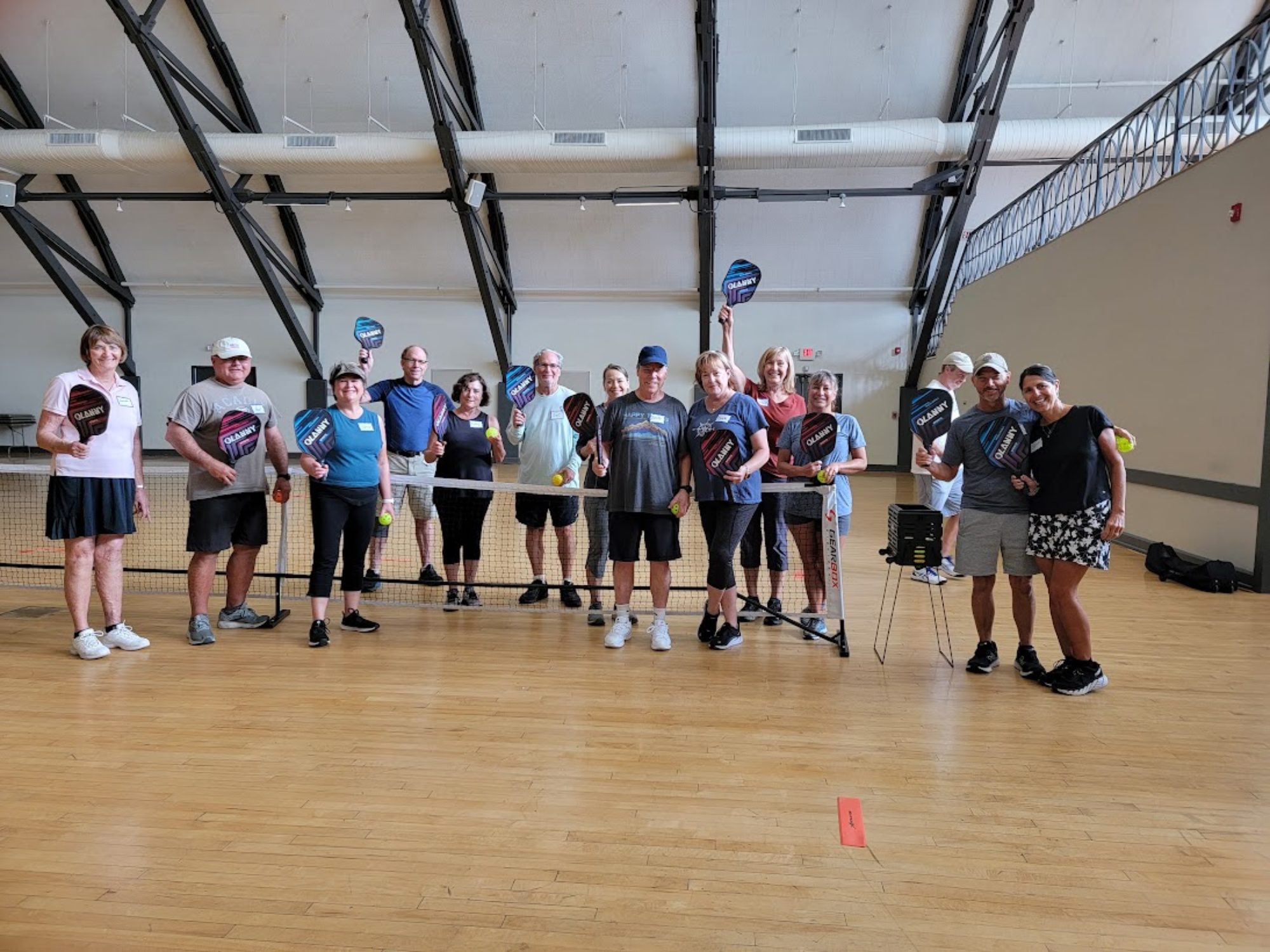


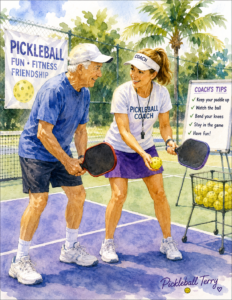
Somebody asked me the other day this question: “Can you make a living coaching pickleball?” So, I decided to write this article.
If you’ve ever watched professional pickleball on television, you’ve probably wondered: Can these players really make a living playing pickleball?
The short answer is yes, but only for a relatively small number of players.
As pickleball has exploded in popularity, so have the opportunities to earn money. Professional tours now offer larger prize pools, television coverage, sponsorships, and team contracts. But the reality is that most pros don’t make their living from tournament winnings alone.
Let’s start with the stars.
Elite players such as Anna Leigh Waters, Ben Johns, Federico Staksrud, and Anna Bright have become household names in the pickleball world. They earn money from multiple sources, including tournament winnings, Major League Pickleball (MLP) salaries, sponsorships, appearance fees, clinics, and endorsement deals. For the very top players, total annual earnings can reach well into the six figures, and a handful may even surpass the million-dollar mark when all income streams are combined.
But that’s the exception and not the rule.
The majority of professional players earn their income from several sources. Tournament prize money is only one part of the equation. A player may have a strong weekend on the PPA or APP Tour, but if they don’t consistently finish near the top, those winnings can disappear quickly after paying for airfare, hotels, meals, coaching, and entry fees.
That’s why many professionals teach lessons and clinics when they aren’t competing. Private instruction, weekend camps, corporate events, and exhibitions can provide a steady income while also helping players build their personal brand.
Sponsorships have also become increasingly important. Paddle manufacturers, apparel companies, shoe brands, and nutrition companies often sponsor players to represent their products. Some athletes earn additional income through signature paddles, affiliate partnerships, YouTube channels, podcasts, and social media content.
Another significant source of income is Major League Pickleball (MLP). Unlike traditional tournaments, MLP is a team-based league where players are drafted by franchises. Team salaries vary, but for many professionals, MLP provides another valuable paycheck during the season.
The truth is that today’s successful pickleball professionals are more than just athletes; they’re also entrepreneurs. They understand that building a career means teaching, creating content, working with sponsors, connecting with fans, and growing their reputation both on and off the court.
So, can you really make a living playing pickleball?
Absolutely—but it takes much more than having a great forehand.
Like golfers, tennis players, and other professional athletes, the best pickleball players build multiple streams of income. Tournament success opens doors, but personality, professionalism, and business savvy often determine who enjoys a long and successful career.
As the sport continues to grow, so will the opportunities. Larger tournaments, increased television exposure, new sponsors, and expanding professional leagues are creating careers that simply didn’t exist a few years ago.
For now, the dream of making a living in pickleball is very real—but for most players, success comes from treating pickleball not just as a game, but as a business.
But how about the average local PPR Pickleball coach. Can they make a living
Can the Average Local Pickleball Coach Really Make a Living?
Every pickleball player knows someone who teaches lessons. Maybe it’s the PPR-certified coach at your local park, the instructor running beginner clinics at the YMCA, or the coach giving private lessons every morning. It raises an interesting question:
Can the average local pickleball coach actually make a living?
The answer is yes—but it’s usually not by teaching lessons alone.
Let’s do some simple math.
Suppose a coach charges $75 an hour for private lessons. That sounds great until you realize they’re not teaching eight hours a day, five days a week. Most lessons happen in the mornings or evenings, and weather, vacations, and court availability all affect the schedule.
Even if a coach teaches four private lessons a day, five days a week, that’s about 20 lessons per week, or $1,500 in gross income. But from that, they still have to pay taxes, insurance, equipment, travel, certification fees, and often court rental fees.
That’s why successful coaches rarely rely on just one source of income.
Many combine private lessons with beginner clinics, group classes, camps, round robins, corporate events, and tournament directing. Some sell paddles or apparel. Others create YouTube channels, write books, publish newsletters, or partner with local businesses. The most successful coaches understand they’re not just teaching pickleball—they’re running a business.
Another challenge many people overlook is finding students.
Being a great player doesn’t automatically make someone a successful coach. Coaches have to market themselves, answer emails, maintain a website or social media presence, schedule lessons, and build a reputation through excellent customer service. Word-of-mouth referrals become incredibly valuable.
Location also matters. A coach in a pickleball hotspot like Sarasota, Naples, or The Villages may have far more opportunities than someone in an area where the sport is still growing.
One advantage local coaches have over touring professionals is stability. While professional players spend much of the year traveling, local coaches often build long-term relationships with students. They watch beginners improve, help players prepare for tournaments, and become part of the local pickleball community. That can be both personally rewarding and financially sustainable.
So, can the average local PPR-certified coach make a living?
Yes—but only if they think like an entrepreneur. The coaches who succeed are usually the ones who diversify their income, build strong relationships, and continually look for new ways to provide value.
In today’s pickleball economy, the paddle may be your tool, but your business skills are just as important as your backhand.
Bottom line: The coaches making the best living aren’t necessarily the best players. They’re the ones who combine solid coaching with smart business, excellent communication, and a genuine passion for helping others enjoy the game.