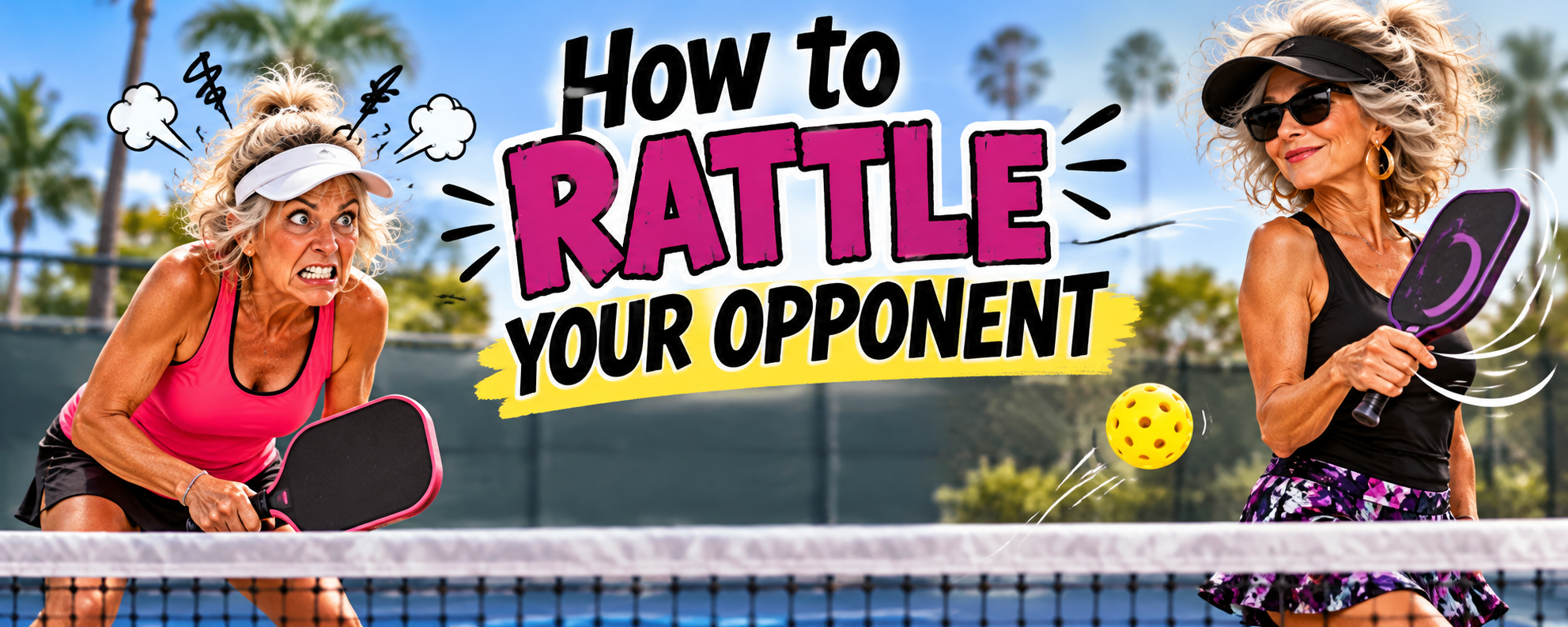
How to Rattle Your Opponents

For pickleball players of all skill level 941-400-0978
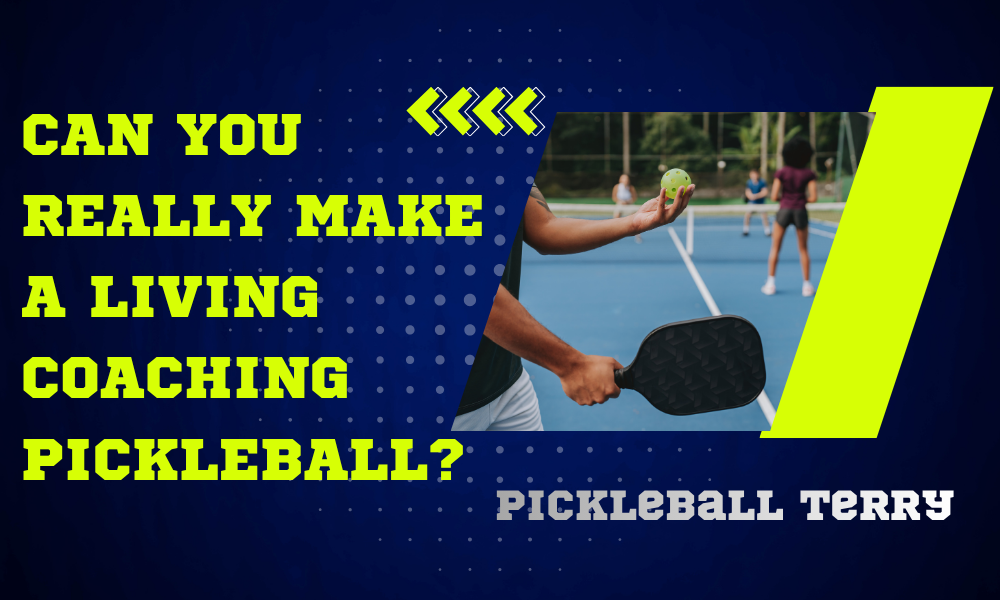
Somebody asked me the other day this question: “Can you make a living coaching pickleball?” So, I decided to write this article.
If you’ve ever watched professional pickleball on television, you’ve probably wondered: Can these players really make a living playing pickleball?
The short answer is yes, but only for a relatively small number of players.
As pickleball has exploded in popularity, so have the opportunities to earn money. Professional tours now offer larger prize pools, television coverage, sponsorships, and team contracts. But the reality is that most pros don’t make their living from tournament winnings alone.
Let’s start with the stars.
Elite players such as Anna Leigh Waters, Ben Johns, Federico Staksrud, and Anna Bright have become household names in the pickleball world. They earn money from multiple sources, including tournament winnings, Major League Pickleball (MLP) salaries, sponsorships, appearance fees, clinics, and endorsement deals. For the very top players, total annual earnings can reach well into the six figures, and a handful may even surpass the million-dollar mark when all income streams are combined.
But that’s the exception and not the rule.
The majority of professional players earn their income from several sources. Tournament prize money is only one part of the equation. A player may have a strong weekend on the PPA or APP Tour, but if they don’t consistently finish near the top, those winnings can disappear quickly after paying for airfare, hotels, meals, coaching, and entry fees.
That’s why many professionals teach lessons and clinics when they aren’t competing. Private instruction, weekend camps, corporate events, and exhibitions can provide a steady income while also helping players build their personal brand.
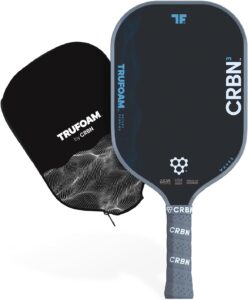
Sponsorships have also become increasingly important. Paddle manufacturers, apparel companies, shoe brands, and nutrition companies often sponsor players to represent their products. Some athletes earn additional income through signature paddles, affiliate partnerships, YouTube channels, podcasts, and social media content.
Another significant source of income is Major League Pickleball (MLP). Unlike traditional tournaments, MLP is a team-based league where players are drafted by franchises. Team salaries vary, but for many professionals, MLP provides another valuable paycheck during the season.
The truth is that today’s successful pickleball professionals are more than just athletes; they’re also entrepreneurs. They understand that building a career means teaching, creating content, working with sponsors, connecting with fans, and growing their reputation both on and off the court.
So, can you really make a living playing pickleball?
Absolutely—but it takes much more than having a great forehand.
Like golfers, tennis players, and other professional athletes, the best pickleball players build multiple streams of income. Tournament success opens doors, but personality, professionalism, and business savvy often determine who enjoys a long and successful career.
As the sport continues to grow, so will the opportunities. Larger tournaments, increased television exposure, new sponsors, and expanding professional leagues are creating careers that simply didn’t exist a few years ago.
For now, the dream of making a living in pickleball is very real—but for most players, success comes from treating pickleball not just as a game, but as a business.
But how about the average local PPR Pickleball coach. Can they make a living
Can the Average Local Pickleball Coach Really Make a Living?
Every pickleball player knows someone who teaches lessons. Maybe it’s the PPR-certified coach at your local park, the instructor running beginner clinics at the YMCA, or the coach giving private lessons every morning. It raises an interesting question:
Can the average local pickleball coach actually make a living?
The answer is yes—but it’s usually not by teaching lessons alone.
Let’s do some simple math.
Suppose a coach charges $75 an hour for private lessons. That sounds great until you realize they’re not teaching eight hours a day, five days a week. Most lessons happen in the mornings or evenings, and weather, vacations, and court availability all affect the schedule.
Even if a coach teaches four private lessons a day, five days a week, that’s about 20 lessons per week, or $1,500 in gross income. But from that, they still have to pay taxes, insurance, equipment, travel, certification fees, and often court rental fees.
That’s why successful coaches rarely rely on just one source of income.
Many combine private lessons with beginner clinics, group classes, camps, round robins, corporate events, and tournament directing. Some sell paddles or apparel. Others create YouTube channels, write books, publish newsletters, or partner with local businesses. The most successful coaches understand they’re not just teaching pickleball—they’re running a business.
Another challenge many people overlook is finding students.
Being a great player doesn’t automatically make someone a successful coach. Coaches have to market themselves, answer emails, maintain a website or social media presence, schedule lessons, and build a reputation through excellent customer service. Word-of-mouth referrals become incredibly valuable.
Location also matters. A coach in a pickleball hotspot like Sarasota, Naples, or The Villages may have far more opportunities than someone in an area where the sport is still growing.
One advantage local coaches have over touring professionals is stability. While professional players spend much of the year traveling, local coaches often build long-term relationships with students. They watch beginners improve, help players prepare for tournaments, and become part of the local pickleball community. That can be both personally rewarding and financially sustainable.
So, can the average local PPR-certified coach make a living?
Yes—but only if they think like an entrepreneur. The coaches who succeed are usually the ones who diversify their income, build strong relationships, and continually look for new ways to provide value.
In today’s pickleball economy, the paddle may be your tool, but your business skills are just as important as your backhand.
Bottom line: The coaches making the best living aren’t necessarily the best players. They’re the ones who combine solid coaching with smart business, excellent communication, and a genuine passion for helping others enjoy the game.
By Pickleball Terry
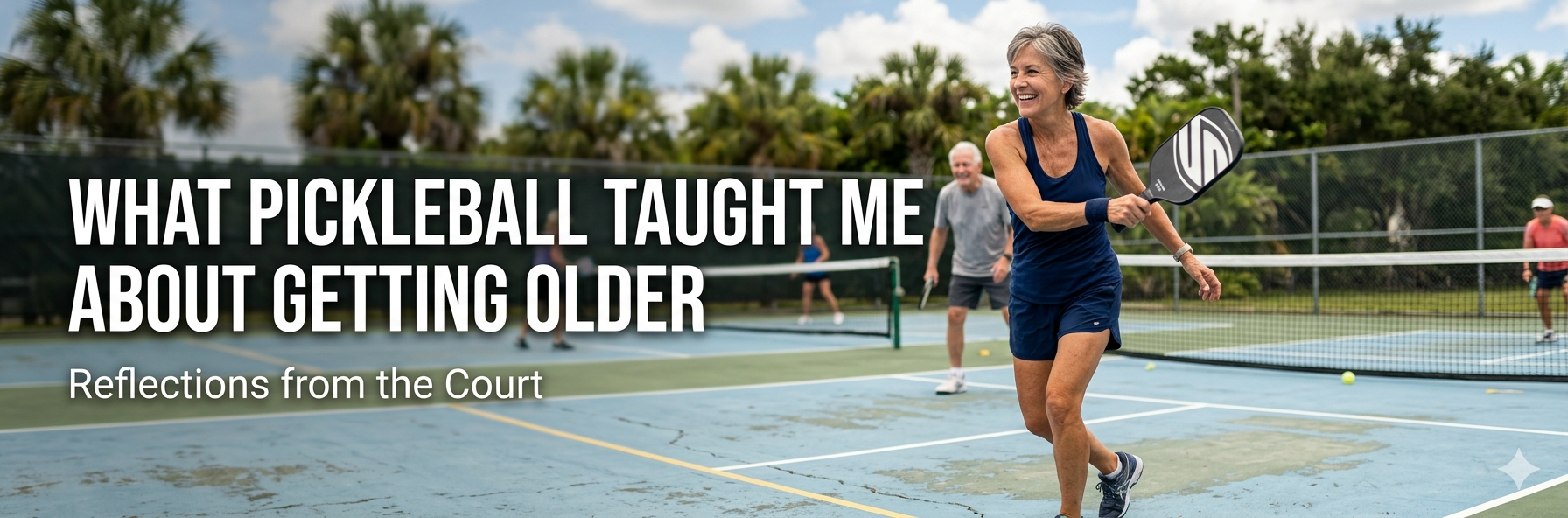
When I first picked up a pickleball paddle, I thought I was signing up for exercise. Like many people, I wanted to stay active, keep moving, and maybe lose a few pounds. What I didn’t realize was that pickleball would teach me some valuable lessons about getting older.

One of the biggest surprises was learning that age doesn’t have to define what you can do. Society often sends the message that after a certain age, you should slow down, sit back, and watch life happen from the sidelines. Then I stepped onto a pickleball court and saw people in their seventies, eighties, and even nineties running, laughing, competing, and enjoying life. It completely changed my perspective on aging.
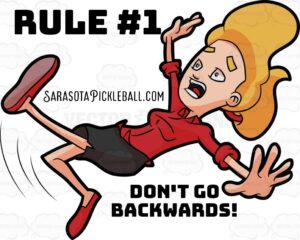
Pickleball also taught me that staying young has less to do with your birth certificate and more to do with your attitude. I have met players who are eighty years old and act forty, and I’ve met people who are fifty and have already given up on trying new things. The players who seem happiest are the ones who continue to challenge themselves, learn new skills, and stay curious.
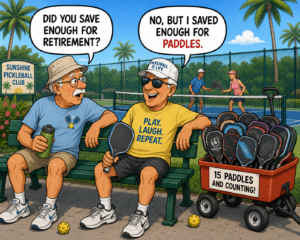
Another lesson was the importance of friendship. As we get older, making new friends can become surprisingly difficult. People retire, move away, or become busy with family obligations. Yet pickleball has a way of bringing people together. Some of my closest friendships started with a simple question: “Need a partner?” The court creates connections that often extend far beyond the game itself.
Perhaps the most important lesson pickleball taught me is that purpose matters. Many people struggle after retirement because they lose the routine and social interaction that work once provided. Pickleball gives people a reason to get up in the morning. It provides goals, friendships, laughter, and a sense of belonging. That is powerful at any age.
Of course, getting older still comes with its challenges. The knees may ache a little more. Recovery takes longer. Sometimes the mind knows exactly what to do, but the body doesn’t quite cooperate. Yet pickleball reminds me that perfection isn’t the goal. Participation is. Showing up, having fun, and staying engaged in life are victories in themselves.

What pickleball ultimately taught me is that getting older doesn’t mean the adventure is over. In many ways, it’s just beginning. As long as there is a paddle in my hand, friends on the court, and another game to play, I have something to look forward to tomorrow.
 Thanks for reading,
Pickleball Terry
Dinkpickleball@gmail.com
By Pickleball Terry
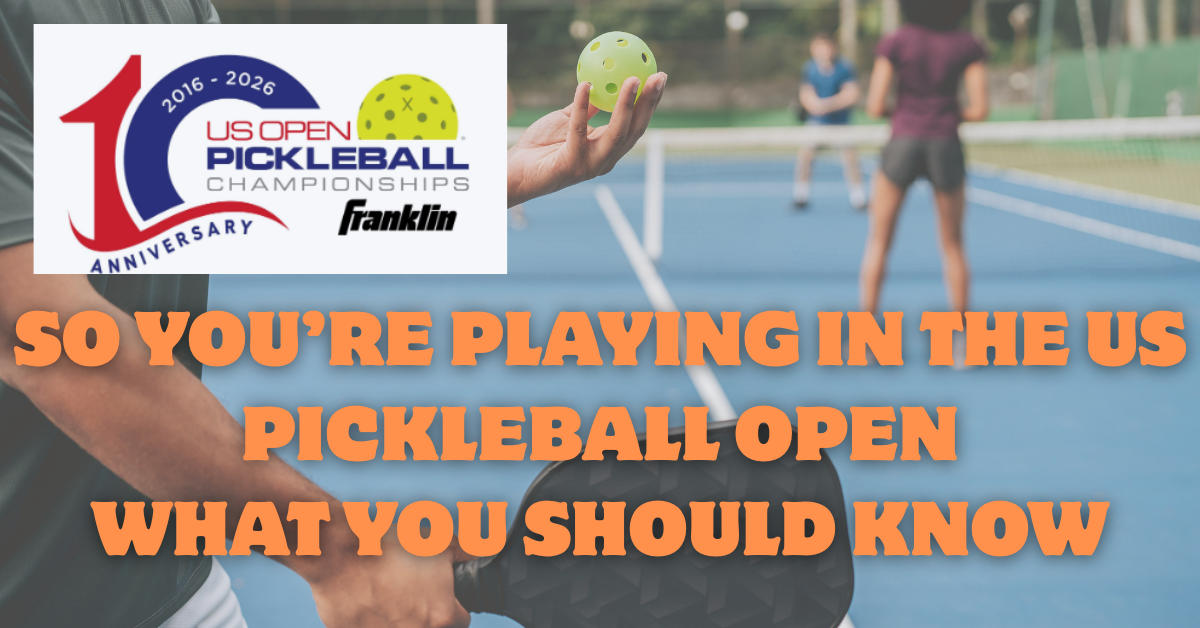
If you’re heading to Naples, Florida this April, congratulations—you’ve scored a seat at the most electric event in the sport. The 2026 Franklin US Open Pickleball Championships (April 11–18) isn’t just a tournament; it’s a milestone. This year marks a decade of dinks, and the 10th-anniversary celebration promises to be the biggest yet.
Whether you’re a first-timer or a seasoned “Naples Veteran,” here is the ultimate guide to navigating the 2026 Open.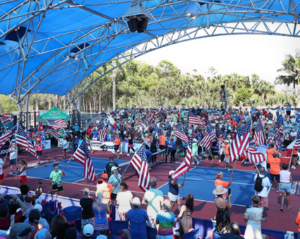
Dates: April 11 – April 18, 2026.
Location: East Naples Community Park (The USOP National Pickleball Center). 3500 Thomasson Dr, Naples, FL 34112
The Vibe: Expect over 3,000 athletes and 50,000+ fans. It’s high-energy, high-humidity, and purely addictive.
 Tickets: The “Free” Secret
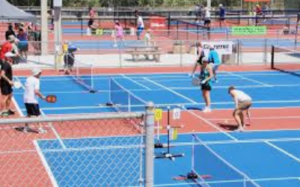
Most people think they need a ticket just to enter. You don’t. * Grounds Access is FREE: You can wander the expo, enjoy the food trucks, and watch pro and amateur matches on 59 of the 60 courts without paying a dime.
Championship Court: Tickets are only required for the Zing Zang Championship Court. These are usually handled via a lottery months in advance, but check the on-site ticket booth early in the morning for any last-minute “no-show” re-sales ($5 surcharge usually applies).
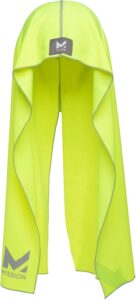
Naples in April is beautiful, but it can be brutal. Good news is that this is in early April so you might luck out and have lower temperatures. I have played in two Opens and did not have a problem with the heat or humidity. I live in Sarasota so I have acclimated to playing in Florida weather. Players that come down from the north are usually blown away by the humidity. I have seen people hanging out in the air conditioned bathrooms just for a break. I recommend bringing a sun umbrella for shade, and a cooler full of ice and water. Ice will hydrate you and the ice will cool you off. I will take a scarf and soak it in the ice water, wring it out and wear around my neck. Instant cooling.
Parking is Cashless: It costs $10/day or $60 for a weekly pass. Park at the onsite lot or the Sugden Park overflow lot. Don’t stress the walk; there are complimentary shuttles. No cash this year. Bring your credit card.

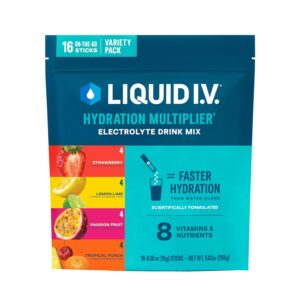
Hydration is Non-Negotiable: The “Naples Humidifier” is real. Bring a refillable water bottle (glass isn’t allowed). The grounds have hydration stations and “mister” tents—use them before you think you need them. There is a couple of places to find relief from the sun. Inside the big tent where they have the T-shirts and paddles for sale.
The “Pro” Kit: Pack extra socks and shirts. By noon, you’ll likely want a fresh change. I see lots of changes during the day. Swamp feet is real.
4. What to Bring
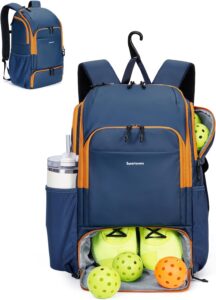
Bring: A portable chair (bleachers fill up fast), a hat/umbrella for personal shade, and a credit card (the event is largely cashless).
Leave: Your glass bottles and outside alcohol. Also, while dogs are welcome on leashes in the park, they aren’t allowed inside the Championship Court area.
If you only have a few days, here’s how to prioritize and just want to be a spectator:
The First Weekend (April 11-12): Focuses on the Junior Championships and pro clinics. It’s great for families.
Friday, April 17: This is “Semifinal Friday.” The intensity is off the charts as pros battle for a spot in the finals.
Championship Saturday, April 18: The grand finale. This is where legends are made on the Zing Zang court.
Between matches, head over to the Lightstrike Patio. There’s live music every afternoon, great food, and the “Expo Tent” is the best place on earth to test-drive new paddles or snag 10th-anniversary limited edition gear.
Unsolicited Advice on the Pickleball Courts: Helpful or Harmful?
By Pickleball Terry
Pickleball courts are one of the most social spaces in sports. Players of all ages and skill levels mix together, laugh between points, and often strike up conversations with complete strangers. That friendliness is part of what makes pickleball special. But there’s one court habit that can quickly turn good vibes into tension: unsolicited advice.
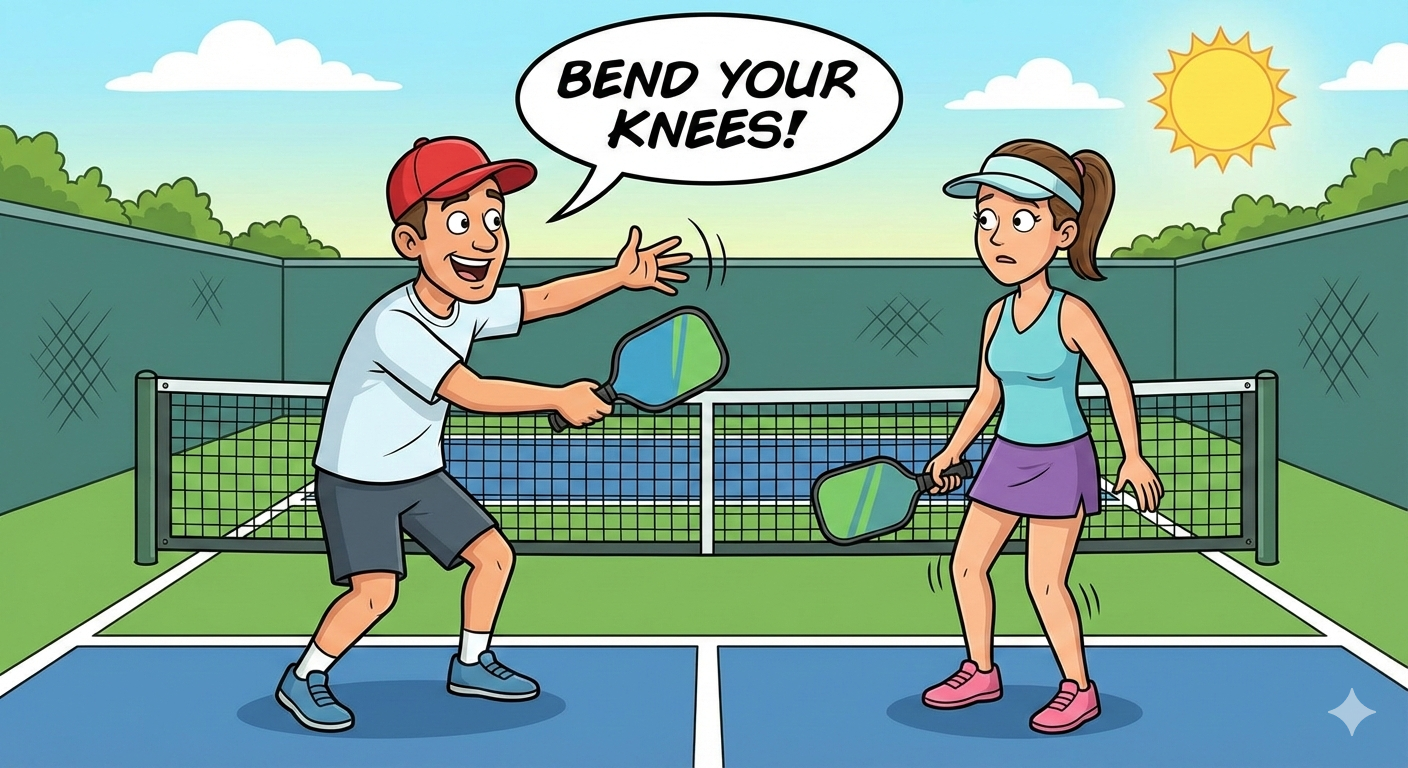
If you’ve played pickleball for more than a few weeks, you’ve probably experienced it. You miss a third-shot drop, and someone says, “You should really slow your swing down.” You pop up a dink and hear, “You need to get lower.” Sometimes it comes from a well-meaning partner. Sometimes it comes from an opponent. And sometimes it comes from the person waiting on the sideline who hasn’t even played the game yet.
The tricky thing about unsolicited advice is that it’s often given with good intentions. Many players genuinely want to help. They remember being beginners themselves and think a quick tip will speed up your progress. The problem isn’t always the advice, but it’s the timing, the delivery, and whether it was invited in the first place.
On recreational courts, most people are there to have fun, get some exercise, and enjoy the social aspect of the game. When advice is forced on someone mid-game, it can feel embarrassing or condescending, even if that wasn’t the intent. Instead of focusing on the next point, the player is now thinking about mechanics, posture, or grip, usually at exactly the wrong moment.
There’s also an unspoken hierarchy issue. Not all advice-givers are actually qualified to give advice. Pickleball is full of confident players who have played for a long time but may not fully understand proper technique. Bad advice can be worse than no advice at all, especially when it contradicts what a player is already working on.
So, when is advice appropriate?
A good rule of thumb is simple: wait to be asked. If someone comes up to you after a game and says, “Hey, do you have any tips for my serve?” That’s your green light. If your partner asks, “What do you think I should do differently?” then now you’re helping, not intruding.
If you truly feel compelled to say something, timing matters. Asking permission goes a long way. A quick, “Would you like a suggestion?” shows respect and gives the other person control. If the answer is no, let it go.
For players on the receiving end, it’s okay to set boundaries. A polite, “Thanks, I’m just out here to play today,” is enough. You don’t owe anyone an explanation.
“Thanks, I’m just out here to play today.”
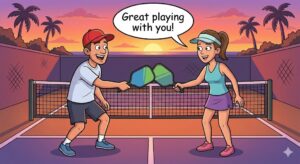
Pickleball grows because it’s welcoming. Keeping advice invited and kind helps preserve the joy that brings people back to the courts again and again. Sometimes the best thing you can offer isn’t a tip, but it’s a smile, a good rally, and a genuine “Nice shot.”
Thank you for reading,

Pickleball Terry
Rebuttal: Pickleball Is Not a Drug—It’s a Lifelong Passion With Balance
Headline from the New York Post:
Doctors warned that “pickleball is a drug” as injuries rise among fervent players getting triangle fractures, wearing designer heels—even matching paddle and shoes. New York Post
Here’s how I would reframe this, not dismissing the concerns, but celebrating why that enthusiasm is a gift, and how balancing passion, safety, and joy makes it sustainable. By Pickleball Terry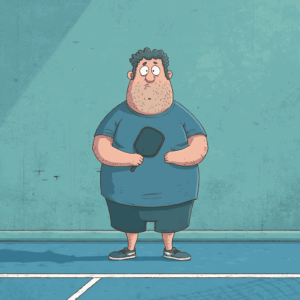
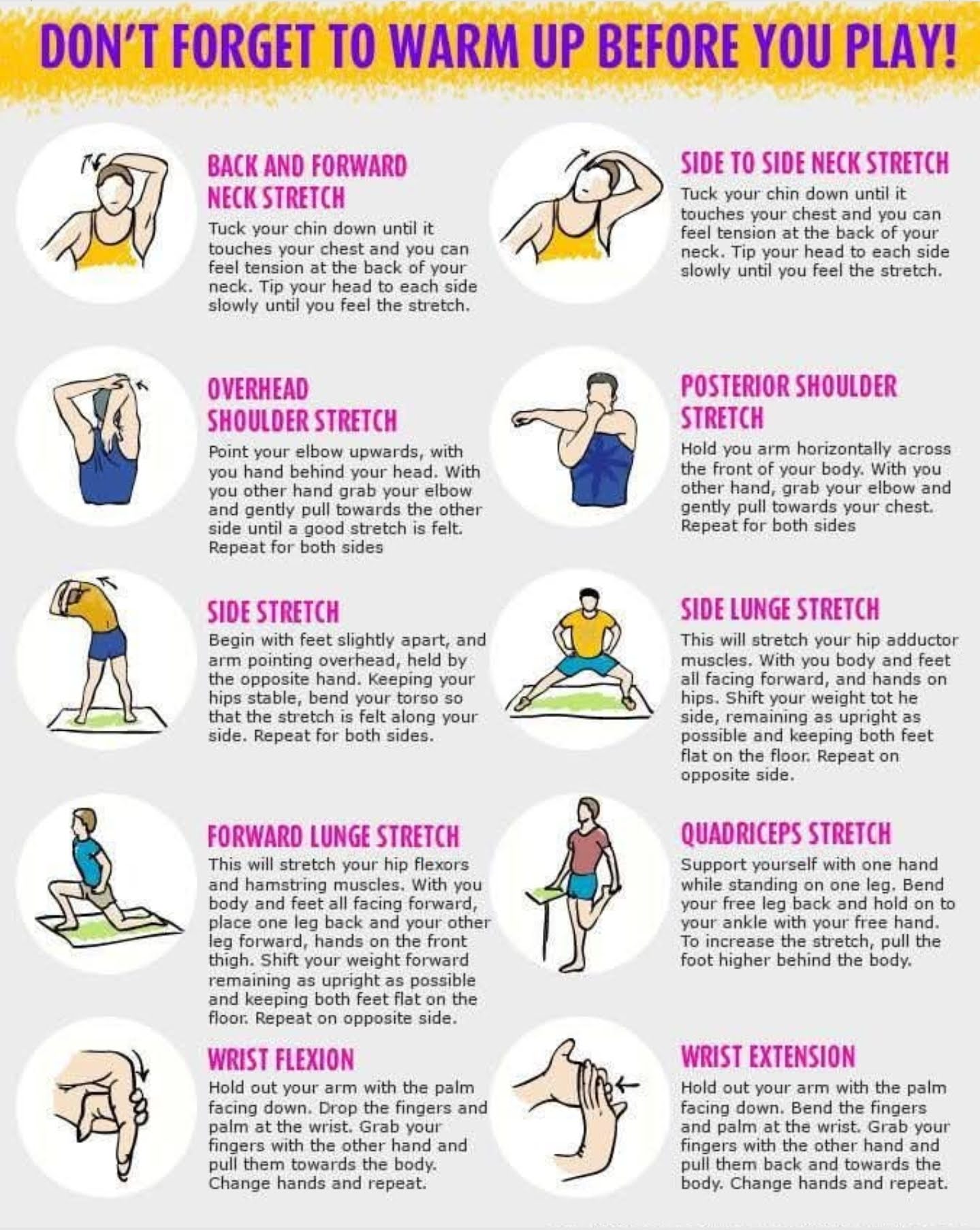
“Enthusiasm isn’t addiction. Pickleball becomes a problem only when it’s done without balance, care, or community. Injuries ease with warm-up.”
Pickleball Terry

 How to Play Aggressive Pickleball (Without Losing Control)If you want to win more pickleball matches, sometimes the best defense is a great offense. Playing aggressively on the court can help you take control, apply pressure, and dominate — but it needs to be smart and strategic.
 CLICK HERE
Aggressive pickleball isn’t just about hitting the ball hard. It’s about:
Aggression is about mindset as much as mechanics.
When you play fast and aggressively, your opponents have less time to react — leading to more unforced errors.
Aggressive players dictate how rallies unfold. You’re playing offense, not defense.
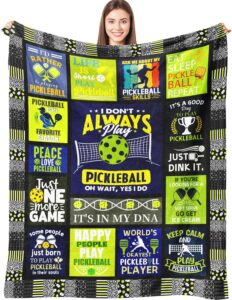
An aggressive approach fuels energy and momentum, shifting a match in your favor, especially in doubles.
After your third shot, rush the net and hold the line. This is where most points are won. From this position, you can:
Look for:
When you see a ball sitting up, go for it — but stay in control. Target feet, hips, or open court space.
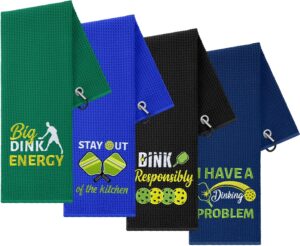
4 Pieces Funny Dinkball Towels Microfiber Cotton Athletic Towels click here
Aggression doesn’t always mean power. Well-placed shots can be just as deadly:
Aggressive players don’t wait — they read and react. Stay light on your feet and anticipate your opponent’s next shot.
Playing aggressively doesn’t mean playing emotionally. Stay calm, composed, and calculated. Smart aggression wins — not wild swings.
Don’t attack just for the sake of it. Know when to reset the rally instead. Avoid attacking when:
Patience is part of being aggressive — wait for the right ball.
If you want to level up your game, don’t just “play it safe.” Be the player who takes initiative, attacks smartly, and stays one step ahead.
When done right, aggressive pickleball is confident, calculated, and incredibly effective.
Want more pickleball tips? Subscribe to our newsletter and get weekly insights straight to your inbox.
Thanks for reading!
Pickleball Terry
Mastering the Third Shot Drop in Pickleball: What It Is, How to Do It, and Why It Matters by Pickleball Terry
If you’re looking to level up your pickleball game, one shot you must understand and practice is the third shot drop. It’s a staple of smart, strategic play—especially in doubles—and often separates casual players from those with a more competitive edge.
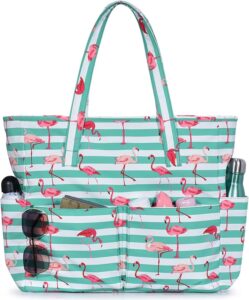
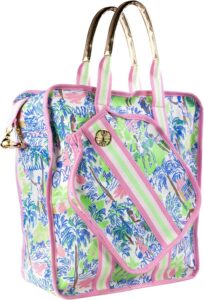 Lilly Pulitzer Pickleball Bag for Women with Storage for 2 Paddles, Zipper Pocket, Waterbottle Sleeve and Gold Details, Serving it Up CLICK HERE FOR PRICE
What is the Third Shot Drop?
The third shot drop is exactly what it sounds like: a soft, arcing shot played on the third shot of a rally. Here’s the typical sequence: (Remember: The serving team does the Third Shot Drop.)
After you serve and your opponent returns the ball, you (or your partner) play the third shot. The goal is to gently drop the ball over the net into the opposing team’s non-volley zone (also called the “kitchen”), where it ideally lands softly and is difficult to attack. Sounds easy but it’s not. It’s much easier to drive the ball than to execute a Third Shot Drop. A little too high and you have just given your opponents an easy put-away. Or too soft and whoops! It lands on your side of the net. Plus it takes more brain energy to remember to use this shot successfully. Yes, it’s much easier to just slam the ball back and hope for the best. As you improve and play more advanced players, the Third Shot Drop becomes strategic to the game. You will not be able to drive a ball through advanced players who are stationed at the NVZ (non-volley zone). If you want to move up, it’s going to take more effort in the form of perfecting Third Shot Drop.
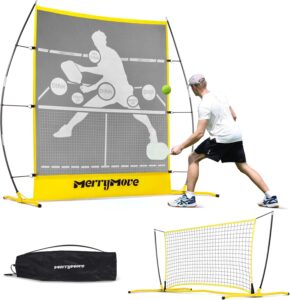
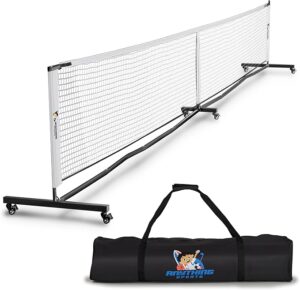
Pickleball Practice Rebounder Net: Pickleball Rebounder or 6FT Mini Pickleball Net Portable CLICK HERE FOR PRICE
I tell my students that they have to practice the shot a thousand times ( A little dramatic but practice, practice, practice.) before they try to bring it to their game. If they don’t, too many errors and they have a better chance of a drive. But if they want to move up in level, they have to know this shot and be able to execute it.
Why is It So Important?
Pickleball is a game of positioning, and the most advantageous position is at the non-volley zone (NVZ). After serving, however, the serving team is at a disadvantage because they must stay back for the return. A well-executed third-shot drop allows the serving team time to advance to the NVZ safely.
If instead, you drive the ball hard on the third shot, it often results in an easy volley or put-away for your opponents. The drop shot neutralizes the return team’s advantage, forcing them to play a soft shot from below net level, giving you time to move up.
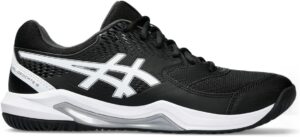
How to Execute a Third Shot Drop
Here’s a breakdown of the mechanics:
Grip and Stance: Use a continental grip for better touch. Stay low with knees bent, paddle out front, and eyes on the ball.
Contact Point: Hit the ball after it bounces, ideally when it’s on the rise. Make contact in front of your body.
Soft Touch: Think of it like tossing an egg—you want to cradle the ball with a gentle lift, not a swat. The paddle motion is more of a slow upward arc.
Target Area: Aim to land the ball just over the net and into the kitchen. It should bounce low, making it hard for your opponents to attack.
Consistency: This shot takes time to master. Focus on control, not power. Drilling this repeatedly is key.
When to Use It
While the third shot drop is most common after a return of serve, you can also use drop shots later in the rally when you’re pushed to the baseline. It’s especially effective against aggressive players who hug the net and are looking for opportunities to smash.
Final Thoughts
The third shot drop isn’t flashy, but it’s fundamental. By giving your team time to move up and take control of the net, you turn defense into offense. It requires patience, finesse, and practice—but once mastered, it becomes a game-changer.
So the next time you step on the court, don’t just drive the ball—drop it with intention. Your future self (and your partner) will thank you.
Thank you for reading,
Pickleball Terry
SarasotaPickleball.com
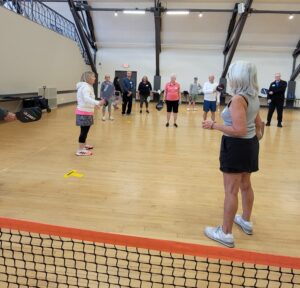
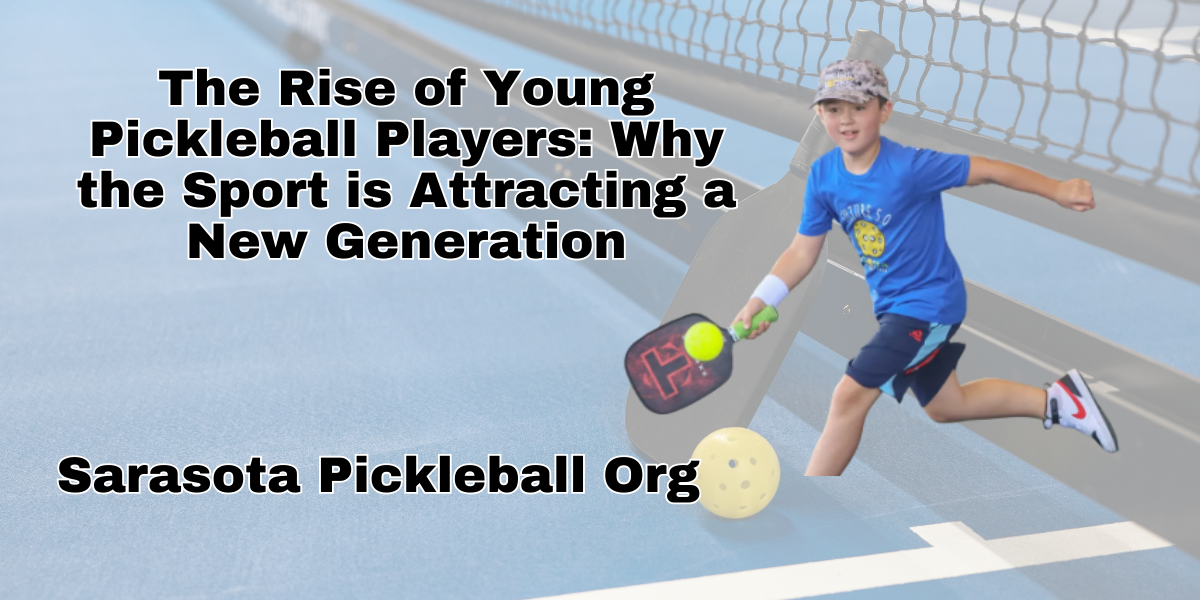
ALL PROCEEDS GO TO THE SARASOTA HIGH SCHOOL ATHLETES
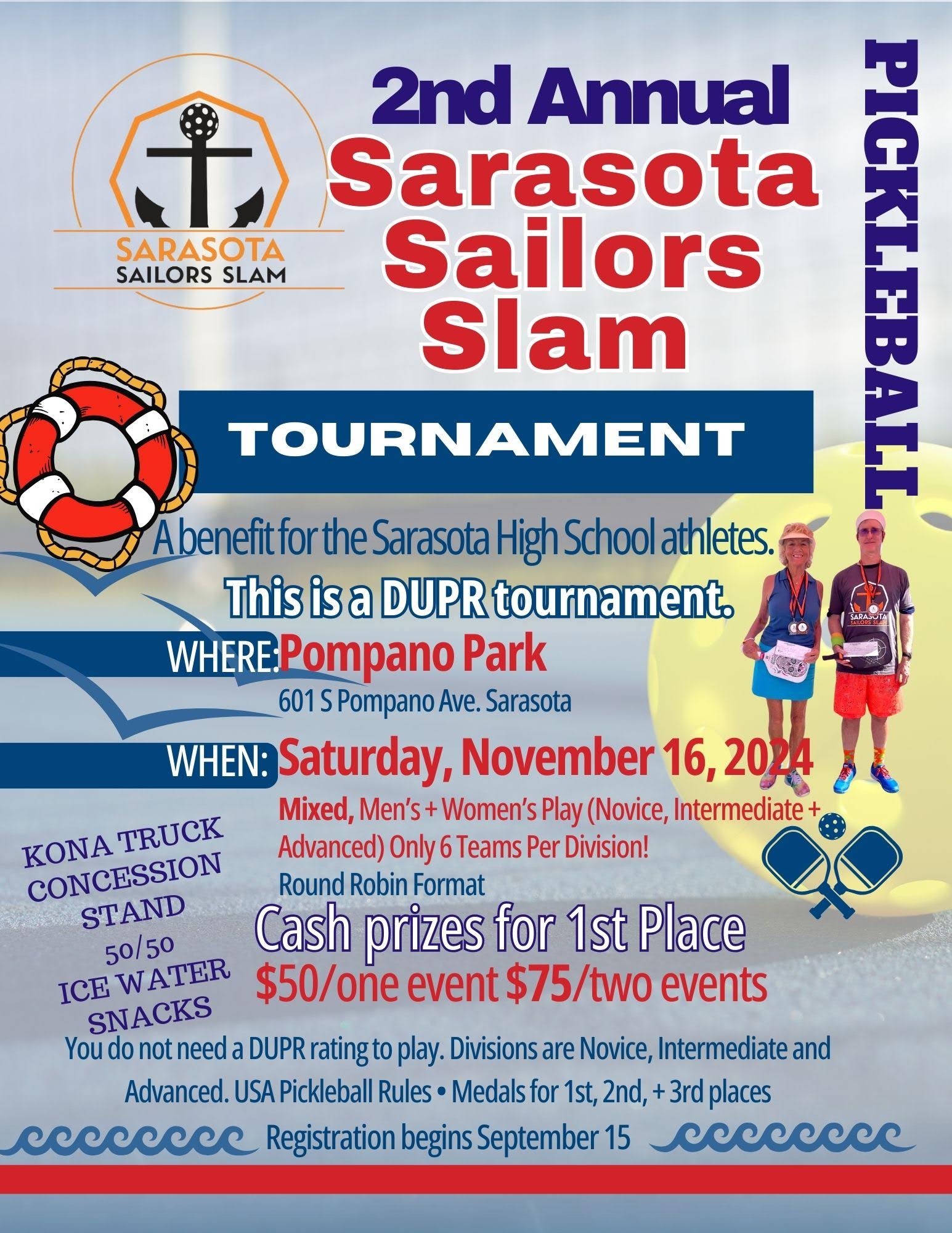
Only 6 teams per division. Spots are filling quickly. Signup before they are closed. There will be a waiting list. Email dinkpickleball@gmail.com to be put on the waiting list.
We are using Swish Tournament software which means you will be able to find your opponents and court assignments on your Swish apps. You will also be able to see everyone’s score in realtime.
You do not need to have a DUPR score but you will need to signup with DUPR. When you register at Swish by clicking the link above, they will instruct you on how to validate your DUPR account. This is a sanctioned DUPR tournament. All scores will be recorded on the DUPR site.
We will have giveaways, 50/50, T-Shirts, Medals, Cash prizes, Free water and snacks, Free Kona Ice Slushies for participants, and so much more!!!
Booth rental space is $50.00 for vendors who want to sell pickleball related items.
We want to thank Archwell Health for supplying the Kona Truck.
Thank you,
Jenn Stutler and Terry Ryan

 CLICK HERE
 CLICK HERE
 CLICK HERE