
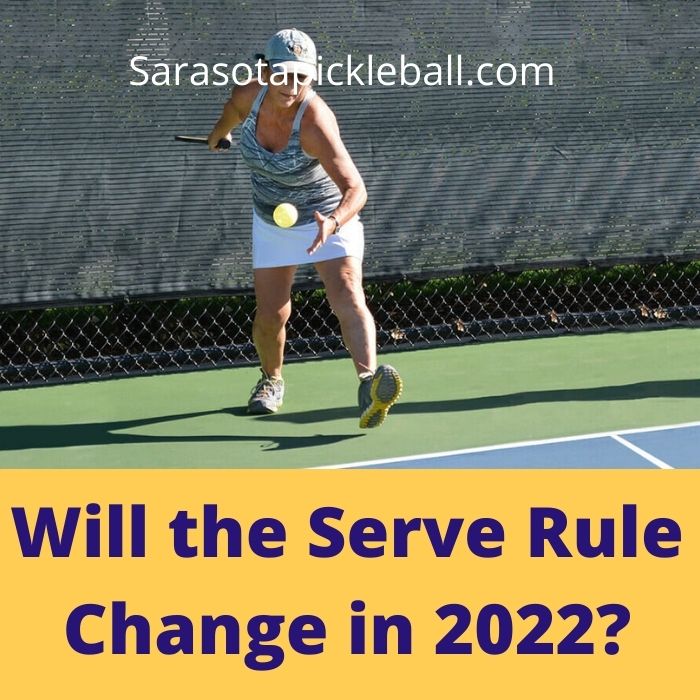
Will the Serve Rule Change in 2022?

Sarasota Pickleball

The serve has been controversial since  the drop serve was introduced in January 2021. Then Zane came up with the COVID serve, also know as the chainsaw serve…or the Zane serve. Now that  tournaments are beginning to outlaw the drop serve, the questions is…will the only serve allowed in 2022 be the standard and back to basics, underhand serve.

Here is a post I saw on Facebook and Morgan makes a good point.

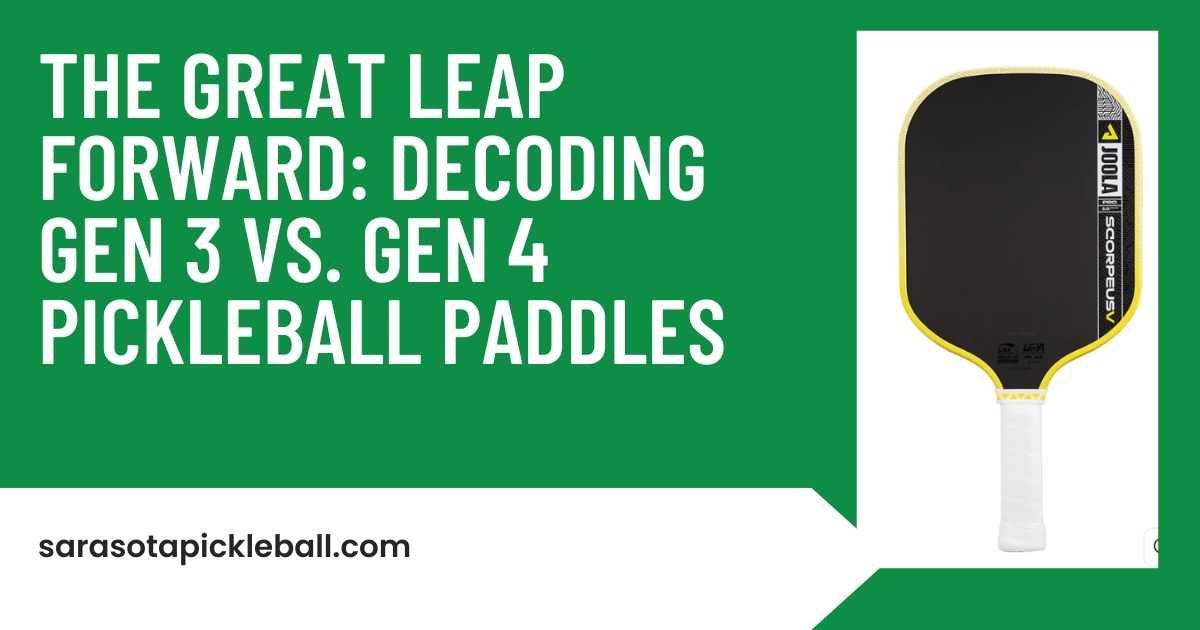
The Great Leap Forward: Decoding Gen 3 vs. Gen 4 Pickleball Paddles

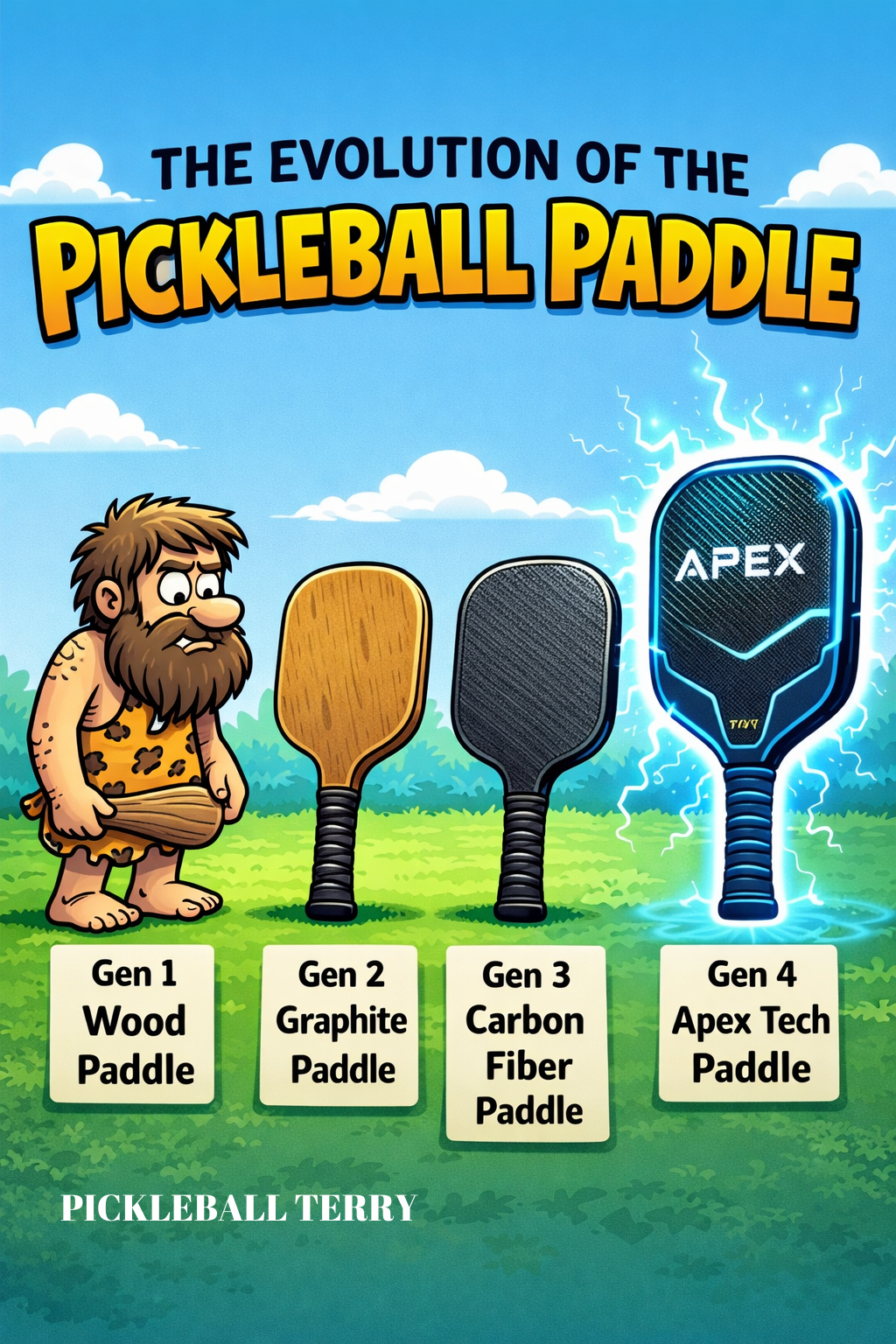
In the world of pickleball, equipment evolution is moving at warp speed. Just when you think you’ve mastered your favorite paddle, a new “generation” drops, promising to change the game. We’ve gone from the equivalent of “Prehistoric Paddles” (wooden planks) to the “Graphite Revolution” and now, we’re witnessing a battle for supremacy in the modern era: Generation 3 vs. Generation 4.

a cartoon of a cave man showing the evolution of pickleball paddlesThe “Evolution of the Pickleball Player” image provided perfectly captures this trajectory. We’ve left the simple “Tennis Exile” days far behind and are now firmly in the “Smart Tech Epoch.” If you’re a serious player, understanding the subtle (and sometimes radical) differences between Gen 3 and Gen 4 paddles is crucial for your next purchase.
Generation 3: Mastering the Hybrid

Generation 3 paddles were the first major jump into complex, composite engineering. They moved past basic graphite and carbon fiber faces by focusing heavily on core technology.

The hallmark of a Gen 3 paddle is the advanced honeycomb core, often made of polymer or specialized polypropylene, designed for a blend of power and control. These paddles refined the “sweet spot” and introduced technologies like perimeter weighting (for stability) and specialized textures (like raw carbon fiber) for maximum spin.

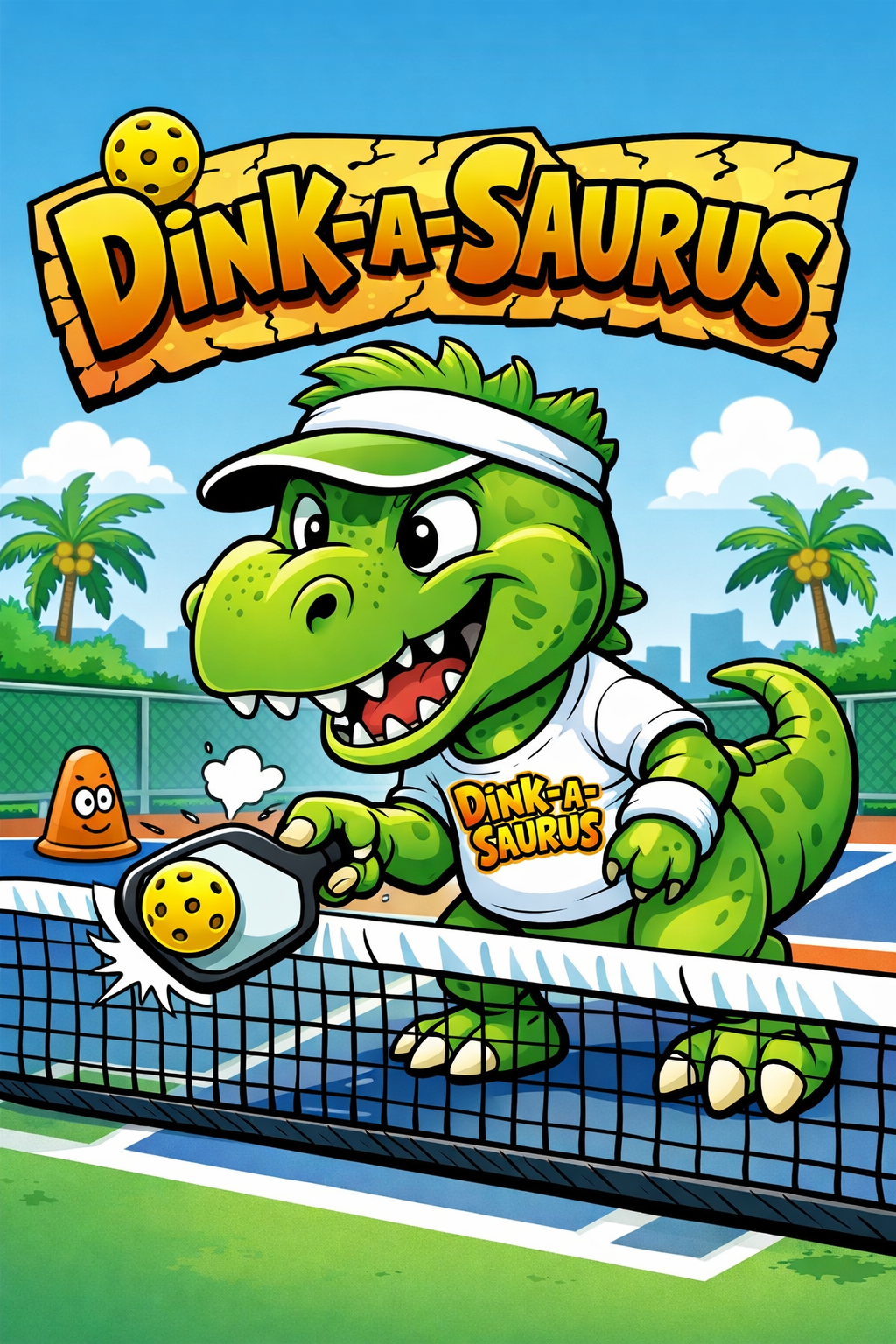
Think of Gen 3 as the era of optimization. They took the existing “Graphite Revolution” materials and engineered them to their absolute physical limits. These paddles are excellent “all-arounders,” providing a balance that many players still swear by.an image of a dinosaur cartoon called a dinkasaurus. It's a joke by Pickleball Terry

Generation 4: The Apex of Synthesis

If Gen 3 optimized materials, Generation 4 is about synthesis and the integration of technology, bordering on “The Ultimate Dink-a-Saurus” concept shown in the image. Gen 4 paddles are the frontier of innovation.

While not (yet) integrated with Wi-Fi (the day will come), Gen 4 paddles use materials and construction techniques previously reserved for aerospace engineering.

The core differentiator is the radical material integration. Instead of a simple core bonded to a face, Gen 4 paddles often use proprietary, multi-material composite cores (e.g., combining different densities or materials) or unique weaving techniques that allow the face and core to act as a single, dynamic unit. The goal is maximized energy transfer (power) without sacrificing feel and control. This technology provides a level of power, pop, and devastating spin that feels almost unnatural to those used to older gear.

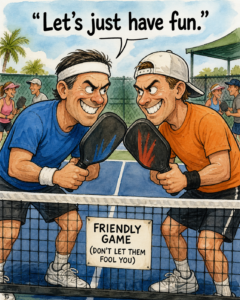
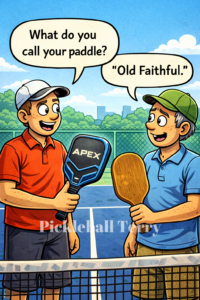
A cartoon by Pickleball Terry of two men on the pickleball court

The Verdict

So, which one do you need?

  • Choose Generation 3 if you value a balanced, proven paddle and find the extreme power of newer models difficult to control. They are reliable workhorses.
  • Choose Generation 4 if you are an aggressive player seeking cutting-edge performance, maximum spin, and raw power. If you want the “Ultimate Dink-a-Saurus” advantage and don’t mind a steeper price tag, Gen 4 is your new frontier.


Generation 3 paddles were the first major jump into complex, composite engineering. They moved past basic graphite and carbon fiber faces by focusing heavily on core technology.

The hallmark of a Gen 3 paddle is the advanced honeycomb core, often made of polymer or specialized polypropylene, designed for a blend of power and control. These paddles refined the “sweet spot” and introduced technologies like perimeter weighting (for stability) and specialized textures (like raw carbon fiber) for maximum spin.


Think of Gen 3 as the era of optimization. They took the existing “Graphite Revolution” materials and engineered them to their absolute physical limits. These paddles are excellent “all-arounders,” providing a balance that many players still swear by.

The Verdict

So, which one do you need?

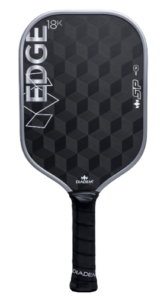
  • Choose Generation 3 if you value a balanced, proven paddle and find the extreme power of newer models difficult to control. They are reliable workhorses. My favorite paddle right now.

    Diadem 18K
    $239.95 and on sale for $174.95 Available from Pickleball Terry
  • Choose Generation 4 if you are an aggressive player seeking cutting-edge performance, maximum spin, and raw power. If you want the “Ultimate Dink-a-Saurus” advantage and don’t mind a steeper price tag, Gen 4 is your new frontier.

In 2026, the pickleball market has split into two distinct ways of using foam: as a perimeter stabilizer (edge injection) or as a full-core replacement for traditional honeycomb.

Hybrid Foam (Edge-Injected)

Most high-performance paddles in 2026 use foam around the outer edges. This acts as a “perimeter weight,” which expands the sweet spot and makes the paddle more stable on off-center hits. It also helps dampen the “pingy” vibration of polymer cores.

Paddles With Foam-Injected Perimeter or Edge Walls

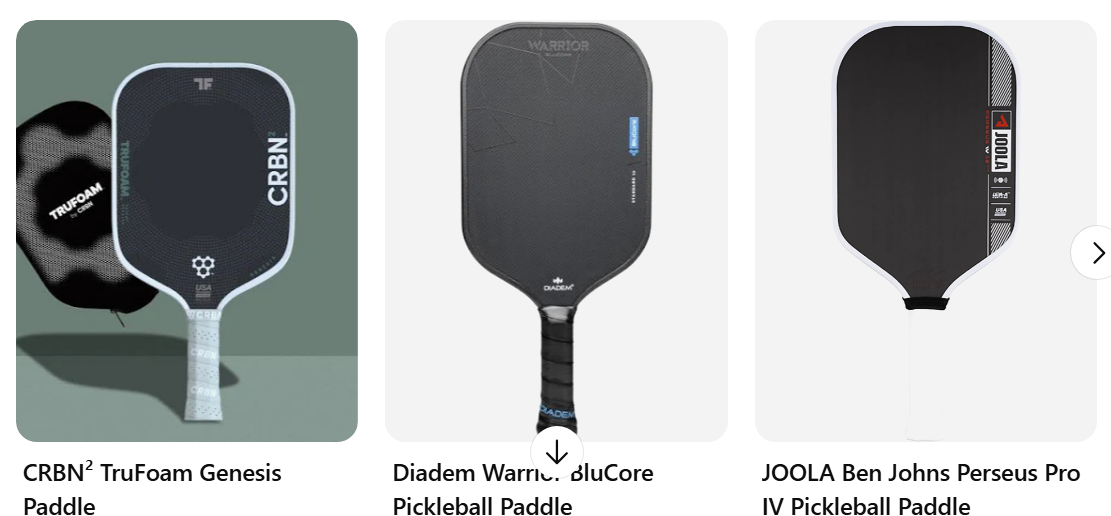
1. JOOLA Perseus Pro IV Pickleball Paddle

  • Uses Hyper-Foam Edge Wall technology.

  • Foam injected around the paddle frame to improve stability and enlarge the sweet spot.

  • Designed for power players who want forgiveness on off-center hits.


2. Selkirk LUXX Control Air Invikta Pickleball Paddle

  • Built with FlexFoam perimeter technology.

  • Foam around the edge increases stability and reduces vibration.

  • Known for control and touch in the soft game.


3. Engage Pursuit Pro MX 6.0 Pickleball Paddle

  • Thermoformed construction with foam-injected edge walls.

  • Expands the effective sweet spot and improves paddle stability.


4. CRBN TruFoam Genesis Pickleball Paddle

  • Uses dense foam instead of a traditional honeycomb core.

  • Eliminates dead zones and produces a very consistent paddle face.

  • JOOLA Ben Johns Perseus Pro IV: This remains a top choice for players who want a “connected” feel. It uses a Hyper-foam edge wall to increase pop and stability without making the paddle feel heavy or sluggish.
  • Diadem Edge BluCore Hybrid: A versatile option that uses a foam perimeter ring specifically to increase the consistency of the sweet spot across the entire face. It is highly rated for its balance of power and comfort.

Engage ProFoam | High Density Foam Core Performance Pickleball Paddle –

$229.99


Full Foam Core (Generation 4)

True “Gen 4” paddles have removed the honeycomb entirely. By using a solid foam core, these paddles eliminate the risk of “core crush”—a common issue where honeycomb cells break down over time. These paddles provide a “thud” rather than a “pop,” which is excellent for dwell time and spin.

Dwell time is the brief moment the ball compresses on the paddle before it springs off. Paddles with longer dwell time tend to feel softer and give players more control and spin, while paddles with shorter dwell time feel crisp and produce more power.

  • CRBN TruFoam Genesis 3: This is a leading 100% foam core paddle. It is engineered to mimic the flex and dwell time of tennis strings, giving you significantly more time to “shape” the ball with spin before it leaves the paddle face.

Not to confuse you more but…When people talk about flex time” in Gen-4 pickleball paddles, they are usually referring to how long the paddle face flexes and holds the ball before it rebounds.

It is closely related to dwell time, but flex time focuses more on the paddle bending or compressing, not just the ball contacting the face.
Simple explanation…

  • When the ball hits the paddle:
    The paddle face flexes slightly
    The ball compresses into the paddle surfacThe paddle springs back and releases the ball
    Flex time = the brief moment the paddle face is flexed before it snaps back.
  • Engage ProFoam: Designed for long-term durability, this paddle uses a high-density core to provide consistent power from day one to day 100. It is a great pick if you are tired of paddles losing their “pop” after a few months of heavy play.

Choosing Your Feel

If you prefer a crisp, traditional feel with added forgiveness, look for a foam-injected edge paddle like the JOOLA. If you want a plush, quiet response and the highest possible spin potential, a full foam core like the CRBN is the way to go.


Recommendation based on playstyle:

  • For Speed and Quick Hands: The CRBN TruFoam Genesis 3 is the clear winner. Its low swing weight allows for lightning-fast resets at the kitchen, and the full foam core provides the most plush, controlled feel for dinking.
  • For Balanced Power: The JOOLA Ben Johns Perseus Pro IV offers a perfect middle ground. The Hyper-foam edges give you enough stability to block hard drives, while the honeycomb center maintains the classic pop needed for put-away shots.
  • For Maximum Stability: If you find yourself hitting the ball off-center frequently, the Diadem Edge BluCore Hybrid provides the most forgiveness due to its slightly higher static weight and perimeter ring.

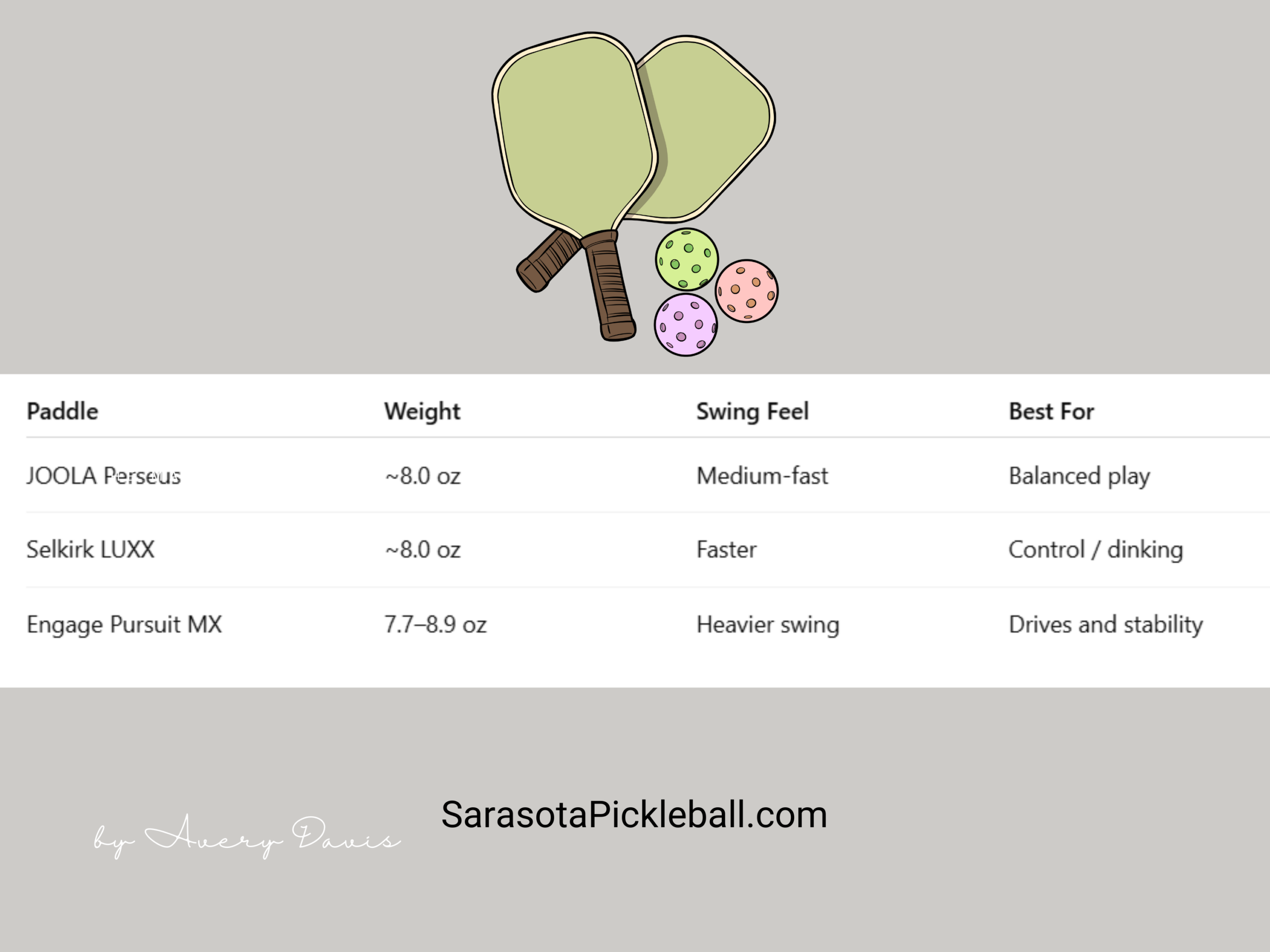
To help you decide between these modern foam-integrated options, I’ve compared their weights and swing speeds. These factors are critical for determining how “fast” a paddle feels at the kitchen line and how much effort it takes to reset hard-hitting shots.

Which one should you choose?

  • For Speed and Quick Hands: The CRBN TruFoam Genesis 3 is the clear winner. Its low swing weight allows for faster resets during fast-paced volleys, and the full foam core provides the softest feel for precise dinking.
  • For Balanced Power: The JOOLA Ben Johns Perseus Pro IV offers a versatile middle ground. The Hyper-foam edges provide stability to block hard drives, while the center maintains the crisp pop needed for put-away shots.
  • For Maximum Forgiveness: If you hit the ball off-center frequently, the Diadem Edge BluCore Hybrid provides the most consistency due to its perimeter ring design and slightly higher mass.


Player Insights & Tournament Performance

  • The “Hybrid” Experience (Gen 3): High-level players often praise the JOOLA Ben Johns Perseus Pro IV for its predictable response. In tournament play, the Hyper-foam edge wall is noted for reducing “dead spots,” allowing players to successfully reset hard drives even when they don’t hit the exact center of the paddle.
  • The “Full-Core” Shift (Gen 4): Reviewers of the CRBN TruFoam Genesis 3 highlight the unique dwell time. Because the ball sinks into the foam face, players report being able to generate “massive amounts of topspin” that simply wasn’t possible with older honeycomb designs.
  • Sweet Spot Consistency: The Diadem Edge BluCore Hybrid is frequently cited by instructors as a great “transition” paddle. The perimeter foam ring provides a very forgiving feel, making it easier for players moving up from intermediate gear to maintain consistency under pressure.

Comparison of Foam-Integrated Models

Engage ProFoam | High Density Foam Core Performance Pickleball Paddle –

$229.99

Engage Pickleball


CRBN TruFoam Genesis 3 Pickleball Paddle

$279.99

CRBN


Diadem Edge BluCore Hybrid Pickleball Paddle

$249.95

Diadem


Foam Tech Edge Injection Full Foam Core Perimeter Ring
Vibration Dampening High Maximum Moderate
Ball Feel Crisp/Connected Plush/Soft Solid/Stable
Ideal Playstyle Aggressive All-Court Dink & Spin Specialist Consistent/Forgiving

Final Recommendation

I remember the old days when we were happy with a wooden paddle and a Jug pickleball ball. Now, you have to practically be a scientist learning about the next generation of paddles. Stick with me, and I’ll try to keep up for you.

Thanks for reading,

Pickleball Terry

sarasotapickleball.com

Human Growth Hormone and Pickleball: A Natural Boost for Health and Longevity

By Pickleball Terry

Human Growth Hormone (HGH) is one of the body’s most important hormones when it comes to health, energy, recovery, and aging. Produced by the pituitary gland, HGH plays a major role in muscle growth, fat metabolism, bone density, and cellular repair. When people talk about “feeling young,” a lot of that vitality is connected to healthy levels of growth hormone circulating through the body.

Adidas Gel Woman's Court Shoe
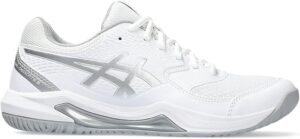
ASICS Women’s Gel-Dedicate 8 Tennis Shoes
Still a favorite on the courts! Check Amazon.
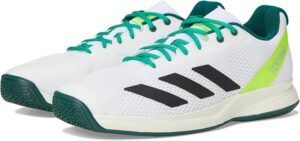
Mens Adidas Court Flash Pickleball Shoes
Mens Adidas Court Flash Pickleball Shoes On Sale! Check Amazon

As we age, HGH naturally declines. By the time someone reaches their 40s or 50s, levels can be significantly lower than they were in youth. This decline is associated with reduced muscle mass, slower recovery from exercise, increased body fat, and lower energy levels. While some people explore medical treatments, many scientists agree that lifestyle habits can significantly influence natural HGH production.

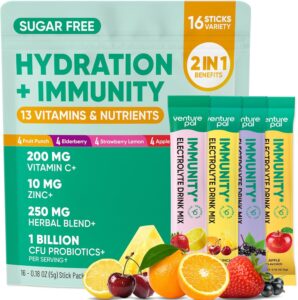
Liquid Hydration with vitamins
Venture Pal 2-in-1 Hydration + Immune Electrolytes Powder Packets with 7 Electrolytes & 6 Vitamins, Elderberry, Turmeric, Echinacea | Liquid Daily IV. Check Amazon

This is where pickleball enters the picture.

Pickleball may look like a simple recreational sport, but it actually contains many of the elements known to stimulate the body’s natural production of growth hormone. Short bursts of activity, quick movements, and interval-style exertion are all triggers for HGH release.

During a typical pickleball game, players sprint for a shot, recover quickly, reset, and then repeat. These bursts of effort resemble a form of high-intensity interval training (HIIT), which research has shown to stimulate growth hormone release. When your body experiences short, intense bouts of activity followed by recovery periods, the pituitary gland responds by increasing HGH output to help repair tissues and support muscle recovery.

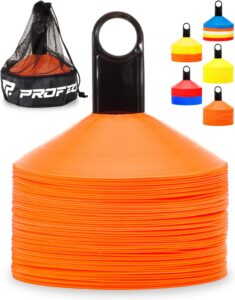
coach training cones
Every player needs these for training. Check Amazon

Another important factor is muscle engagement. Pickleball uses multiple muscle groups at the same time: legs for movement, core for balance, shoulders and arms for paddle control. This full-body involvement signals the body to repair and strengthen muscle fibers after play. Growth hormone plays a key role in that repair process.

Sleep is also deeply connected to HGH production, and regular physical activity like pickleball helps improve sleep quality. The largest release of growth hormone occurs during deep sleep. Players who exercise during the day often fall asleep faster and experience deeper rest, which in turn promotes higher nighttime HGH release.

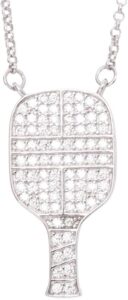
Hit Happy Pickleball Pendant with sterling silver
Material Sterling Silver
Metal type Platinum, Sterling Silver 
Clasp type Lobster
Chain type Cable
Gem type Cubic Zirconia Check Amazon

There is also a social component that indirectly supports hormone health. Pickleball is one of the most social sports in the world. Laughter, friendly competition, and connection with other players reduce stress hormones like cortisol. High levels of cortisol can suppress growth hormone production. When players are relaxed, engaged, and having fun, the body maintains a more balanced hormonal environment.

For players looking to maximize the HGH benefits from pickleball, a few simple habits can help.

Play with intensity during rallies. Move your feet, chase balls, and avoid standing flat-footed between shots.

Play regularly. Three to five sessions per week provides consistent stimulation for the body.

Strength train a couple times a week. Adding light resistance training supports the same muscle repair systems that rely on growth hormone.

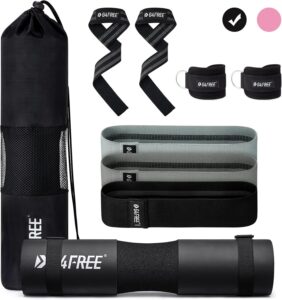
900 Bought This Month

G4Free 9Pcs Barbell Pad Set for Squat, Hip Thrusts, Lunges, Leg day, Standard Olympic Bars with 2 Gym Ankle Safety Straps, 3 Hip Resistance Bands, 2 Lifting
G4Free 9Pcs Barbell Pad Set for Squat, Hip Thrusts, Lunges, Leg day, Standard Olympic Bars with 2 Gym Ankle Safety Straps, 3 Hip Resistance Bands, 2 Lifting check Amazon
Pickleball Terry's Pickleball tour of Costa Rica.
Do you love pickleball? Do you love exploring nature and going on tours in another country? Then go to pickleballandcostarica.com


Prioritize sleep. Aim for seven to eight hours of quality sleep so the body can perform its nightly hormone release.

Finally, avoid excessive sugar and highly processed foods, which can interfere with hormone balance.

The beauty of pickleball is that it doesn’t feel like a workout. People show up to play, laugh with friends, compete a little, and enjoy being outside. Yet beneath the surface, the body is engaging powerful biological systems that promote strength, recovery, and long-term health.

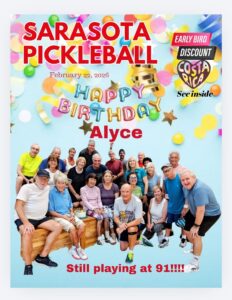
Cover of Sarasota Pickleball Magazine

In other words, every time you step onto the pickleball court, you may be doing more than just playing a game. You are giving your body one of the natural signals it needs to stay strong, resilient, and youthful.

Thanks for reading. Share your thoughts.
I love pickleball! Dinkpickleball@gmail.com

Pickleball Terry


So, You’re Playing in The US Pickleball Open: What You Should Know

Headline for What You Should Know About Playing in The US Open

So you’re going to the US Pickleball Open. Here’s what you should know.

By Pickleball Terry

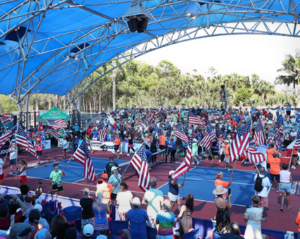
If you’re heading to Naples, Florida this April, congratulations—you’ve scored a seat at the most electric event in the sport. The 2026 Franklin US Open Pickleball Championships (April 11–18) isn’t just a tournament; it’s a milestone. This year marks a decade of dinks, and the 10th-anniversary celebration promises to be the biggest yet.

Whether you’re a first-timer or a seasoned “Naples Veteran,” here is the ultimate guide to navigating the 2026 Open.The US Pickleball Open

1. The Basics: When and Where

  • Dates: April 11 – April 18, 2026.

  • Location: East Naples Community Park (The USOP National Pickleball Center). 3500 Thomasson Dr, Naples, FL 34112

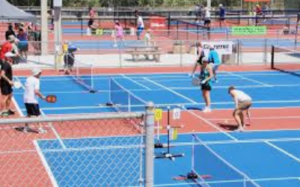
  • The Vibe: Expect over 3,000 athletes and 50,000+ fans. It’s high-energy, high-humidity, and purely addictive.

2. US Open PickleballTickets: The “Free” Secret

Most people think they need a ticket just to enter. You don’t. * Grounds Access is FREE: You can wander the expo, enjoy the food trucks, and watch pro and amateur matches on 59 of the 60 courts without paying a dime.

  • Championship Court: Tickets are only required for the Zing Zang Championship Court. These are usually handled via a lottery months in advance, but check the on-site ticket booth early in the morning for any last-minute “no-show” re-sales ($5 surcharge usually applies).

3. Survival Logistics: Parking & Heat

Naples in April is beautiful, but it can be brutal. Good news is that this is in early April so you might luck out and have lower temperatures. I have played in two Opens and did not have a problem with the heat or humidity. I live in Sarasota so I have acclimated to playing in Florida weather. Players that come down from the north are usually blown away by the humidity. I have seen people hanging out in the air conditioned bathrooms just for a break. I recommend bringing a sun umbrella for shade, and a cooler full of ice and water. Ice will hydrate you and the ice will cool you off. I will take a scarf and soak it in the ice water, wring it out and wear around my neck. Instant cooling.

  • Parking is Cashless: It costs $10/day or $60 for a weekly pass. Park at the onsite lot or the Sugden Park overflow lot. Don’t stress the walk; there are complimentary shuttles. No cash this year. Bring your credit card.

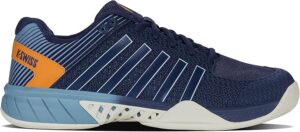
  • K-Swiss Men's Express Light Pickleball Shoe
    K-Swiss Men’s Express Light Pickleball Shoe Click Here

    Hydration is Non-Negotiable: The “Naples Humidifier” is real. Bring a refillable water bottle (glass isn’t allowed). The grounds have hydration stations and “mister” tents—use them before you think you need them. There is a couple of places to find relief from the sun. Inside the big tent where they have the T-shirts and paddles for sale.

  • The “Pro” Kit: Pack extra socks and shirts. By noon, you’ll likely want a fresh change. I see lots of changes during the day. Swamp feet is real.

    4. What to Bring 

  • Bring: A portable chair (bleachers fill up fast), a hat/umbrella for personal shade, and a credit card (the event is largely cashless).

  • Leave: Your glass bottles and outside alcohol. Also, while dogs are welcome on leashes in the park, they aren’t allowed inside the Championship Court area.

5. Pro-Tip: The Schedule Highlights

If you only have a few days, here’s how to prioritize and just want to be a spectator:

  • The First Weekend (April 11-12): Focuses on the Junior Championships and pro clinics. It’s great for families.

  • Friday, April 17: This is “Semifinal Friday.” The intensity is off the charts as pros battle for a spot in the finals.

  • Championship Saturday, April 18: The grand finale. This is where legends are made on the Zing Zang court.

6. Enjoy the “Party”

Between matches, head over to the Lightstrike Patio. There’s live music every afternoon, great food, and the “Expo Tent” is the best place on earth to test-drive new paddles or snag 10th-anniversary limited edition gear.

For a player, the “check-in” process at the US Open has evolved significantly for the 10th Anniversary in 2026. Gone are the days of standing in long lines every single morning.

The Athlete’s Guide: Nailing the Check-In

If you’re competing, your morning routine is the difference between a focused gold-medal run and a frantic, stressful start. Here is how to handle the “digital-first” check-in process for 2026.

  • Pick up early: Head to the Athlete Check-In Desk at the USOP National Pickleball Center as soon as you arrive in Naples (even if it’s the day before your event). Buy T-shirts and hats as souvenirs because they well out early.
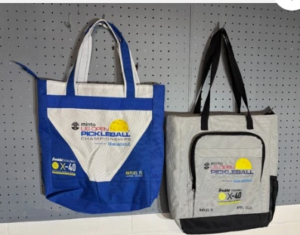
  • The Swag Bag: This is where you’ll grab your official 10th-anniversary player shirt and gear. Doing this a day early saves you from carrying a heavy bag around right before your first match.Us Pickleball Open Swag Bags

1. The “Auto Check-In” Revolution

For the 10th anniversary, the US Open has moved to automatic check-in through the Pickleball Den software.

  • No Daily Desk Visit: You no longer need to visit the physical check-in desk every morning to tell them you’re there.

  • How it works: As long as you are registered and paid, the system assumes you are ready to play. You just need to be physically present at the park and watching your phone.

2. The Physical Logistics (Credentials & Swag)

While daily check-in is digital, you still need your physical “Athlete Credential” to access player-only areas.

3. Mastering the “Den”

Pickleball Den is your lifeline. Make sure you have the following set up 48 hours before your first serve:

  • Text Alerts: Double-check that your cell number is correct in your profile. You will receive a text the moment your bracket starts and another when you have a Court Assignment. Once you get texted you have 10 minutes to get to your assigned court. There you warm up until the referee tells you to start. He/she gives you the basics, has one of the players pick a number 1 or 2, and the winner picks if they are going to serve first or the other team is going to serve first, OR, the pick a side they want to play on to start. If you have sun in your eyes, I recommend starting on the side with the sun at your back and try to get as many points as you can before you switch at six. You do get two times out. This year you MUST say TIME OUT before you leave the court. Players used to walk off before the opponents knew what was happening.  Oh, and don’t expect to have your court near the last one you played in. Hours later, you will be notified to play in a court that is way on the other side of the property.

  • The “En-Court” Button: Once your match is called, you’ll use the “En-Court Now” button in the app. This is how you see your opponents’ details and the specific court number.

4. The Paddle “Trap”

Don’t let a “failed” check-in happen at the court.

  • Approved List Only: For 2026, the US Open is strictly enforcing the USA Pickleball Approved Paddle List.

  • The Pro Tip: Referees may ask you to show a screenshot of your paddle on the approved list if it’s a newer or rare model. Have that screenshot ready in a “Pickleball” photo album on your phone to avoid a delay (or a forfeit).

5. Warm-Up Strategy

With 60 courts, you’d think there’s plenty of room, but warm-up space is a premium. It stinks because I like to play a few warm-up games before I play. Warning! There is a lot of down time meaning sitting on your butt waiting for your next game. This gives you time to walk around, watch your friends play, or shop in the tent. Food is available in a couple of food trucks and there is  barbecue chicken for sale in the tent, too.

  • The “Plexi” Courts: Most matches are played on the permanent asphalt/plexicushion courts. If you can, arrive 90 minutes early to snag a few dinks on the peripheral courts before they are locked down for tournament play. Good luck getting one.

  • Check the Monitor: There are giant LED “Flight Boards” near the vendor village showing live match progress. If you see your bracket is “On Deck,” stop what you’re doing and head toward your court cluster.


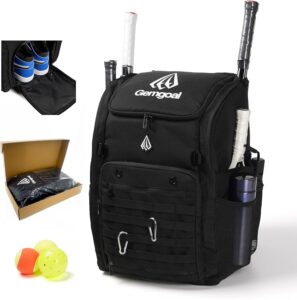
Gemgoal Pro Tournament 52L Pickleball Bag Ultimate Organization Holds 4-10 Paddles for 2 Players,Includes Ventilated Shoe Compartment,Separate Wet Dry...
Gemgoal Pro Tournament 52L Pickleball Bag Ultimate Organization Holds 4-10 Paddles for 2 Players,Includes Ventilated Shoe Compartment,Separate Wet Dry…CLICK HERE

Tournament days in Naples are marathons, not sprints. If you forget these, you aren’t just uncomfortable—you’re at a competitive disadvantage.

1. The Gear Essentials

  • Primary & Backup Paddle: Both must be on the USA Pickleball Approved list.

  • 2026 Rule Alert: Referees are performing more “spot checks.” If your primary paddle face delaminates or the grit wears down, you need a legal backup ready to go instantly.
  • Sunglasses. Oh my goodness, yes! Good ones with UAV protection.

    Nike Mens Adrenaline Sunglasses
    Nike Mens Adrenaline Sunglasses Click Here
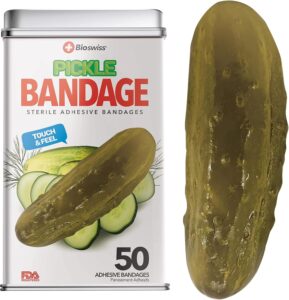
  • ♦Bandages: Between games, check for blisters.

    https://amzn.to/4sfkLIC
    Click Here
  • ♦Benadryl in case you get a bug bite.
  • ♦Advil or something like it for pain relief.

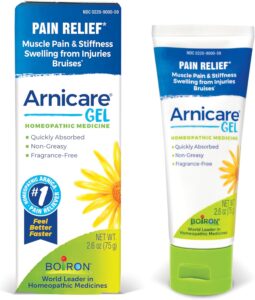
  • ♦Arnica gel in case you get hit by a ball.

  • https://amzn.to/3ODZUAl
    Click here

    WARNING! The “Visible Ball” Rule Fix: Under the new 2026 Rules (Rule 4.2), carrying a second ball in your pocket is a fault if it is visible to your opponent. If you like to keep a spare, ensure your pockets are deep enough to hide it completely, or leave it at the fence.

2. The Naples “Anti-Humidity” Kit

  • 4–5 Pairs of Performance Socks: The humidity makes your feet sweat faster than you’d believe. Changing your socks between every match prevents “trench foot” and keeps your movement sharp.

  • Towel or Extra Grips: In the Florida heat, your handle will become a slip-and-slide. Bring a towel or two to wipe off the sweat. An extra grip in case you need one.

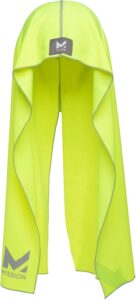
  • Cooling Towel: Keep one in your cooler on ice. Drape it over your neck during changeovers to instantly drop your core temperature.

    Mission cooling towel green
    Cooling towel

3. Nutrition & Fuel (Very important)

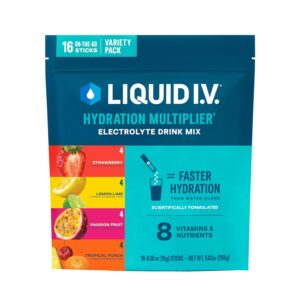
  • Electrolyte Heavy-Hitters: Water isn’t enough. Bring salt tabs, liquid IV, or magnesium supplements. Start “pre-hydrating” 24 hours before your first match.  Continue to hydrate all day long. There are places to fill up your water bottles around the courts. I have seen an ambulance take a couple of people away because they became over heated. Take care to actively keep yourself cool with ice and drink your water or juices.

    Liquid I.V.® Hydration Multiplier - Variety Pack - Lemon Lime, Passion Fruit, Strawberry, Tropical Punch | Electrolyte Powder Drink Mix | 1 Pack (16 Servings)
    Liquid I.V.® Hydration Multiplier – Variety Pack – Lemon Lime, Passion Fruit, Strawberry, Tropical Punch | Electrolyte Powder Drink Mix | 1 Pack (16 Servings) Click Here
  • “Quick-Burn” Snacks: Bananas, dates, or energy chews. Avoid heavy proteins right before play; your body needs its blood flow in your legs, not your stomach.

  • Mustard Packets or Pickle Juice: The “Naples Legacy” item. If you feel a cramp coming on, these are the emergency “shut-off” switches for your muscles.

  • Sunscreen (The “Face Stick” kind): Creamy sunscreens on your forehead will run into your eyes the moment you start sweating. Use a wax-based “stick” for your face and brow, or don’t apply to your forehead. Sunscreen on legs and arms is important also.

4. The “Mental Game” Misc

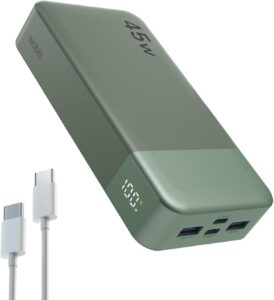
  • Portable Power Bank: Since match calls come via text in 2026, a dead phone = a forfeited match. Keep your lifeline charged.

    NOBIS Portable Charger, 20000mAh Power Bank, 45W Power Bank Fast Charging, Battery Pack with C to C Cable, Battery Bank with Digital Display
    NOBIS Portable Charger, 20000mAh Power Bank, 45W Power Bank Fast Charging, Battery Pack with C to C Cable, Battery Bank with Digital Display Click Here
  • And sometimes there is rain. Be prepared to have games delayed and even postponed for another day. I know people who took the day off from work to play in the Open but when there division was postponed to the next day, they had to go back to work and couldn’t play. Nor did they get their money refunded. These things will happen.

I live in Sarasota and did stay in Naples to play. It was a blast staying at a motel with other pickleball players. Do I recommend playing in the US Open? Absolutely! What a great experience.

If you want to have another wonderful experience where you play pickleball everyday and go on adventures, then check out my next pickleball trip to Costa Rica this December 14-21, 2026. This my second time leading pickleball lovers to an amazing pickleball resort in beautiful Costa Rica. Go to Pickleballandcostarica.com. Or email me at pickleballterry@sarasotapickleball.com.


Unsolicited Advice on the Pickleball Courts: Helpful or Harmful?

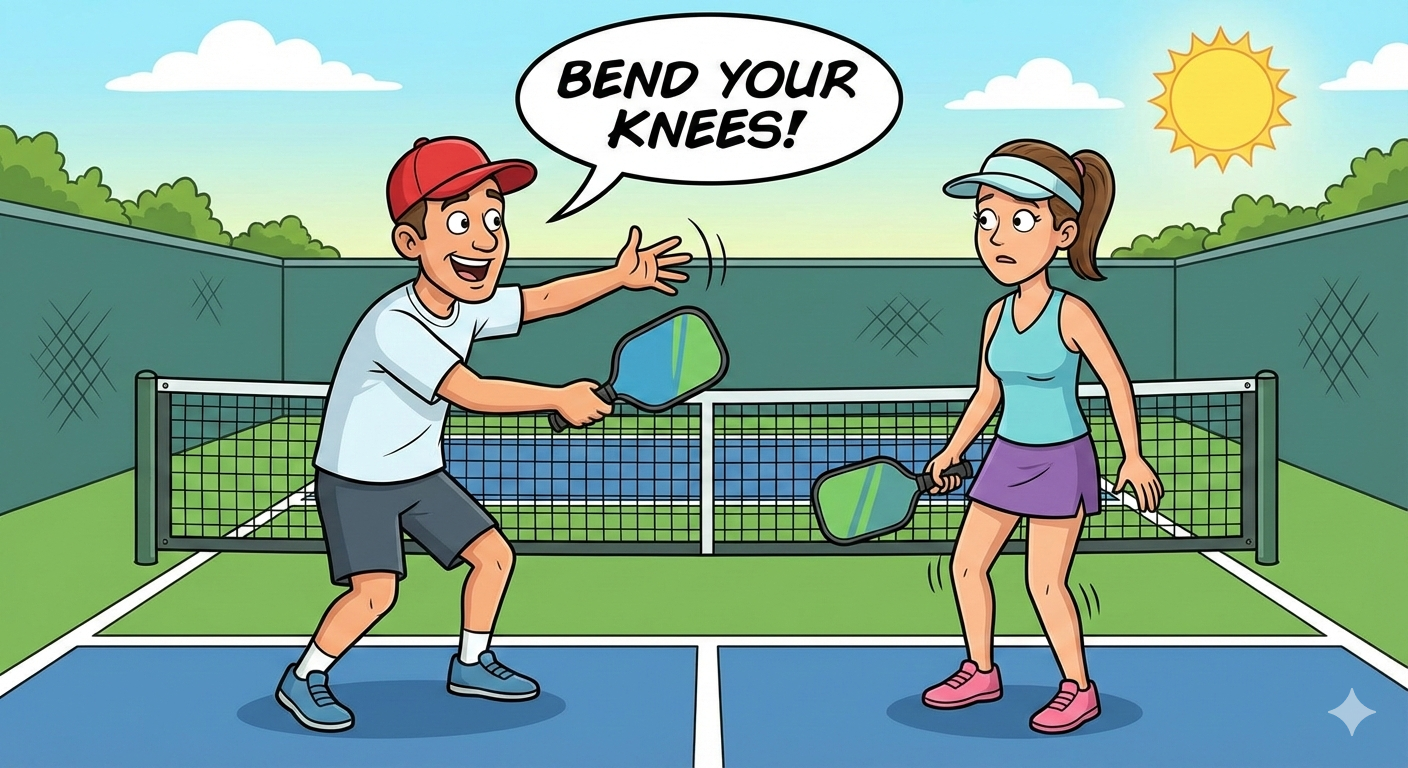
An image of a cartoon of two players with one yelling at the other one on a pickleball court saying bend your knees.

Unsolicited Advice on the Pickleball Courts: Helpful or Harmful?

By Pickleball Terry

Pickleball courts are one of the most social spaces in sports. Players of all ages and skill levels mix together, laugh between points, and often strike up conversations with complete strangers. That friendliness is part of what makes pickleball special. But there’s one court habit that can quickly turn good vibes into tension: unsolicited advice.

If you’ve played pickleball for more than a few weeks, you’ve probably experienced it. You miss a third-shot drop, and someone says, “You should really slow your swing down.” You pop up a dink and hear, “You need to get lower.” Sometimes it comes from a well-meaning partner. Sometimes it comes from an opponent. And sometimes it comes from the person waiting on the sideline who hasn’t even played the game yet.

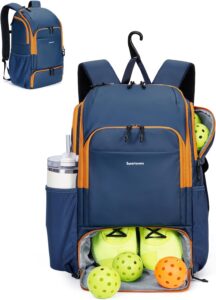
Pickleball bagCLICK HERE

The tricky thing about unsolicited advice is that it’s often given with good intentions. Many players genuinely want to help. They remember being beginners themselves and think a quick tip will speed up your progress. The problem isn’t always the advice, but it’s the timing, the delivery, and whether it was invited in the first place.

On recreational courts, most people are there to have fun, get some exercise, and enjoy the social aspect of the game. When advice is forced on someone mid-game, it can feel embarrassing or condescending, even if that wasn’t the intent. Instead of focusing on the next point, the player is now thinking about mechanics, posture, or grip, usually at exactly the wrong moment.

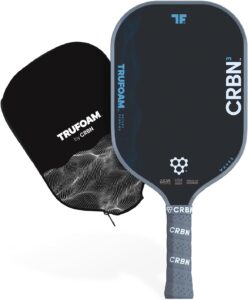
CRBN Foam paddleCLICK HERE

There’s also an unspoken hierarchy issue. Not all advice-givers are actually qualified to give advice. Pickleball is full of confident players who have played for a long time but may not fully understand proper technique. Bad advice can be worse than no advice at all, especially when it contradicts what a player is already working on.

So, when is advice appropriate?

A good rule of thumb is simple: wait to be asked. If someone comes up to you after a game and says, “Hey, do you have any tips for my serve?” That’s your green light. If your partner asks, “What do you think I should do differently?” then now you’re helping, not intruding.

If you truly feel compelled to say something, timing matters. Asking permission goes a long way. A quick, “Would you like a suggestion?” shows respect and gives the other person control. If the answer is no, let it go.

For players on the receiving end, it’s okay to set boundaries. A polite, “Thanks, I’m just out here to play today,” is enough. You don’t owe anyone an explanation.

“Thanks, I’m just out here to play today.”

Pickleball grows because it’s welcoming. Keeping advice invited and kind helps preserve the joy that brings people back to the courts again and again. Sometimes the best thing you can offer isn’t a tip, but it’s a smile, a good rally, and a genuine “Nice shot.”

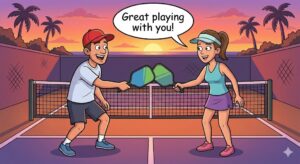
a sunset scene on a pickleball court with two players tapping paddles

Thank you for reading,

Pickleball Terry from Sarasota Pickleball on her pickleball trip to Costa Rica.
Claire, Kenan and Pickleball Terry in Costa Rica

Pickleball Terry

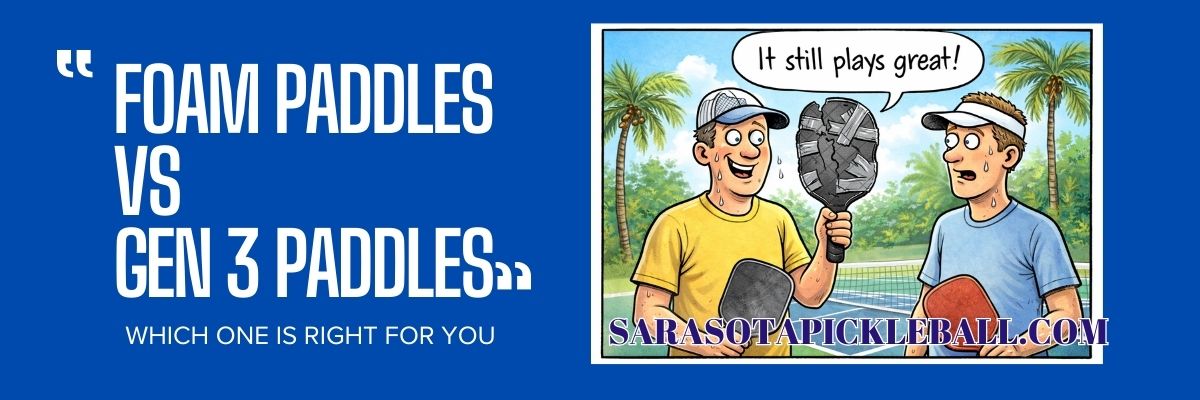
Foam Pickleball Paddles: What Players Need to Know About the Newest Paddle Trend

Foam Pickleball Paddles: What Players Need to Know About the Newest Paddle Trend

If you’ve been hearing more chatter about foam pickleball paddles, there’s a good reason. This new paddle technology is quickly gaining traction with recreational players, competitive amateurs, and even pros who are looking for more consistency, comfort, and long-term durability.

Traditional pickleball paddles use a polymer honeycomb core. While that design has worked well for years, many players have experienced “core crush” — a breakdown of the internal structure that leads to dead spots, unpredictable power, and reduced control over time. Foam paddles are designed to solve that problem.

Foam paddles use a high-density foam core instead of hollow cells. The result is a more solid interior that holds its shape longer and delivers consistent performance match after match. For players, that means the paddle you love on day one should feel very similar months down the road.

One of the biggest benefits players notice immediately is improved feel and control. Foam absorbs vibration extremely well, which creates a softer response on contact. Dinks feel more controlled, resets sit better in the kitchen, and mishits are more forgiving. Players dealing with tennis elbow or arm fatigue may especially appreciate the reduced shock.

Another advantage is the expanded sweet spot. Because foam distributes energy more evenly across the face, shots hit slightly off-center still travel cleanly. This is a big win for players working on consistency or transitioning into faster, higher-level play.

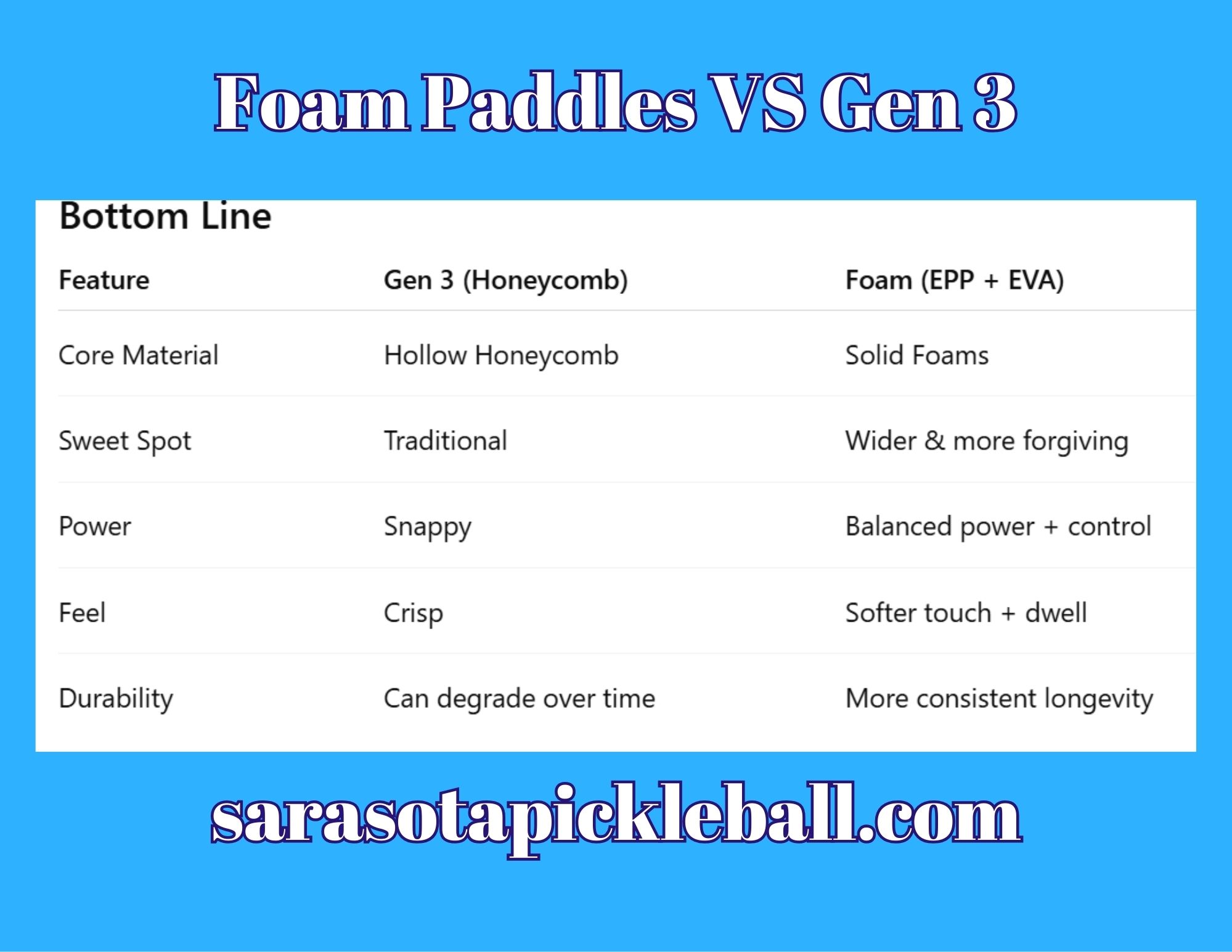
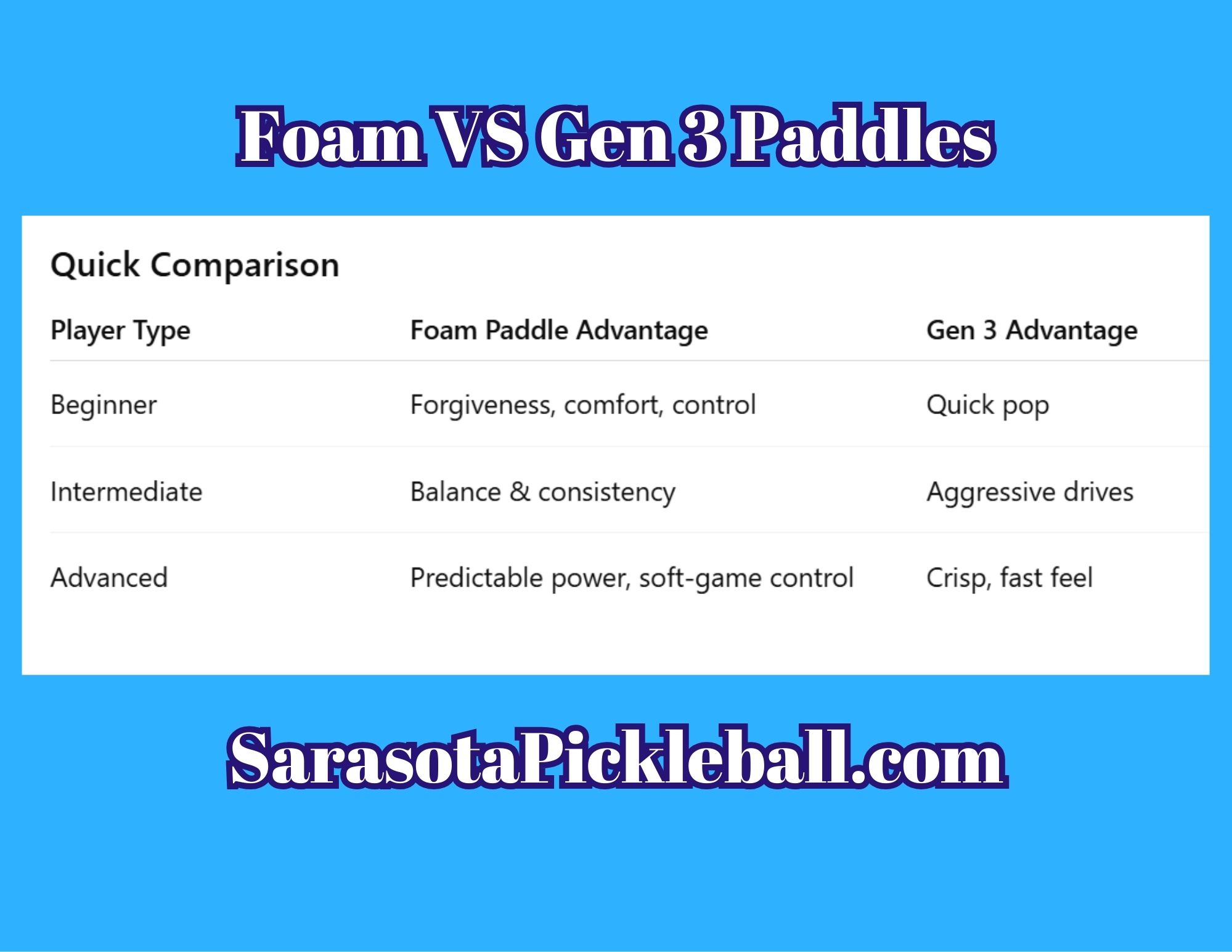
Power players won’t feel left out either. When paired with carbon fiber or textured faces, foam paddles can still generate plenty of pop and spin. The difference is that the power feels more controlled instead of explosive and unpredictable.chart of foam vs Gen 3 paddles

There are currently two main styles on the market:

  • Full foam paddles, which use foam throughout the entire core
  • Foam-enhanced paddles, which blend foam with traditional materials for added stability

So, who should consider switching? Players who value control, touch, durability, and comfort are excellent candidates. Foam paddles may feel slightly different at first, but many players adjust quickly — and don’t want to go back.

As paddle technology continues to evolve, foam paddles are shaping up to be one of the most meaningful upgrades the sport has seen. If consistency and feel matter to your game, foam might be worth a serious look.

EPP Foam Core vs EVA Foam: What’s the Real Difference?

EPP Foam (Expanded Polypropylene)

Think: structure, power, durability

What it is:
EPP is a rigid, resilient foam that rebounds quickly and resists permanent compression.

How it plays:

  • Produces more pop and power
  • Feels firmer at contact
  • Returns energy quickly to the ball
  • Maintains performance over time (less “break-in” change)

Why brands use it:

  • Excellent structural integrity
  • Very durable — resists core crush
  • Holds its shape after thousands of hits

Where it’s usually placed:

  • Center of the paddle core
  • Anywhere power and stability are neededFoam vs Gen 3 paddles chart

Best for players who:

  • Drive the ball
  • Play aggressive baseline or transition game
  • Want consistency over the life of the paddle

EVA Foam (Ethylene Vinyl Acetate)

Think: softness, control, dwell time

What it is:
EVA is a softer, more flexible foam commonly used in shoe midsoles and vibration dampening.

How it plays:

  • Feels plusher and quieter
  • Absorbs vibration
  • Softens mishits

Why brands use it:

  • Improves touch and control
  • Expands the sweet spot
  • Reduces arm fatigue

Where it’s usually placed:

  • Edges of the paddle
  • Around the perimeter or sidewalls
  • Rarely used alone as a full core

Best for players who:

  • Value dinks, drops, and resets
  • Want forgiveness on off-center hits
  • Deal with elbow or wrist issues

Why Many Paddles Use Both

The newest designs combine EPP + EVA to get the best of both worlds:

  • EPP in the center → power, structure, durability
  • EVA on the edges → softness, control, forgiveness

This dual-foam approach creates a paddle that feels explosive when you swing hard, but controlled and stable in the soft game.


Foam vs Gen 3 Pickleball Paddle: Quick Decision Checklist

Choose a FOAM Paddle if…

☐ You want a larger sweet spot
☐ You value control and touch over raw pop
☐ You struggle with off-center hits
☐ You play a strong soft game (dinks, drops, resets)
☐ You want consistent performance over time
☐ You prefer a quieter, softer feel
☐ You experience arm or elbow discomfort
☐ You want more forgiveness in fast-hand battles
☐ You like a paddle that feels stable at the edges

Best for:

  • Beginners
  • Control-focused intermediates
  • Players who build power through mechanics
  • Players prioritizing consistency and durability

 Choose a GEN 3 Paddle if…

☐ You like instant pop and quick rebound
☐ You play an aggressive power game
☐ You prefer a crisp, connected feel
☐ You generate pace with short swings
☐ You like a paddle that feels lively and fast
☐ You don’t mind a smaller sweet spot
☐ You frequently counterattack at the net
☐ You’ve used honeycomb paddles for years

Best for:

  • Advanced players
  • Power-first players
  • Fast hands & counter specialists
  • Players who like immediate feedback

🔍 Still Not Sure? Ask Yourself These 5 Questions

  1. Do I miss-hit often under pressure? → Foam
  2. Do I rely on pop more than placement? → Gen 3
  3. Do I want the paddle to feel the same all season? → Foam
  4. Do I want maximum speed off the face? → Gen 3
  5. Do I prioritize resets and drops? → Foam

Pickleball Terry’s Bottom Line

There’s no “better” paddle — only a better match for your game.

  • Foam paddles reward patience, control, and consistency.
  • Gen 3 paddles reward speed, aggression, and quick hands.

The best paddle is the one that lets you play confidently when points matter.

Sarasotapickleball.com

CRBN Pickleball – TruFoam Waves Paddle – Carbon Fiber Pickleball Paddle – 100% Foam Core Designed for Maximum Power, 14mm

Diadem Edge BluCore Pro Pickleball Paddle | Ultimate Power, Spin & Consistency, Extended Reach, Premium 18K Carbon Fiber, PowerSync Foam Core | USAPA Approved

JOOLA Ben Johns CAS Perseus or Hyperion 16mm Carbon Fiber Pickleball Paddle – CAS Surface Tech – Control & Power Paddle – USAP Approved – Aero Curve – Feel-Tec Pure Grip – NFC Chip


Thanks for reading!
Pickleball Terry

What Makes a Great Pickleball Coach (And What Doesn’t?) By Pickleball Terry

Title Image for What makes a great pickleball coach

By Pickleball Terry

As a pickleball coach, I’ve met many players who have taken lessons with different instructors, some fantastic, and some… not so much. When you’re spending your time and money to improve, you deserve more than someone who just feeds you balls and tells you to dink. A great coach can make a huge difference in your growth and enjoyment of the game.

A image of pickleball pasta for sale on Amazon
Pastabilities Pickleball Pasta- Funny and Unique Pickleball Gifts, Non-GMO Natural Wheat and Vegetable Pasta, All-Natural, Kosher Certified, Made in the USA

CLICK HERE

Unfortunately, I’ve also heard plenty of stories that make me shake my head. Have you experienced any of these?

  • Pickleball watch
    Score Keeper Watch for Pickleball Digital Wristwatch with Alarm, Stopwatch & Clock | Water Resistant, Lightweight & Easy

    CLICK HERE

    The coach who keeps looking at their watch during your lesson, like they can’t wait to be done.

  • The one who doesn’t show any genuine interest in you or your goals, your level, your progress. Ugh! What’s your last name? Where you are from?

  • Coaches who are just there for the money, not because they love teaching. They never smile, and look like they are irritated at you for being there. Whoa! I was at a clinic where a student said something about being bored with the drill we were doing, and the coach went off on her. He yelled for a good 5 minutes, about how it was his class and no one was going to tell him what to do…yada yada yada. It was awkward for the rest of us. Yikes! I made a mental note, that I would never do that to one of my students. And one day, that happened. I had a clinic and one of the students said she didn’t like the drill we were working on, and could we do something else? I said, “Sure!” and moved onto another drill. Everyone was happy. Hey, it’s their clinic and if they don’t like something or want to do something else, I don’t bat an eye. I happily move on.

A cartoon of two dogs laughing on the ground with a caption that reads when you finally convince them to play pickleball

  • The coach who yells, disrespects, or makes you feel small for making mistakes. I will not do this. I will not do this. I will not do this. I have slipped up and done this and I have repented. I will not do this again.

A cartoon of an chubby pickleball player

  • I’ve even seen coaches take phone calls while their student is paying for private time! This soooo bugs me. Unless it’s an emergency, don’t take the call. However, if a student gets a call and wants to answer, I have no problem with that. Also, the dang Apple watches where people stop in the middle of a lesson to read the text. Really??? That important? Concentrate of the lesson instead.

Mug with a funny pickleball saying

Click Here

  • Or the classic: you sign up for a private lesson, but when you show up, the coach’s cousin or buddy is on the court too, suddenly turning your private into a semi-private. Not a good move. Shows disrespect for the student that signed up for a private lesson.

  • Some coaches will stop abruptly the second the hour is up, even if you’re in the middle of learning something important. Buzzz. Their alarm goes off on their phones, Okay, lesson is over. Where’s the money? Very unprofessional. If things are going good, I’ll give them a 1/2 hour more. I want to make sure they are satisfied with the lesson. When I was a beginner, I took a lesson and the coach watched their time the entire lesson, and as soon as the hour was over, they were out of there.

A cartoon of two women talking on a pickleball court. A joke.

  • And this one. The coach who makes you pick up every ball while they stand there watching you. Oh my gosh, this actually happens more time than you think, especially if they are using a ball machine, blasting balls at the student until the machine runs out of balls. I call this lazy coaching. Then they make the student/students pick up the balls which takes up a lot of valuable lesson time. If you are an adult especially a senior, this is unusual punishment. Picking up 50 balls while the coach sits on the bench looking at their phone. No thank you! Half of your lesson should not be picking up balls.

Pickleball Machine – Full-Featured – Adjustable Topspin, Backspin, & Lobs, Random Oscillation, Ball Speed (20-60MPH),
Pickleball Machine – Full-Featured – Adjustable Topspin, Backspin, & Lobs, Random Oscillation, Ball Speed (20-60MPH) CLICK HERE

These are all signs of someone who isn’t fully invested in you.

A great coach does the opposite. They show up early, prepared, and fully focused. They take time to get to know you — your strengths, weaknesses, and goals. They don’t just bark orders; they encourage, explain, and guide. They give you their full attention and energy, and they genuinely care about your progress.

Most importantly, a good coach makes learning fun. You leave the court feeling encouraged, motivated, and excited to play again.

If you ever run into a coach who makes you feel like an afterthought, trust your gut — you deserve better. Pickleball is too great a game to waste on bad coaching experiences.

What Makes a Great Pickleball Coach?

Pickleball is growing at a rapid pace, and with that growth comes a surge of new players eager to learn. While anyone can hit a few balls and explain the rules, being a truly great pickleball coach takes more than just skill on the court. It’s about leadership, communication, passion, and creating an environment where players can grow.

1. Strong Fundamentals & Knowledge

A great coach has a solid understanding of the game — not just the rules, but strategies, shot selection, footwork, and court positioning. They stay current on evolving techniques and tournament trends, and they can break down complex plays into simple, actionable steps. Players trust a coach who can not only perform but explain why each shot or movement matters.

2. Clear Communication

Even the best drills are useless if they aren’t communicated well. Great coaches know how to explain things clearly and concisely, adapting their language to match the level of the student. Beginners need simple, encouraging guidance, while advanced players might benefit from more tactical, detailed feedback.

3. Patience & Positivity

Learning pickleball can be both exciting and frustrating. A great coach understands that mistakes are part of the journey. They stay patient, positive, and encouraging, helping students build confidence at their own pace. This supportive environment keeps players motivated and coming back.

4. Personalized Coaching

No two players are alike. A strong coach observes each player’s strengths, weaknesses, and learning styles, then tailors drills and strategies accordingly. Whether it’s refining a serve, improving footwork, or building doubles teamwork, personalization helps players improve faster.

Multi-Ball Retriever & Grabber, Portable for Courts, Easy Storage
Multi-Ball Retriever & Grabber, Portable for Courts, Easy Storage CLICK HERE

5. Passion & Energy

Great coaches bring enthusiasm to every session. Their love for the game is contagious. When players see their coach having fun and genuinely caring about their progress, they feed off that energy. Passion turns a lesson into an experience.

6. Leadership & Role Modeling

Lastly, great pickleball coaches lead by example. They model sportsmanship, respect, punctuality, and dedication.


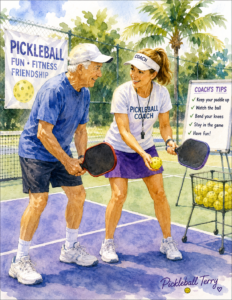
A great pickleball coach blends technical skill with human connection. They don’t just teach shots — they build confidence, community, and love for the game. And that’s what keeps players learning and thriving. I major in all the above. I share the love of the game and inspire people to get out and play. But, I’m not the only coach out there. I know a lot of great coaches. See who works best for you, and take some lessons to improve your game.

Thanks for reading,

Pickleball Terry

joke about pickleball score

Staying Hydrated on the Pickleball Court: Your Summer Survival Guide

A woman drinking water on a pickleball court


When the summer heat kicks in, staying hydrated isn’t just about comfort — it’s essential for performance and safety on the pickleball court. As temperatures rise, so does your body’s need for water and electrolytes. Whether you’re playing a quick game or grinding through a full tournament, hydration can be the difference between finishing strong or fizzling out.

Cartoon of man drinking water on a pickleball court and sarasota pickleball is printed on his shirt

Why Hydration Matters in Pickleball

Pickleball, while fun and social, is a high-intensity sport. It involves quick bursts of movement, constant direction changes, and extended time on the court — often under the blazing sun. This leads to sweating, which causes the body to lose not just water but also electrolytes.

Dehydration can lead to:

  • Fatigue and sluggishness
  • Muscle cramps
  • Dizziness or lightheadedness
  • Heat exhaustion or even heat stroke

The Role of Electrolytes

So, what are electrolytes? They’re essential minerals — including sodium, potassium, magnesium, calcium, and chloride — that help regulate muscle function, nerve signals, and fluid balance. When you sweat, these minerals are lost. If they’re not replaced, your muscles may cramp and your performance will drop.

diy electrolyte drink formula recipe card

Staying Hydrated on the Pickleball Court Your Summer Survival Guide 

Ice, Water, and Electrolytes: The Winning Combo

To stay safe and sharp during your summer pickleball sessions, here’s what you need to do:

1. Bring Plenty of Cold Water

Always bring more water than you think you’ll need. Insulated bottles or coolers with ice can help keep your water cold for hours — cold fluids not only hydrate but also help lower your core body temperature.

2. Add Electrolyte Supplements

Plain water is great, but when you’re sweating heavily, it’s not enough. Mix in electrolyte powders or drink ready-made electrolyte beverages. Popular options include:

Be sure to read the labels — some products contain high amounts of sugar, which isn’t ideal during sustained activity.

sports cooler
CLICK HERE

3. Pre-Hydrate and Re-Hydrate

Start hydrating before you step on the court. Sip throughout your games rather than waiting until you’re thirsty — thirst is a sign you’re already behind. After play, continue to hydrate to replace fluids lost through sweat.

Chill pad for sports
Click Here

4. Pack Extra Ice

Ice is your best friend in the summer. Use it to keep your drinks cold, cool yourself off between games, or even place it in a towel around your neck to lower your body temperature during breaks.

Under Armour Half Gallon Water Bottle Insulated, 64oz Insulated Water Bottle with Handle, Sports Water Jug, Fence Hook
Click Here

Cartoon of woman feeling ill on a court

5. Know the Signs of Dehydration and Heat Illness

Don’t push through if you feel:

  • Lightheaded
  • Nauseous
  • Excessively fatigued
  • Confused or disoriented

Take a break in the shade, drink fluids, and seek help if symptoms persist.

Neck fan
Neck fan Click here

Final Tips

  • Wear light, moisture-wicking clothing
  • Use a hat and sunglasses
  • Take frequent shade breaks
  • Avoid alcohol or excessive caffeine before play

Bottom Line:
Pickleball is meant to be fun, but the heat of summer adds a serious element to your preparation. Water, electrolytes, and ice are your three keys to staying safe, energized, and on top of your game. Hydrate early, hydrate often — and bring enough to share with a partner who forgot theirs!

Stay cool and dink smart.

Thanks for reading.
Pickleball Terry
941-400-0978

The Third Shot Drop in Pickleball

The third shot drop header for Sarasota Pickleball Organization

Mastering the Third Shot Drop in Pickleball: What It Is, How to Do It, and Why It Matters by Pickleball Terry

If you’re looking to level up your pickleball game, one shot you must understand and practice is the third shot drop. It’s a staple of smart, strategic play—especially in doubles—and often separates casual players from those with a more competitive edge.


Lilly Pulitzer Pickleball Bag for Women with Storage for 2 Paddles, Zipper Pocket, Waterbottle Sleeve and Gold Details, Serving it UpLilly Pulitzer Pickleball Bag for Women with Storage for 2 Paddles, Zipper Pocket, Waterbottle Sleeve and Gold Details, Serving it Up CLICK HERE FOR PRICE


What is the Third Shot Drop?

The third shot drop is exactly what it sounds like: a soft, arcing shot played on the third shot of a rally. Here’s the typical sequence: (Remember: The serving team does the Third Shot Drop.)

  • Serve (1st shot)
  • Return of serve (2nd shot)
  • Third shot drop

After you serve and your opponent returns the ball, you (or your partner) play the third shot. The goal is to gently drop the ball over the net into the opposing team’s non-volley zone (also called the “kitchen”), where it ideally lands softly and is difficult to attack. Sounds easy but it’s not. It’s much easier to drive the ball than to execute a Third Shot Drop. A little too high and you have just given your opponents an easy put-away. Or too soft and whoops! It lands on your side of the net. Plus it takes more brain energy to remember to use this shot successfully. Yes, it’s much easier to just slam the ball back and hope for the best. As you improve and play more advanced players, the Third Shot Drop becomes strategic to the game. You will not be able to drive a ball through advanced players who are stationed at the NVZ (non-volley zone). If you want to move up, it’s going to take more effort in the form of perfecting Third Shot Drop.


Pickleball Practice Rebounder Net: Pickleball Rebounder or 6FT Mini Pickleball Net Portable

Pickleball Practice Rebounder Net: Pickleball Rebounder or 6FT Mini Pickleball Net Portable CLICK HERE FOR PRICE


I tell my students that they have to practice the shot a thousand times ( A little dramatic but practice, practice, practice.) before they try to bring it to their game. If they don’t, too many errors and they have a better chance of a drive. But if they want to move up in level, they have to know this shot and be able to execute it.

Why is It So Important?

Pickleball is a game of positioning, and the most advantageous position is at the non-volley zone (NVZ). After serving, however, the serving team is at a disadvantage because they must stay back for the return. A well-executed third-shot drop allows the serving team time to advance to the NVZ safely.

If instead, you drive the ball hard on the third shot, it often results in an easy volley or put-away for your opponents. The drop shot neutralizes the return team’s advantage, forcing them to play a soft shot from below net level, giving you time to move up.

ASICS Men's Gel-Dedicate 8 Tennis Shoes
ASICS Men’s Gel-Dedicate 8 Tennis Shoes

How to Execute a Third Shot Drop

Here’s a breakdown of the mechanics:

Grip and Stance: Use a continental grip for better touch. Stay low with knees bent, paddle out front, and eyes on the ball.

Contact Point: Hit the ball after it bounces, ideally when it’s on the rise. Make contact in front of your body.

Soft Touch: Think of it like tossing an egg—you want to cradle the ball with a gentle lift, not a swat. The paddle motion is more of a slow upward arc.

Target Area: Aim to land the ball just over the net and into the kitchen. It should bounce low, making it hard for your opponents to attack.

Consistency: This shot takes time to master. Focus on control, not power. Drilling this repeatedly is key.

Reebok Women's Nano Court SneakerCLICK HERE

When to Use It

While the third shot drop is most common after a return of serve, you can also use drop shots later in the rally when you’re pushed to the baseline. It’s especially effective against aggressive players who hug the net and are looking for opportunities to smash.

Final Thoughts

The third shot drop isn’t flashy, but it’s fundamental. By giving your team time to move up and take control of the net, you turn defense into offense. It requires patience, finesse, and practice—but once mastered, it becomes a game-changer.

So the next time you step on the court, don’t just drive the ball—drop it with intention. Your future self (and your partner) will thank you.

Thank you for reading,
Pickleball Terry
SarasotaPickleball.com

Pickleball Terry at her pickleball clinic with students in Sarasota, FL

The Difference in Balls in Pickleball

The difference in pickleballs

Ball wars do happen. What do I mean by “ball wars”? These are disagreements that occur on pickleball courts over the type of balls being used. Some players prefer the Franklin ball, while others favor the Dura 40. Additionally, some players prefer the orange ball, while others insist on using only the green one. I’m referring specifically to outdoor balls, which are harder and have 40 small holes. In contrast, indoor balls have 26 holes, are softer, and are designed for gym floors, making them slower than outdoor balls. I’ve seen players switch balls mid-game, provoking their opponents when they discover that the ball they wanted to use is missing.
Man thinking about whick pickleball to use

Pickleball may be simple to learn, but choosing the right equipment can make a big difference in your performance—especially when it comes to outdoor pickleballs. Unlike their indoor counterparts, outdoor balls are designed to handle wind, rougher surfaces, and the elements. But not all outdoor balls are created equal.

Let’s dive into the different types of outdoor pickleballs, what sets them apart, and how to choose the right one for your game.


https://amzn.to/4cpbOWh

CLICK HERE FOR PRICE

Key Features of Outdoor Pickleballs

Outdoor pickleballs:

  • Have smaller, more numerous holes than indoor balls (usually 40 holes).

  • Are heavier and harder to cut through wind resistance.

  • Bounce lower and travel faster than indoor balls.

  • Tend to wear out faster due to the rougher court surfaces and impact.

With that in mind, here are the most popular types of outdoor pickleballs and what makes each one unique.

dura 40 pickleballCLICK HERE TO SEE PRICE


1. Dura Fast 40

Best for: Tournament play and experienced players

  • Feel: Hard and fast, offering consistent bounce and true flight.

  • Durability: Known to crack sooner than others, but widely used in official tournaments.

  • Playability: Favored by pros for its speed and precision.

Fun fact: The Dura 40 is the official ball of many major tournaments, including the USA Pickleball National Championships.


Franklin 40 for pickleball
For price click on pictures

2. Franklin X-40

Best for: All-around players and clubs

  • Feel: Slightly softer than the Dura, but still fast and responsive.

  • Durability: More durable than the Dura, especially in hot weather.

  • PlayOnix Fuse outdoor pickleballs in orangeClick here for price

  • 3. Onix Fuse G2

Best for: Beginners and intermediate players

  • Feel: Softer and quieter with a slightly higher bounce.

  • Durability: Highly durable and less prone to cracking.

  • Playability: Easier to control, making it great for learning and casual play.

The Fuse G2 is a comfortable option for players transitioning from indoor to outdoor play.


Core pickleballs in greenCLICK HERE FOR PRICE

4. CORE Outdoor Pickleballs

Best for: Durability and value

  • Feel: Similar to Franklin, but with a slightly firmer touch.

  • Durability: Designed to withstand high impact and rough surfaces.

  • Playability: Consistent bounce and good visibility, especially in yellow or neon.

CORE balls are growing in popularity due to their balance between pro-level performance and long-lasting play.


Anna Leigh Waters cheering

Choosing the Right Outdoor Pickleball

When selecting a ball, consider:

  • Your skill level: Beginners may prefer softer, slower balls for easier control.

  • Playing conditions: Harder balls perform better in windy conditions.

  • Frequency of play: If you play often, look for a ball with a reputation for durability.

  • Tournament rules: If you’re playing competitively, check which balls are USAPA-approved.


The best outdoor pickleball for you depends on your goals and playing environment. Whether you’re a weekend warrior or aiming for tournament gold, experimenting with a few types is the best way to find your match. Remember—your paddle and your strategy matter, but so does your ball.

 🇺🇸 Made in USA Pickleball Gear

Support American-made quality with this curated gear guide

Comparison Chart

Brand Product Type Made in USA? Notes
Selkirk Sport Paddles ✅ Yes Premium paddles made in Idaho. Trusted by pros.
Paddletek Paddles ✅ Yes Made in Michigan. Great for control and feel.
Engage Paddles ✅ Yes Designed and produced in Florida.
GAMMA Sports Paddles ✅ Mostly Innovative tech; made in Pittsburgh.
Franklin Balls ❌ No Manufactured in China.
Dura Balls ❌ No Formerly USA-made, now produced in China.
Onix Balls & Paddles ❌ No Designed in the US, made overseas.
American Giant Apparel ✅ Yes Durable athleticwear, made entirely in the USA.
Locale Pickleball Co. Apparel ✅ Some items Small brand. Check tags for origin.

And then there are indoor balls

🏠 What Makes Indoor Pickleballs Different?

Indoor pickleballs are built specifically for smoother, hard court surfaces with no wind or weather interference. Here’s how they stand out:

Key Features:

  • Fewer holes: Usually 26 larger holes (vs. 40 smaller ones in outdoor balls)

  • Softer plastic: Makes for slower play and better control

  • Quieter: Less noise during rallies—great for gyms and shared spaces

  • Higher bounce: Helps compensate for slicker surfaces


🔵 Top Indoor Pickleballs (and How They Compare)

1. Jugs Indoor Pickleballs

  • Feel: Soft and lightweight

  • Bounce: Higher than most—great for slower indoor courts

  • Durability: Very durable; holds up well on hardwood and tile floors

  • Best for: Beginners, casual play, and schools

📝 Note: Jugs are not USAPA approved for tournament play—but they’re a fan favorite for recreational use.


I love this skirt with leggings. So soft and nice high waist. Wish it came in more colors.

black tennis skirt with ruffles and leggins.

CICK HERE FOR PRICE


2. Onix Fuse Indoor Pickleballs

  • Feel: Slightly firmer than Jugs

  • Bounce: Consistent with a smooth feel

  • Durability: Excellent; designed for extended indoor use

  • Best for: Competitive recreational players, clubs, and training

📝 The Onix Fuse Indoor ball is USAPA-approved, which makes it a solid pick for league play.


3. Franklin X-26 Indoor Pickleballs

  • Feel: Very balanced—between soft and firm

  • Bounce: Consistent, slightly lower than Jugs

  • Durability: Good; may crack over time with heavy use

  • Best for: Players who like a bit more control and quieter hits

📝 Great for controlled rallies and technical play indoors.


4. CORE Indoor Pickleballs

  • Feel: Firm and responsive

  • Bounce: Consistent and slightly livelier

  • Durability: Designed for high-usage environments like rec centers

  • Best for: Players transitioning from outdoor to indoor

📝 A newer player in the market, but gaining popularity quickly.


⚖️ Indoor Ball Comparison Chart

Brand Holes USAPA Approved? Bounce Durability Best For
Jugs 26 ❌ No High High Beginners, schools, rec play
Onix Fuse 26 ✅ Yes Medium Very High Clubs, leagues, consistent play
Franklin X-26 26 ✅ Yes Medium Moderate Technical/control players
CORE 26 ✅ Yes Medium-High High Versatile indoor players

🎯 How to Choose the Right Indoor Pickleball

  • New to the game? Try Jugs—they’re forgiving and fun to play with.

  • Want tournament-ready play? Onix Fuse or Franklin X-26 are safe bets.

  • Looking for all-around durability? CORE Indoor or Onix Fuse are your go-tos.

So there you go. I remember the days when we were just happy to have a jug ball, but times have changed, pickleball has advanced, and so have the players.

Keep playing pickleball.

Thanks for reading,
Terry Ryan
A.K.A. Pickleball Terry

  • © 2025 Sarasota Pickleball Organization | All rights reserved