How to Rattle Your Opponents

For pickleball players of all skill level 941-400-0978
By Pickleball Terry
Back in August I wrote about the potluck where the guy across from me said we have to work twice as hard at staying in shape now. Boy, was he right. But work at what, exactly?
Pickleball is a workout. We all know that. Give me a few hours of open play and my Fitbit starts buzzing. The game asks a lot of our legs, our balance and our reactions, and that’s one more reason I love it.
So, here’s the problem. Pickleball uses that quick first step, that balance and whatever we have left from the last time we played. It doesn’t build much of that. That part we have to do ourselves, off the court.
HOW WE GET HURT
Somebody counted ten years of emergency room visits for pickleball injuries, and more than 85% of the injured players were 60 or older. No surprise there. But look at how we get hurt, here in Sarasota like everywhere else. Nearly 2 out of 3 of those visits came from slips, trips, falls and dives. The younger crowd pulls something lunging for the ball. We’re the ones more likely to break something on the way down. In the most recent count, all ages in, fractures made up about a third of the diagnoses.
Yikes! Nobody in those numbers got hurt just for being 65. The chart says slip, trip, fall or dive, and the way I read that, a foot got there a half step late or a leg couldn’t stop, and down they went. A fall can change your life in seconds. I said that back in August. But catching yourself is a skill, and skills can be drilled.
BUILD THE QUICK KIND OF STRENGTH
Strength and quick strength are two different things, and the quick kind goes faster. A study of 100 healthy people between 65 and 89 found that plain strength ran about 1 to 2% lower for every year of age across that range. Leg power, the quick kind, ran closer to 3.5% lower a year, and the gap between the two was clear in the men, less so in the women.
On the court, that quick strength is the first step up to the kitchen and the hard stop once you get there. It’s also the turn and go when a lob sails over your head.
So, what’s the plan? The exercises in my leg strength post (squats, lunges, step-ups, resistance bands) are still the right ones. The change I’d suggest, once the regular version feels easy, is a little speed on the way up. Stand up from the squat like the ball is already on its way, as fast as you can control. Then come back down slowly. Two days a week, 20 minutes, on days you don’t play. A big review of strength training in older people found that most programs ran two to three times a week and had people working hard. That made a big difference in strength and a solid one in getting out of a chair.
If you’re new to strength training, get some instruction first. That can be a trainer at the Y, a physical therapist or a coaching app such as huuman that plans your strength days around your court days. Any of the three will keep you from guessing at how much and how often.
PRACTICE THE STEP THAT CATCHES YOU
Balance needs practice just like your pickleball serve does. Standing on one foot by the kitchen sink at home is a start. What saves you on the court is one fast step that catches you.
Studies have looked at exactly that. Seven of them put people 60 and up through stepping practice. Sometimes on cue, sometimes to catch themselves after a nudge. Those people cut their falls roughly in half. In the studies that measured it, reaction time and balance got better. Strength didn’t budge, so stepping is its own skill. Another review, a huge one with more than 23,000 people, found that balance and functional exercise cut falls by about a quarter. Balance plus strength together probably cuts them by about a third.
What catches you out there? One good step. So here’s a simple court drill, no ball required. Start at the kitchen line with a partner right in front of you. They call out left, right or back (for back, turn and step, never run backwards). You take one fast step that way and get back to your ready position. Ten calls each, then switch. At home, stand next to the kitchen counter, let yourself tip forward just a little, on purpose, and catch yourself with one step. Then do the same to each side a few times. Keep a hand close to the counter every time. And if you’ve had a fall this year, have a physical therapist watch you do this one first. Do it for two minutes while you warm up, before you start dinking.
RESPECT THE DAY AFTER
In June I wrote that recovery takes longer as we get older. Turns out it’s more complicated than that. One look at 36 studies compared older and younger people after the same hard exercise. Muscle function came back no slower in the older group at 24 and 72 hours. The younger group was actually more sore.
So, our muscles come back no slower than the 30-year-olds’ on the next court. The difference is what we do in between. Play a game then sit out two. Don’t play every day. Give yourself one real rest day a week, and walking counts. Walking was number one on my list back in August anyway.
And please get your sleep. One study followed nearly 3,000 women, all 70 or older and most of them in their 80s, for a year. Compare the ones getting 7 to 8 hours with the ones sleeping 5 hours or less a night. The short sleepers had about one and a half times the odds of falling twice or more that year. Perhaps sleep is balance training too. If you want more on recovery and sleep, the sleep and recovery overview on the huuman blog has plenty.
WHAT I’D ADD TO YOUR WEEK
Play 3 days a week and sit out a game now and then.
Do your 2 strength days, 20 minutes each, up fast and down slow, not on court days.
Do 2 minutes of step-and-catch before you dink.
Take one full rest day. Walking is allowed.
Sleep 7 to 8 hours, more after a tournament.
And if anything creaks for more than a few days, see a medical professional instead of playing through it. I know, I know. (I once played on a broken toe. Do as I say…not as I did.)
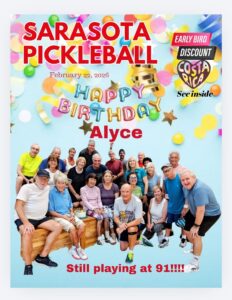
Ray is 93 and still playing. None of us is promised that. But two short strength days, two minutes of stepping and a good night’s sleep are things we can start this week, and I’d say that’s not much to ask for many more mornings out on the court.
Thanks for reading,
Pickleball Terry
Dinkpickleball@gmail.com
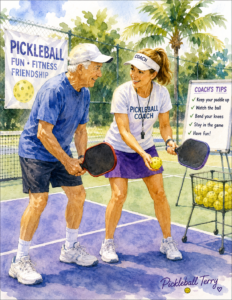
Somebody asked me the other day this question: “Can you make a living coaching pickleball?” So, I decided to write this article.
If you’ve ever watched professional pickleball on television, you’ve probably wondered: Can these players really make a living playing pickleball?
The short answer is yes, but only for a relatively small number of players.
As pickleball has exploded in popularity, so have the opportunities to earn money. Professional tours now offer larger prize pools, television coverage, sponsorships, and team contracts. But the reality is that most pros don’t make their living from tournament winnings alone.
Let’s start with the stars.
Elite players such as Anna Leigh Waters, Ben Johns, Federico Staksrud, and Anna Bright have become household names in the pickleball world. They earn money from multiple sources, including tournament winnings, Major League Pickleball (MLP) salaries, sponsorships, appearance fees, clinics, and endorsement deals. For the very top players, total annual earnings can reach well into the six figures, and a handful may even surpass the million-dollar mark when all income streams are combined.
But that’s the exception and not the rule.
The majority of professional players earn their income from several sources. Tournament prize money is only one part of the equation. A player may have a strong weekend on the PPA or APP Tour, but if they don’t consistently finish near the top, those winnings can disappear quickly after paying for airfare, hotels, meals, coaching, and entry fees.
That’s why many professionals teach lessons and clinics when they aren’t competing. Private instruction, weekend camps, corporate events, and exhibitions can provide a steady income while also helping players build their personal brand.
Sponsorships have also become increasingly important. Paddle manufacturers, apparel companies, shoe brands, and nutrition companies often sponsor players to represent their products. Some athletes earn additional income through signature paddles, affiliate partnerships, YouTube channels, podcasts, and social media content.
Another significant source of income is Major League Pickleball (MLP). Unlike traditional tournaments, MLP is a team-based league where players are drafted by franchises. Team salaries vary, but for many professionals, MLP provides another valuable paycheck during the season.
The truth is that today’s successful pickleball professionals are more than just athletes; they’re also entrepreneurs. They understand that building a career means teaching, creating content, working with sponsors, connecting with fans, and growing their reputation both on and off the court.
So, can you really make a living playing pickleball?
Absolutely—but it takes much more than having a great forehand.
Like golfers, tennis players, and other professional athletes, the best pickleball players build multiple streams of income. Tournament success opens doors, but personality, professionalism, and business savvy often determine who enjoys a long and successful career.
As the sport continues to grow, so will the opportunities. Larger tournaments, increased television exposure, new sponsors, and expanding professional leagues are creating careers that simply didn’t exist a few years ago.
For now, the dream of making a living in pickleball is very real—but for most players, success comes from treating pickleball not just as a game, but as a business.
But how about the average local PPR Pickleball coach. Can they make a living
Can the Average Local Pickleball Coach Really Make a Living?
Every pickleball player knows someone who teaches lessons. Maybe it’s the PPR-certified coach at your local park, the instructor running beginner clinics at the YMCA, or the coach giving private lessons every morning. It raises an interesting question:
Can the average local pickleball coach actually make a living?
The answer is yes—but it’s usually not by teaching lessons alone.
Let’s do some simple math.
Suppose a coach charges $75 an hour for private lessons. That sounds great until you realize they’re not teaching eight hours a day, five days a week. Most lessons happen in the mornings or evenings, and weather, vacations, and court availability all affect the schedule.
Even if a coach teaches four private lessons a day, five days a week, that’s about 20 lessons per week, or $1,500 in gross income. But from that, they still have to pay taxes, insurance, equipment, travel, certification fees, and often court rental fees.
That’s why successful coaches rarely rely on just one source of income.
Many combine private lessons with beginner clinics, group classes, camps, round robins, corporate events, and tournament directing. Some sell paddles or apparel. Others create YouTube channels, write books, publish newsletters, or partner with local businesses. The most successful coaches understand they’re not just teaching pickleball—they’re running a business.
Another challenge many people overlook is finding students.
Being a great player doesn’t automatically make someone a successful coach. Coaches have to market themselves, answer emails, maintain a website or social media presence, schedule lessons, and build a reputation through excellent customer service. Word-of-mouth referrals become incredibly valuable.
Location also matters. A coach in a pickleball hotspot like Sarasota, Naples, or The Villages may have far more opportunities than someone in an area where the sport is still growing.
One advantage local coaches have over touring professionals is stability. While professional players spend much of the year traveling, local coaches often build long-term relationships with students. They watch beginners improve, help players prepare for tournaments, and become part of the local pickleball community. That can be both personally rewarding and financially sustainable.
So, can the average local PPR-certified coach make a living?
Yes—but only if they think like an entrepreneur. The coaches who succeed are usually the ones who diversify their income, build strong relationships, and continually look for new ways to provide value.
In today’s pickleball economy, the paddle may be your tool, but your business skills are just as important as your backhand.
Bottom line: The coaches making the best living aren’t necessarily the best players. They’re the ones who combine solid coaching with smart business, excellent communication, and a genuine passion for helping others enjoy the game.
By Pickleball Terry
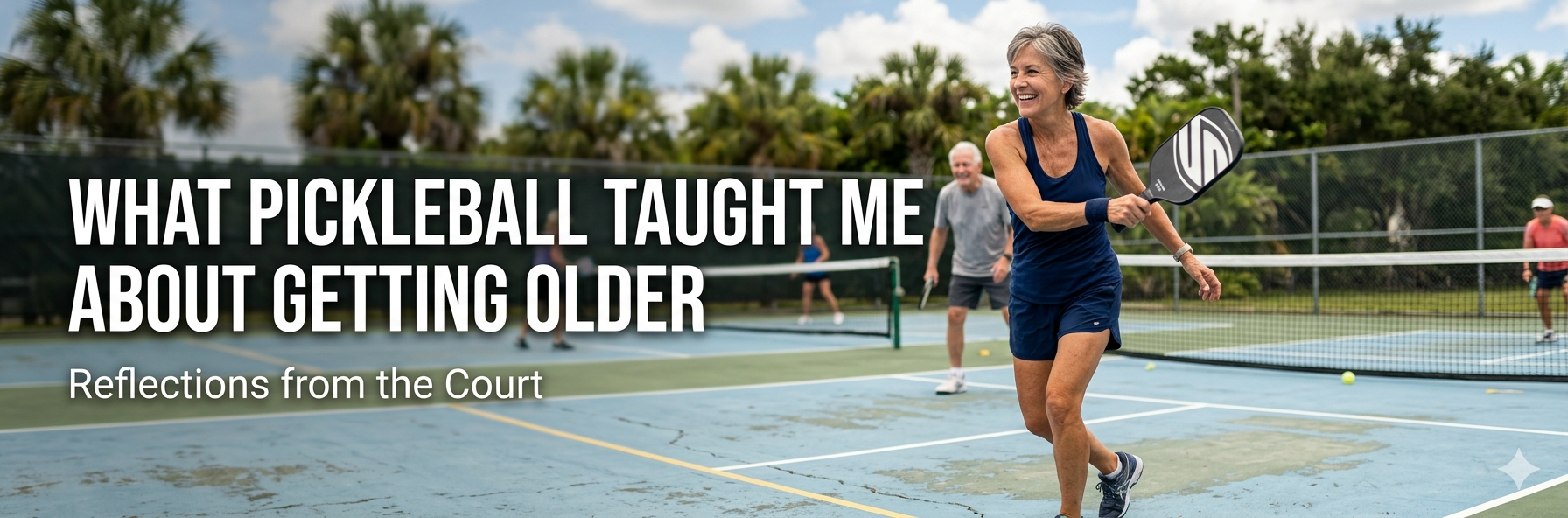
When I first picked up a pickleball paddle, I thought I was signing up for exercise. Like many people, I wanted to stay active, keep moving, and maybe lose a few pounds. What I didn’t realize was that pickleball would teach me some valuable lessons about getting older.

One of the biggest surprises was learning that age doesn’t have to define what you can do. Society often sends the message that after a certain age, you should slow down, sit back, and watch life happen from the sidelines. Then I stepped onto a pickleball court and saw people in their seventies, eighties, and even nineties running, laughing, competing, and enjoying life. It completely changed my perspective on aging.
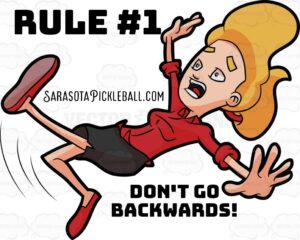
Pickleball also taught me that staying young has less to do with your birth certificate and more to do with your attitude. I have met players who are eighty years old and act forty, and I’ve met people who are fifty and have already given up on trying new things. The players who seem happiest are the ones who continue to challenge themselves, learn new skills, and stay curious.
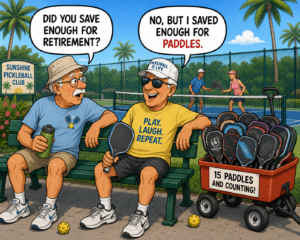
Another lesson was the importance of friendship. As we get older, making new friends can become surprisingly difficult. People retire, move away, or become busy with family obligations. Yet pickleball has a way of bringing people together. Some of my closest friendships started with a simple question: “Need a partner?” The court creates connections that often extend far beyond the game itself.
Perhaps the most important lesson pickleball taught me is that purpose matters. Many people struggle after retirement because they lose the routine and social interaction that work once provided. Pickleball gives people a reason to get up in the morning. It provides goals, friendships, laughter, and a sense of belonging. That is powerful at any age.
Of course, getting older still comes with its challenges. The knees may ache a little more. Recovery takes longer. Sometimes the mind knows exactly what to do, but the body doesn’t quite cooperate. Yet pickleball reminds me that perfection isn’t the goal. Participation is. Showing up, having fun, and staying engaged in life are victories in themselves.

What pickleball ultimately taught me is that getting older doesn’t mean the adventure is over. In many ways, it’s just beginning. As long as there is a paddle in my hand, friends on the court, and another game to play, I have something to look forward to tomorrow.
 Thanks for reading,
Pickleball Terry
Dinkpickleball@gmail.com
By Pickleball Terry
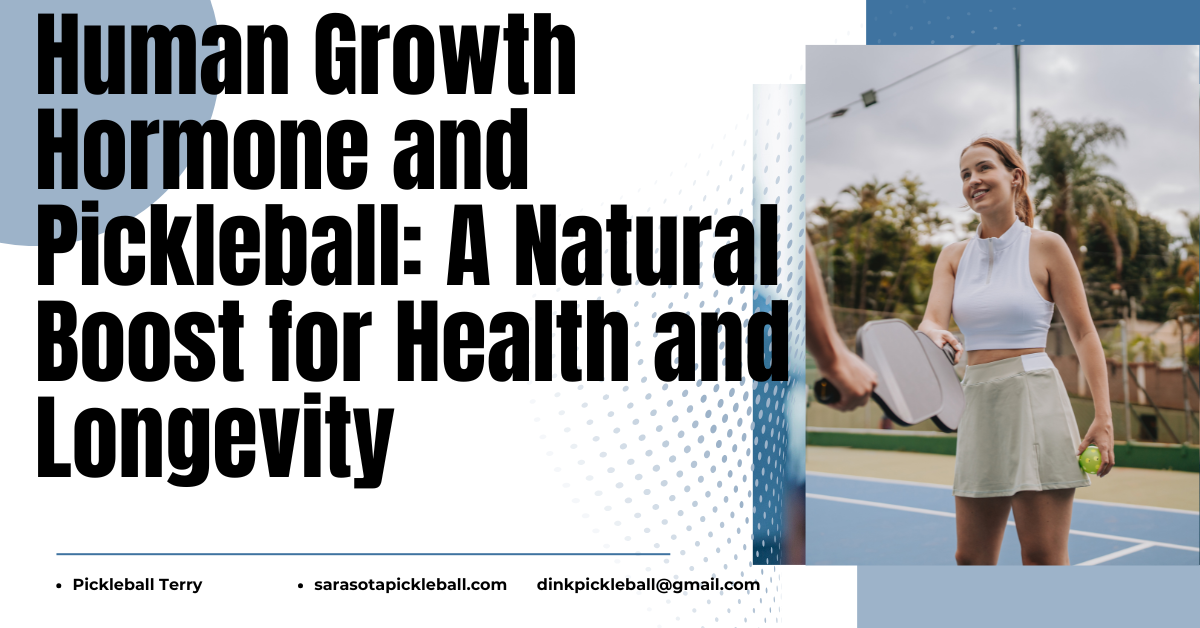
Human Growth Hormone (HGH) is one of the body’s most important hormones when it comes to health, energy, recovery, and aging. Produced by the pituitary gland, HGH plays a major role in muscle growth, fat metabolism, bone density, and cellular repair. When people talk about “feeling young,” a lot of that vitality is connected to healthy levels of growth hormone circulating through the body.
As we age, HGH naturally declines. By the time someone reaches their 40s or 50s, levels can be significantly lower than they were in youth. This decline is associated with reduced muscle mass, slower recovery from exercise, increased body fat, and lower energy levels. While some people explore medical treatments, many scientists agree that lifestyle habits can significantly influence natural HGH production.
This is where pickleball enters the picture.
Pickleball may look like a simple recreational sport, but it actually contains many of the elements known to stimulate the body’s natural production of growth hormone. Short bursts of activity, quick movements, and interval-style exertion are all triggers for HGH release.
During a typical pickleball game, players sprint for a shot, recover quickly, reset, and then repeat. These bursts of effort resemble a form of high-intensity interval training (HIIT), which research has shown to stimulate growth hormone release. When your body experiences short, intense bouts of activity followed by recovery periods, the pituitary gland responds by increasing HGH output to help repair tissues and support muscle recovery.
Another important factor is muscle engagement. Pickleball uses multiple muscle groups at the same time: legs for movement, core for balance, shoulders and arms for paddle control. This full-body involvement signals the body to repair and strengthen muscle fibers after play. Growth hormone plays a key role in that repair process.
Sleep is also deeply connected to HGH production, and regular physical activity like pickleball helps improve sleep quality. The largest release of growth hormone occurs during deep sleep. Players who exercise during the day often fall asleep faster and experience deeper rest, which in turn promotes higher nighttime HGH release.
There is also a social component that indirectly supports hormone health. Pickleball is one of the most social sports in the world. Laughter, friendly competition, and connection with other players reduce stress hormones like cortisol. High levels of cortisol can suppress growth hormone production. When players are relaxed, engaged, and having fun, the body maintains a more balanced hormonal environment.
For players looking to maximize the HGH benefits from pickleball, a few simple habits can help.
Play with intensity during rallies. Move your feet, chase balls, and avoid standing flat-footed between shots.
Play regularly. Three to five sessions per week provides consistent stimulation for the body.
Strength train a couple times a week. Adding light resistance training supports the same muscle repair systems that rely on growth hormone.
900 Bought This Month

Prioritize sleep. Aim for seven to eight hours of quality sleep so the body can perform its nightly hormone release.
Finally, avoid excessive sugar and highly processed foods, which can interfere with hormone balance.
The beauty of pickleball is that it doesn’t feel like a workout. People show up to play, laugh with friends, compete a little, and enjoy being outside. Yet beneath the surface, the body is engaging powerful biological systems that promote strength, recovery, and long-term health.
In other words, every time you step onto the pickleball court, you may be doing more than just playing a game. You are giving your body one of the natural signals it needs to stay strong, resilient, and youthful.
Thanks for reading. Share your thoughts.
I love pickleball! Dinkpickleball@gmail.com
Pickleball Terry

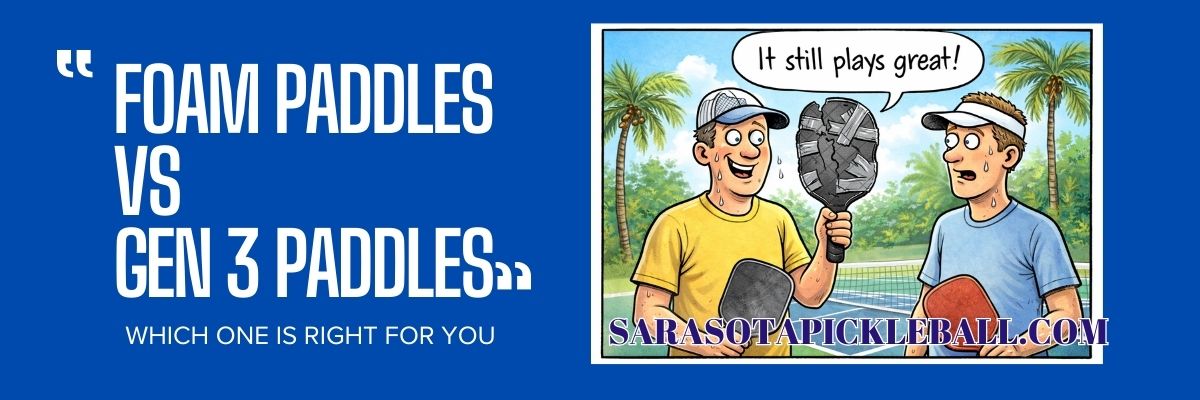
Foam Pickleball Paddles: What Players Need to Know About the Newest Paddle Trend
If you’ve been hearing more chatter about foam pickleball paddles, there’s a good reason. This new paddle technology is quickly gaining traction with recreational players, competitive amateurs, and even pros who are looking for more consistency, comfort, and long-term durability.
Traditional pickleball paddles use a polymer honeycomb core. While that design has worked well for years, many players have experienced “core crush” — a breakdown of the internal structure that leads to dead spots, unpredictable power, and reduced control over time. Foam paddles are designed to solve that problem.
Foam paddles use a high-density foam core instead of hollow cells. The result is a more solid interior that holds its shape longer and delivers consistent performance match after match. For players, that means the paddle you love on day one should feel very similar months down the road.
One of the biggest benefits players notice immediately is improved feel and control. Foam absorbs vibration extremely well, which creates a softer response on contact. Dinks feel more controlled, resets sit better in the kitchen, and mishits are more forgiving. Players dealing with tennis elbow or arm fatigue may especially appreciate the reduced shock.
Another advantage is the expanded sweet spot. Because foam distributes energy more evenly across the face, shots hit slightly off-center still travel cleanly. This is a big win for players working on consistency or transitioning into faster, higher-level play.
Power players won’t feel left out either. When paired with carbon fiber or textured faces, foam paddles can still generate plenty of pop and spin. The difference is that the power feels more controlled instead of explosive and unpredictable.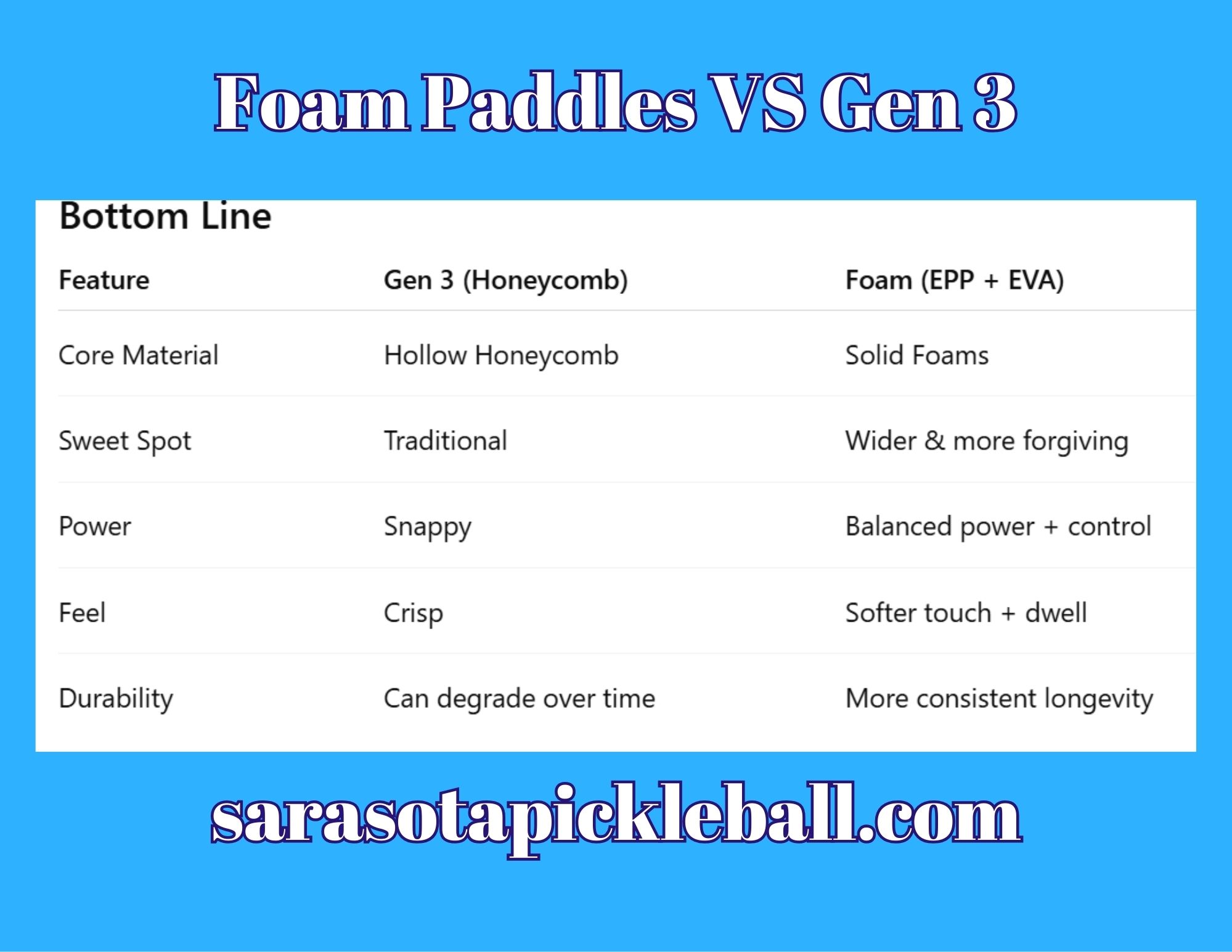
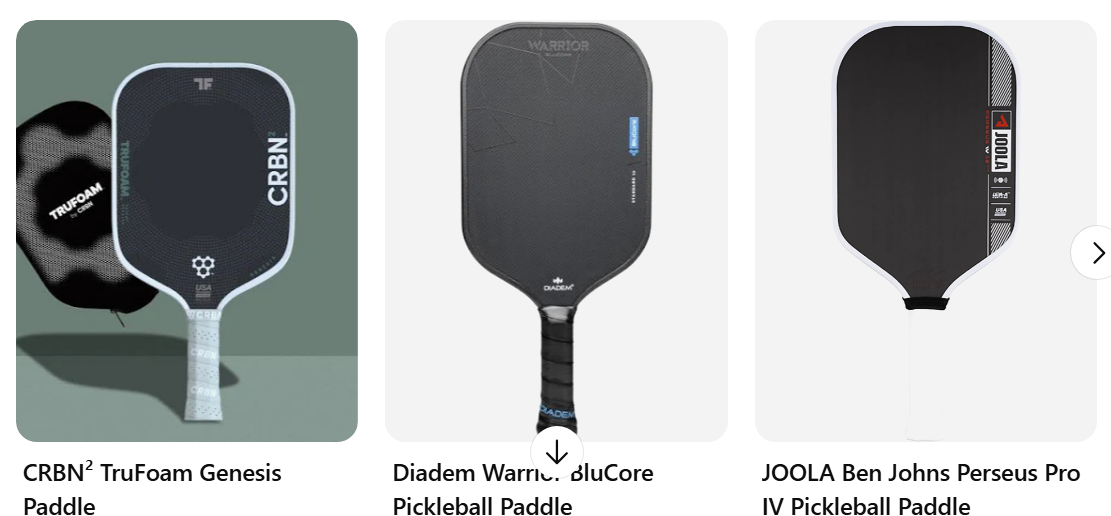
There are currently two main styles on the market:
So, who should consider switching? Players who value control, touch, durability, and comfort are excellent candidates. Foam paddles may feel slightly different at first, but many players adjust quickly — and don’t want to go back.
As paddle technology continues to evolve, foam paddles are shaping up to be one of the most meaningful upgrades the sport has seen. If consistency and feel matter to your game, foam might be worth a serious look.
EPP Foam Core vs EVA Foam: What’s the Real Difference?
EPP Foam (Expanded Polypropylene)
Think: structure, power, durability
What it is:
EPP is a rigid, resilient foam that rebounds quickly and resists permanent compression.
How it plays:
Why brands use it:
Where it’s usually placed:
Best for players who:
EVA Foam (Ethylene Vinyl Acetate)
Think: softness, control, dwell time
What it is:
EVA is a softer, more flexible foam commonly used in shoe midsoles and vibration dampening.
How it plays:
Why brands use it:
Where it’s usually placed:
Best for players who:
Why Many Paddles Use Both
The newest designs combine EPP + EVA to get the best of both worlds:
This dual-foam approach creates a paddle that feels explosive when you swing hard, but controlled and stable in the soft game.
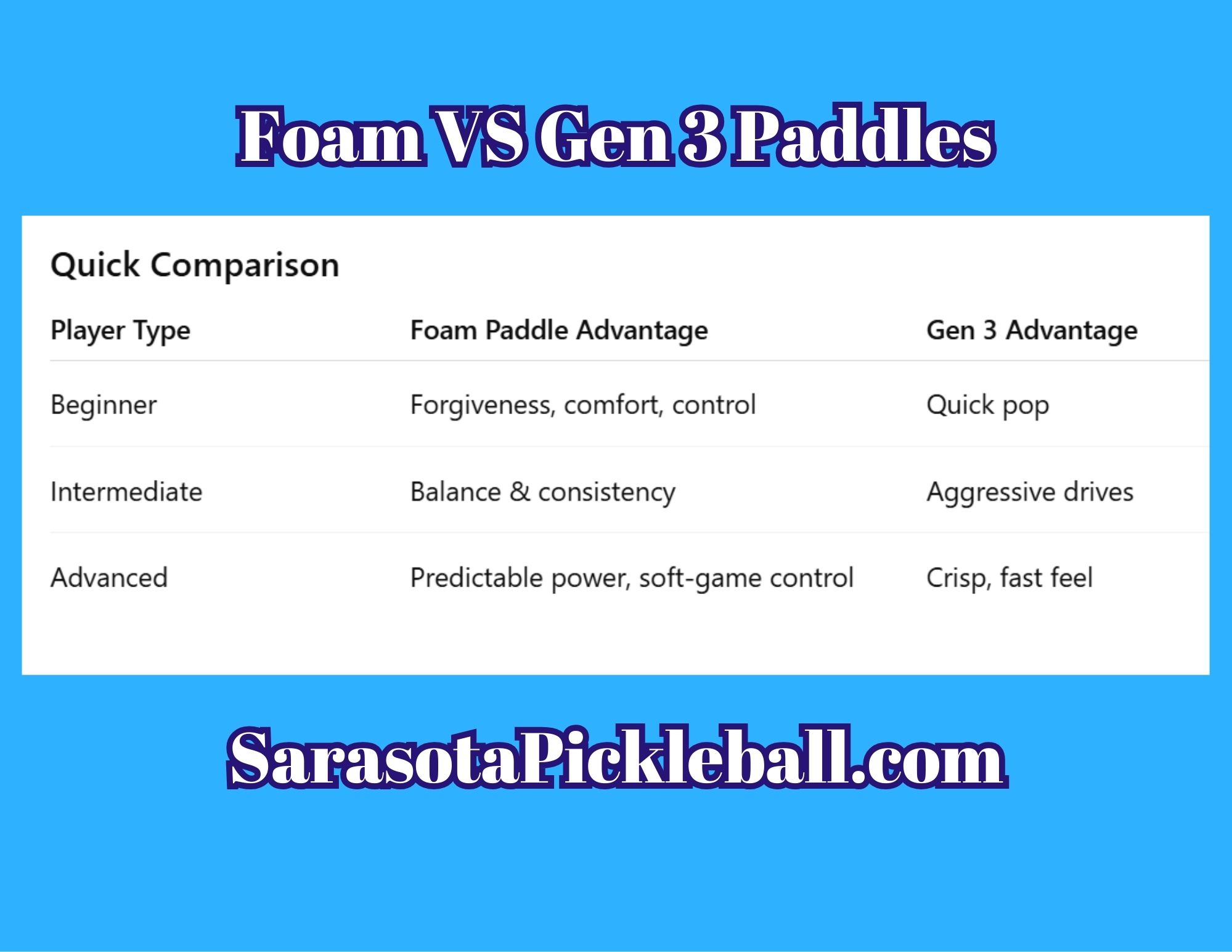
Foam vs Gen 3 Pickleball Paddle: Quick Decision Checklist
Choose a FOAM Paddle if…
☐ You want a larger sweet spot
☐ You value control and touch over raw pop
☐ You struggle with off-center hits
☐ You play a strong soft game (dinks, drops, resets)
☐ You want consistent performance over time
☐ You prefer a quieter, softer feel
☐ You experience arm or elbow discomfort
☐ You want more forgiveness in fast-hand battles
☐ You like a paddle that feels stable at the edges
Best for:
Choose a GEN 3 Paddle if…
☐ You like instant pop and quick rebound
☐ You play an aggressive power game
☐ You prefer a crisp, connected feel
☐ You generate pace with short swings
☐ You like a paddle that feels lively and fast
☐ You don’t mind a smaller sweet spot
☐ You frequently counterattack at the net
☐ You’ve used honeycomb paddles for years
Best for:
🔍 Still Not Sure? Ask Yourself These 5 Questions
Pickleball Terry’s Bottom Line
There’s no “better” paddle — only a better match for your game.
The best paddle is the one that lets you play confidently when points matter.
Thanks for reading!
Pickleball Terry

Rebuttal: Pickleball Is Not a Drug—It’s a Lifelong Passion With Balance
Headline from the New York Post:
Doctors warned that “pickleball is a drug” as injuries rise among fervent players getting triangle fractures, wearing designer heels—even matching paddle and shoes. New York Post
Here’s how I would reframe this, not dismissing the concerns, but celebrating why that enthusiasm is a gift, and how balancing passion, safety, and joy makes it sustainable. By Pickleball Terry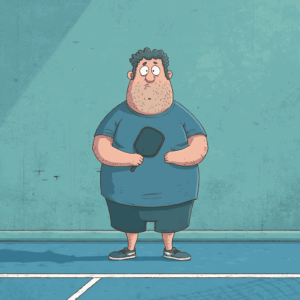
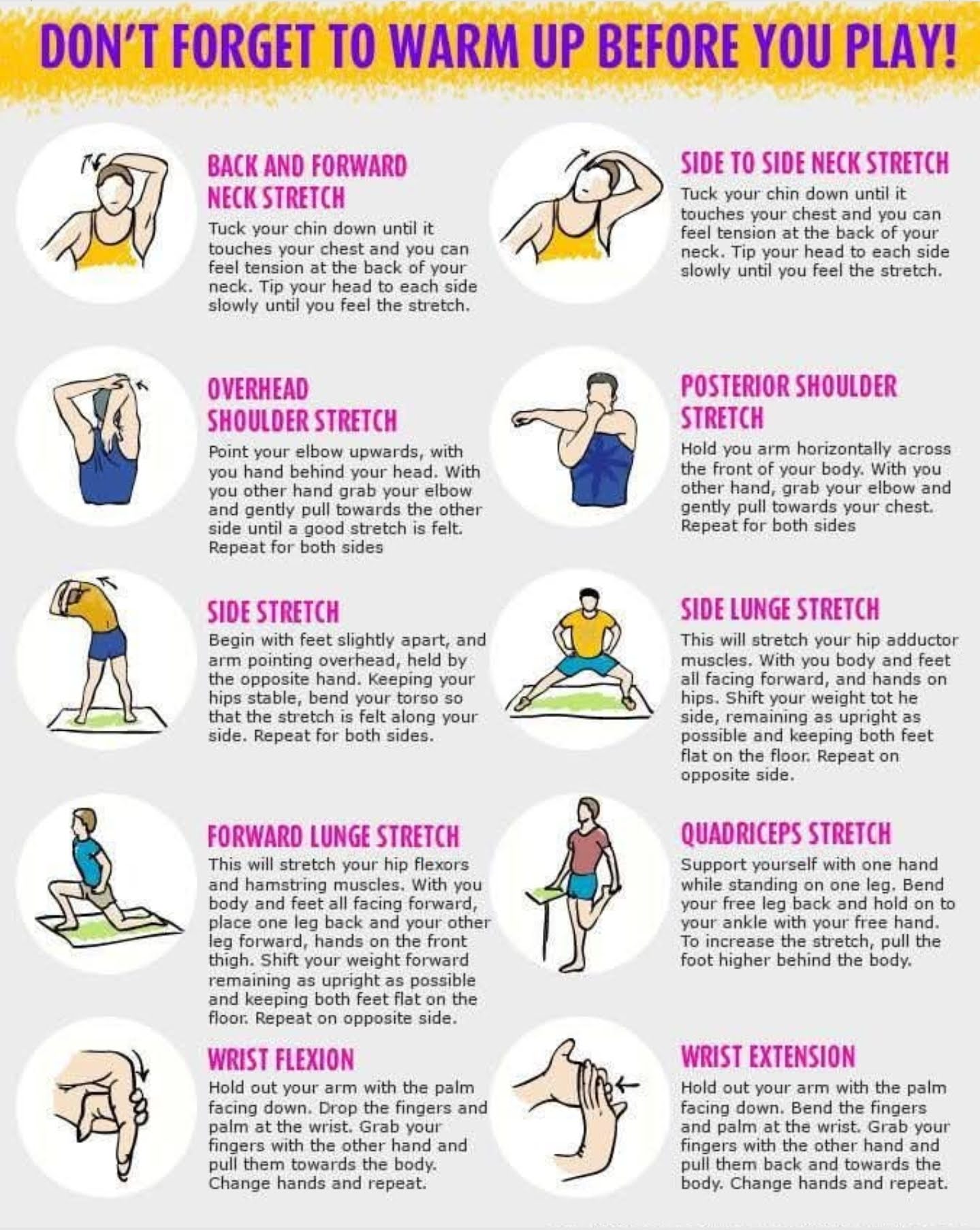
“Enthusiasm isn’t addiction. Pickleball becomes a problem only when it’s done without balance, care, or community. Injuries ease with warm-up.”
Pickleball Terry
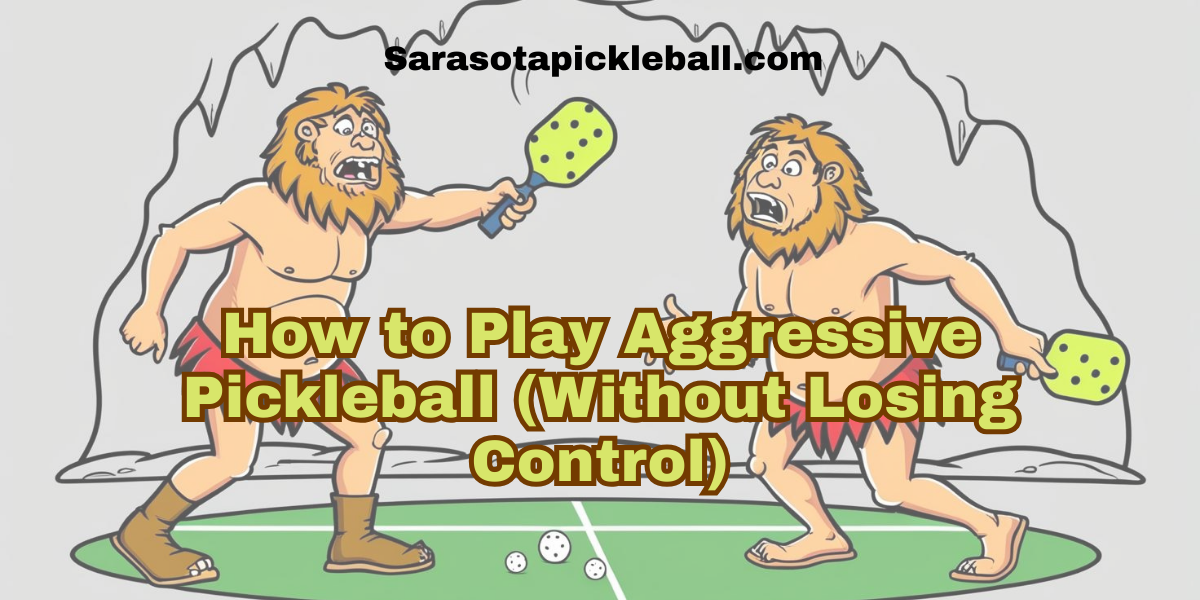 How to Play Aggressive Pickleball (Without Losing Control)If you want to win more pickleball matches, sometimes the best defense is a great offense. Playing aggressively on the court can help you take control, apply pressure, and dominate — but it needs to be smart and strategic.
 CLICK HERE
Aggressive pickleball isn’t just about hitting the ball hard. It’s about:
Aggression is about mindset as much as mechanics.
When you play fast and aggressively, your opponents have less time to react — leading to more unforced errors.
Aggressive players dictate how rallies unfold. You’re playing offense, not defense.
An aggressive approach fuels energy and momentum, shifting a match in your favor, especially in doubles.
After your third shot, rush the net and hold the line. This is where most points are won. From this position, you can:
Look for:
When you see a ball sitting up, go for it — but stay in control. Target feet, hips, or open court space.
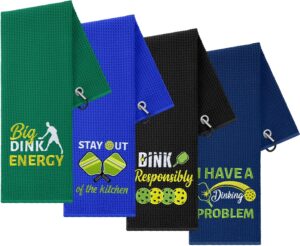
4 Pieces Funny Dinkball Towels Microfiber Cotton Athletic Towels click here
Aggression doesn’t always mean power. Well-placed shots can be just as deadly:
Aggressive players don’t wait — they read and react. Stay light on your feet and anticipate your opponent’s next shot.
Playing aggressively doesn’t mean playing emotionally. Stay calm, composed, and calculated. Smart aggression wins — not wild swings.
Don’t attack just for the sake of it. Know when to reset the rally instead. Avoid attacking when:
Patience is part of being aggressive — wait for the right ball.
If you want to level up your game, don’t just “play it safe.” Be the player who takes initiative, attacks smartly, and stays one step ahead.
When done right, aggressive pickleball is confident, calculated, and incredibly effective.
Want more pickleball tips? Subscribe to our newsletter and get weekly insights straight to your inbox.
Thanks for reading!
Pickleball Terry