
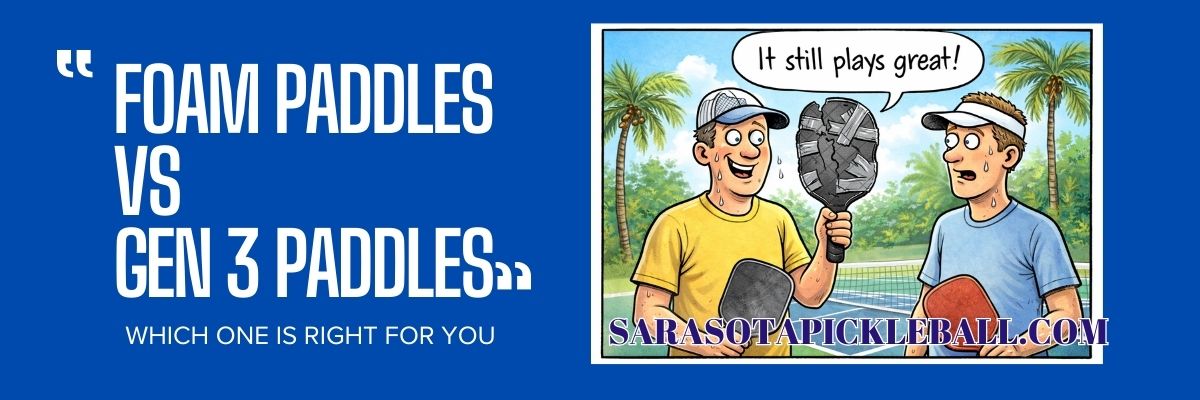
Foam Pickleball Paddles: What Players Need to Know About the Newest Paddle Trend

Foam Pickleball Paddles: What Players Need to Know About the Newest Paddle Trend

If you’ve been hearing more chatter about foam pickleball paddles, there’s a good reason. This new paddle technology is quickly gaining traction with recreational players, competitive amateurs, and even pros who are looking for more consistency, comfort, and long-term durability.

Traditional pickleball paddles use a polymer honeycomb core. While that design has worked well for years, many players have experienced “core crush” — a breakdown of the internal structure that leads to dead spots, unpredictable power, and reduced control over time. Foam paddles are designed to solve that problem.

Foam paddles use a high-density foam core instead of hollow cells. The result is a more solid interior that holds its shape longer and delivers consistent performance match after match. For players, that means the paddle you love on day one should feel very similar months down the road.

One of the biggest benefits players notice immediately is improved feel and control. Foam absorbs vibration extremely well, which creates a softer response on contact. Dinks feel more controlled, resets sit better in the kitchen, and mishits are more forgiving. Players dealing with tennis elbow or arm fatigue may especially appreciate the reduced shock.

Another advantage is the expanded sweet spot. Because foam distributes energy more evenly across the face, shots hit slightly off-center still travel cleanly. This is a big win for players working on consistency or transitioning into faster, higher-level play.

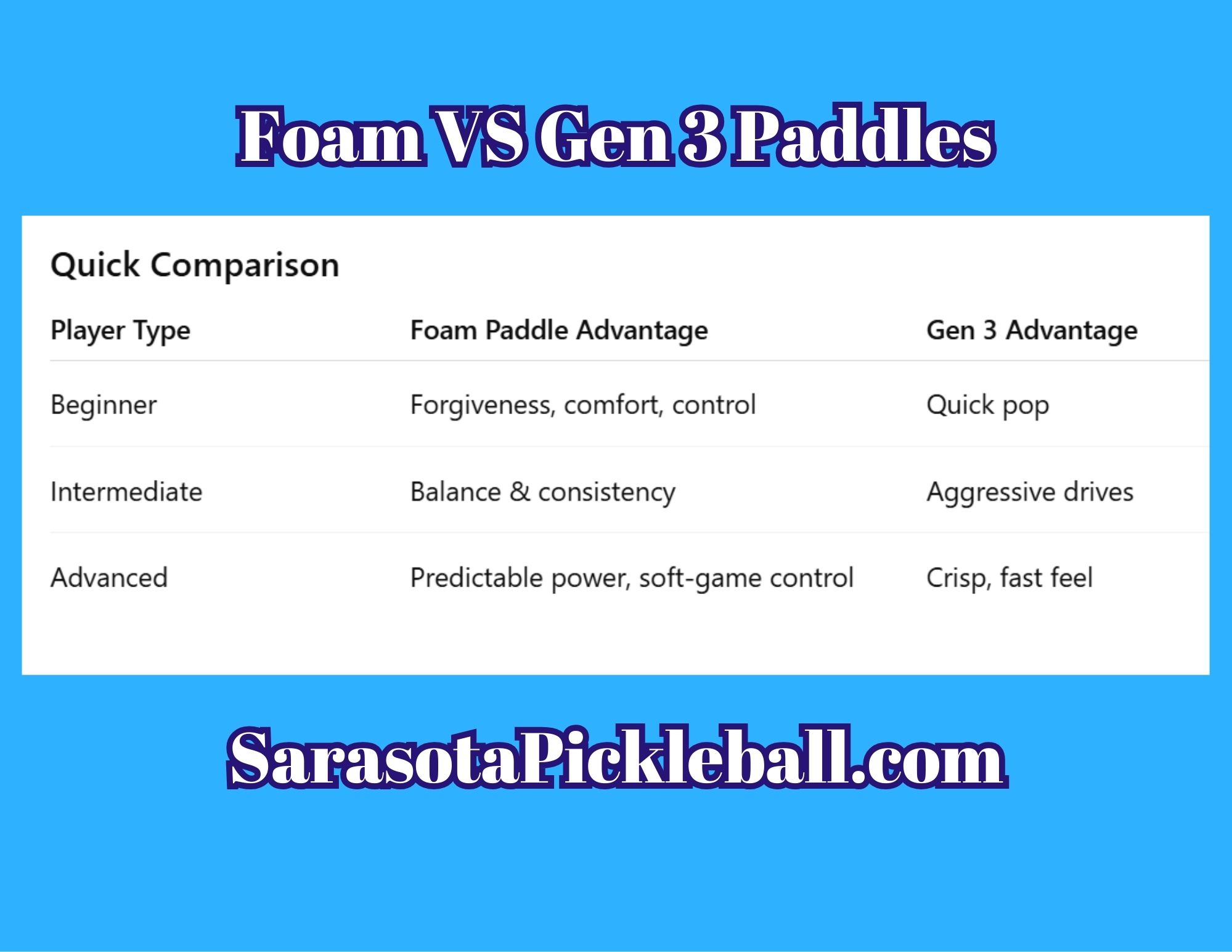
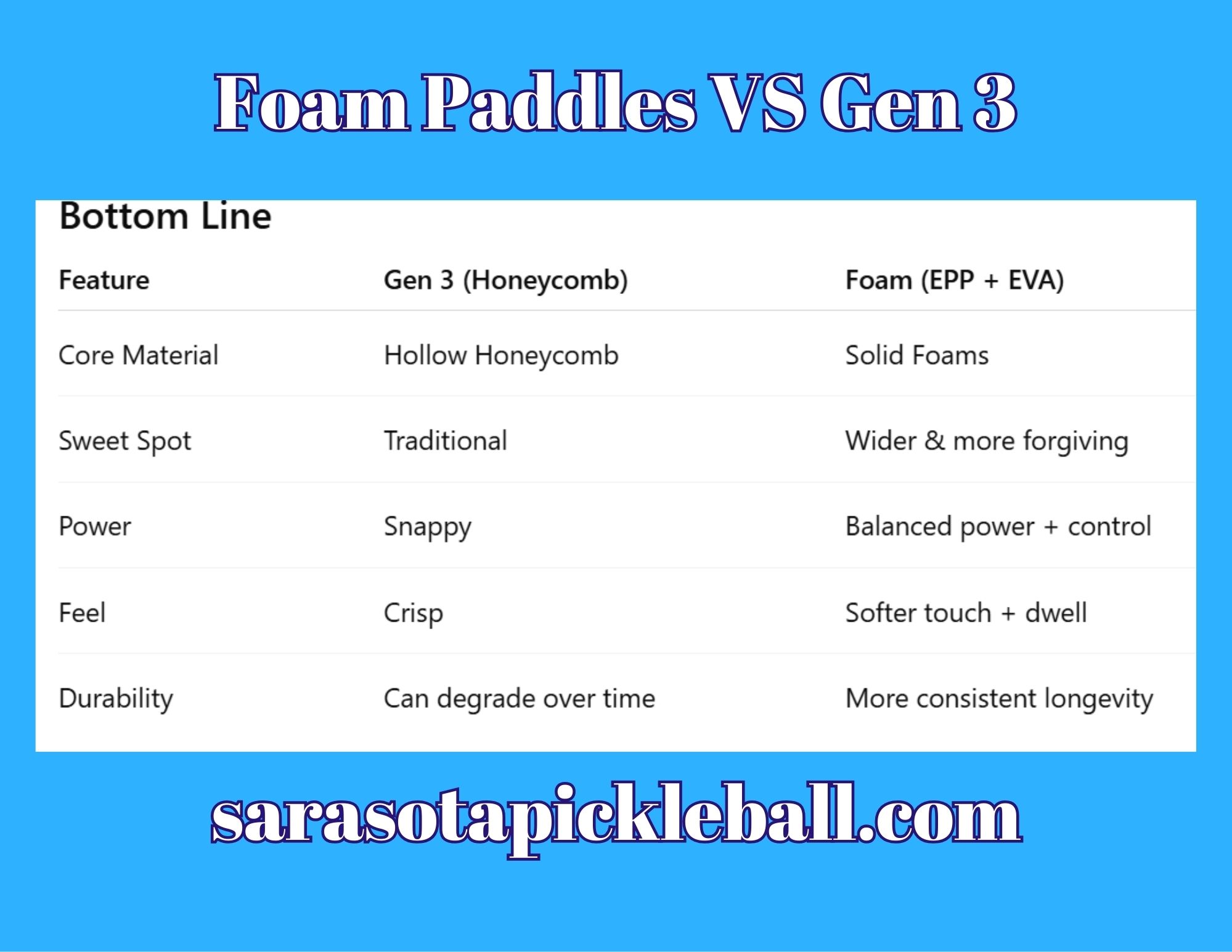
Power players won’t feel left out either. When paired with carbon fiber or textured faces, foam paddles can still generate plenty of pop and spin. The difference is that the power feels more controlled instead of explosive and unpredictable.chart of foam vs Gen 3 paddles
There are currently two main styles on the market:

  • Full foam paddles, which use foam throughout the entire core
  • Foam-enhanced paddles, which blend foam with traditional materials for added stability

So, who should consider switching? Players who value control, touch, durability, and comfort are excellent candidates. Foam paddles may feel slightly different at first, but many players adjust quickly — and don’t want to go back.

As paddle technology continues to evolve, foam paddles are shaping up to be one of the most meaningful upgrades the sport has seen. If consistency and feel matter to your game, foam might be worth a serious look.

EPP Foam Core vs EVA Foam: What’s the Real Difference?

EPP Foam (Expanded Polypropylene)

Think: structure, power, durability

What it is:
EPP is a rigid, resilient foam that rebounds quickly and resists permanent compression.

How it plays:

  • Produces more pop and power
  • Feels firmer at contact
  • Returns energy quickly to the ball
  • Maintains performance over time (less “break-in” change)

Why brands use it:

  • Excellent structural integrity
  • Very durable — resists core crush
  • Holds its shape after thousands of hits

Where it’s usually placed:

  • Center of the paddle core
  • Anywhere power and stability are neededFoam vs Gen 3 paddles chart

Best for players who:

  • Drive the ball
  • Play aggressive baseline or transition game
  • Want consistency over the life of the paddle

EVA Foam (Ethylene Vinyl Acetate)

Think: softness, control, dwell time

What it is:
EVA is a softer, more flexible foam commonly used in shoe midsoles and vibration dampening.

How it plays:

  • Feels plusher and quieter
  • Absorbs vibration
  • Softens mishits

Why brands use it:

  • Improves touch and control
  • Expands the sweet spot
  • Reduces arm fatigue

Where it’s usually placed:

  • Edges of the paddle
  • Around the perimeter or sidewalls
  • Rarely used alone as a full core

Best for players who:

  • Value dinks, drops, and resets
  • Want forgiveness on off-center hits
  • Deal with elbow or wrist issues

Why Many Paddles Use Both

The newest designs combine EPP + EVA to get the best of both worlds:

  • EPP in the center → power, structure, durability
  • EVA on the edges → softness, control, forgiveness

This dual-foam approach creates a paddle that feels explosive when you swing hard, but controlled and stable in the soft game.


Foam vs Gen 3 Pickleball Paddle: Quick Decision Checklist

Choose a FOAM Paddle if…

☐ You want a larger sweet spot
☐ You value control and touch over raw pop
☐ You struggle with off-center hits
☐ You play a strong soft game (dinks, drops, resets)
☐ You want consistent performance over time
☐ You prefer a quieter, softer feel
☐ You experience arm or elbow discomfort
☐ You want more forgiveness in fast-hand battles
☐ You like a paddle that feels stable at the edges

Best for:

  • Beginners
  • Control-focused intermediates
  • Players who build power through mechanics
  • Players prioritizing consistency and durability

 Choose a GEN 3 Paddle if…

☐ You like instant pop and quick rebound
☐ You play an aggressive power game
☐ You prefer a crisp, connected feel
☐ You generate pace with short swings
☐ You like a paddle that feels lively and fast
☐ You don’t mind a smaller sweet spot
☐ You frequently counterattack at the net
☐ You’ve used honeycomb paddles for years

Best for:

  • Advanced players
  • Power-first players
  • Fast hands & counter specialists
  • Players who like immediate feedback

🔍 Still Not Sure? Ask Yourself These 5 Questions

  1. Do I miss-hit often under pressure? → Foam
  2. Do I rely on pop more than placement? → Gen 3
  3. Do I want the paddle to feel the same all season? → Foam
  4. Do I want maximum speed off the face? → Gen 3
  5. Do I prioritize resets and drops? → Foam

Pickleball Terry’s Bottom Line

There’s no “better” paddle — only a better match for your game.

  • Foam paddles reward patience, control, and consistency.
  • Gen 3 paddles reward speed, aggression, and quick hands.

The best paddle is the one that lets you play confidently when points matter.
Sarasotapickleball.com

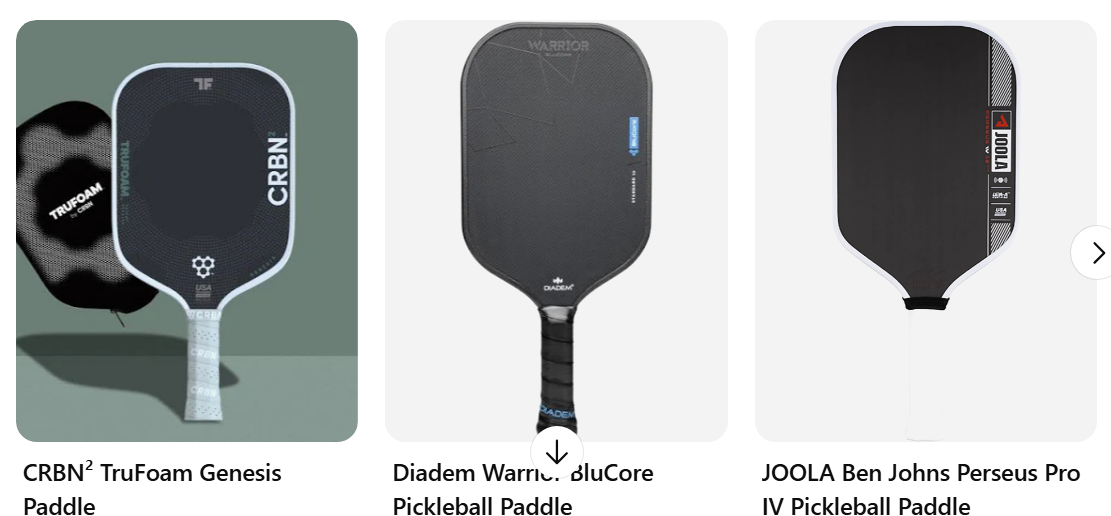
CRBN Pickleball – TruFoam Waves Paddle – Carbon Fiber Pickleball Paddle – 100% Foam Core Designed for Maximum Power, 14mm

Diadem Edge BluCore Pro Pickleball Paddle | Ultimate Power, Spin & Consistency, Extended Reach, Premium 18K Carbon Fiber, PowerSync Foam Core | USAPA Approved

JOOLA Ben Johns CAS Perseus or Hyperion 16mm Carbon Fiber Pickleball Paddle – CAS Surface Tech – Control & Power Paddle – USAP Approved – Aero Curve – Feel-Tec Pure Grip – NFC Chip


Thanks for reading!
Pickleball Terry

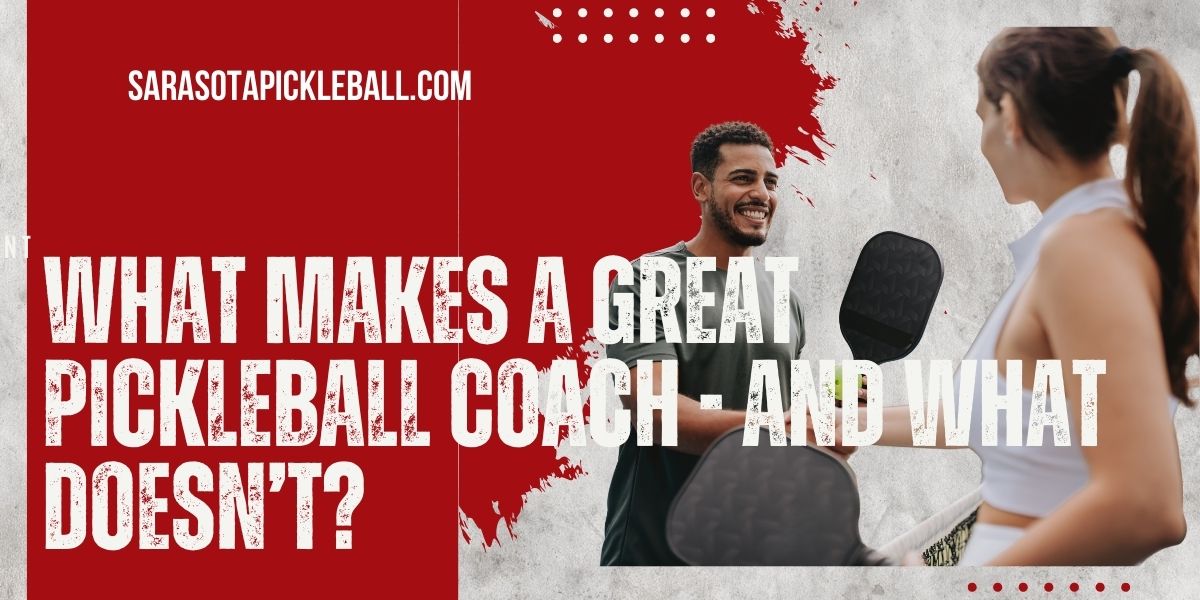
What Makes a Great Pickleball Coach (And What Doesn’t?) By Pickleball Terry

Title Image for What makes a great pickleball coach

By Pickleball Terry

As a pickleball coach, I’ve met many players who have taken lessons with different instructors, some fantastic, and some… not so much. When you’re spending your time and money to improve, you deserve more than someone who just feeds you balls and tells you to dink. A great coach can make a huge difference in your growth and enjoyment of the game.

A image of pickleball pasta for sale on Amazon
Pastabilities Pickleball Pasta- Funny and Unique Pickleball Gifts, Non-GMO Natural Wheat and Vegetable Pasta, All-Natural, Kosher Certified, Made in the USA

CLICK HERE

Unfortunately, I’ve also heard plenty of stories that make me shake my head. Have you experienced any of these?

  • Pickleball watch
    Score Keeper Watch for Pickleball Digital Wristwatch with Alarm, Stopwatch & Clock | Water Resistant, Lightweight & Easy

    CLICK HERE

    The coach who keeps looking at their watch during your lesson, like they can’t wait to be done.

  • The one who doesn’t show any genuine interest in you or your goals, your level, your progress. Ugh! What’s your last name? Where you are from?

  • Coaches who are just there for the money, not because they love teaching. They never smile, and look like they are irritated at you for being there. Whoa! I was at a clinic where a student said something about being bored with the drill we were doing, and the coach went off on her. He yelled for a good 5 minutes, about how it was his class and no one was going to tell him what to do…yada yada yada. It was awkward for the rest of us. Yikes! I made a mental note, that I would never do that to one of my students. And one day, that happened. I had a clinic and one of the students said she didn’t like the drill we were working on, and could we do something else? I said, “Sure!” and moved onto another drill. Everyone was happy. Hey, it’s their clinic and if they don’t like something or want to do something else, I don’t bat an eye. I happily move on.

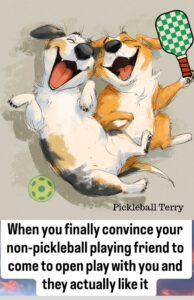
A cartoon of two dogs laughing on the ground with a caption that reads when you finally convince them to play pickleball

  • The coach who yells, disrespects, or makes you feel small for making mistakes. I will not do this. I will not do this. I will not do this. I have slipped up and done this and I have repented. I will not do this again.

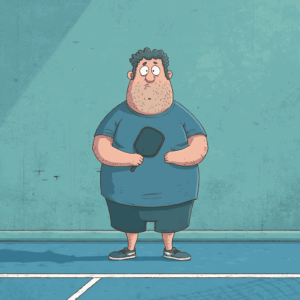
A cartoon of an chubby pickleball player

  • I’ve even seen coaches take phone calls while their student is paying for private time! This soooo bugs me. Unless it’s an emergency, don’t take the call. However, if a student gets a call and wants to answer, I have no problem with that. Also, the dang Apple watches where people stop in the middle of a lesson to read the text. Really??? That important? Concentrate of the lesson instead.

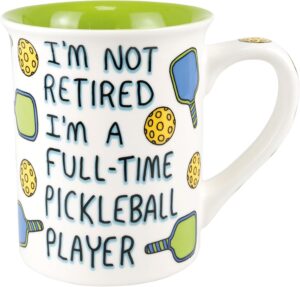
Mug with a funny pickleball saying

Click Here

  • Or the classic: you sign up for a private lesson, but when you show up, the coach’s cousin or buddy is on the court too, suddenly turning your private into a semi-private. Not a good move. Shows disrespect for the student that signed up for a private lesson.

  • Some coaches will stop abruptly the second the hour is up, even if you’re in the middle of learning something important. Buzzz. Their alarm goes off on their phones, Okay, lesson is over. Where’s the money? Very unprofessional. If things are going good, I’ll give them a 1/2 hour more. I want to make sure they are satisfied with the lesson. When I was a beginner, I took a lesson and the coach watched their time the entire lesson, and as soon as the hour was over, they were out of there.

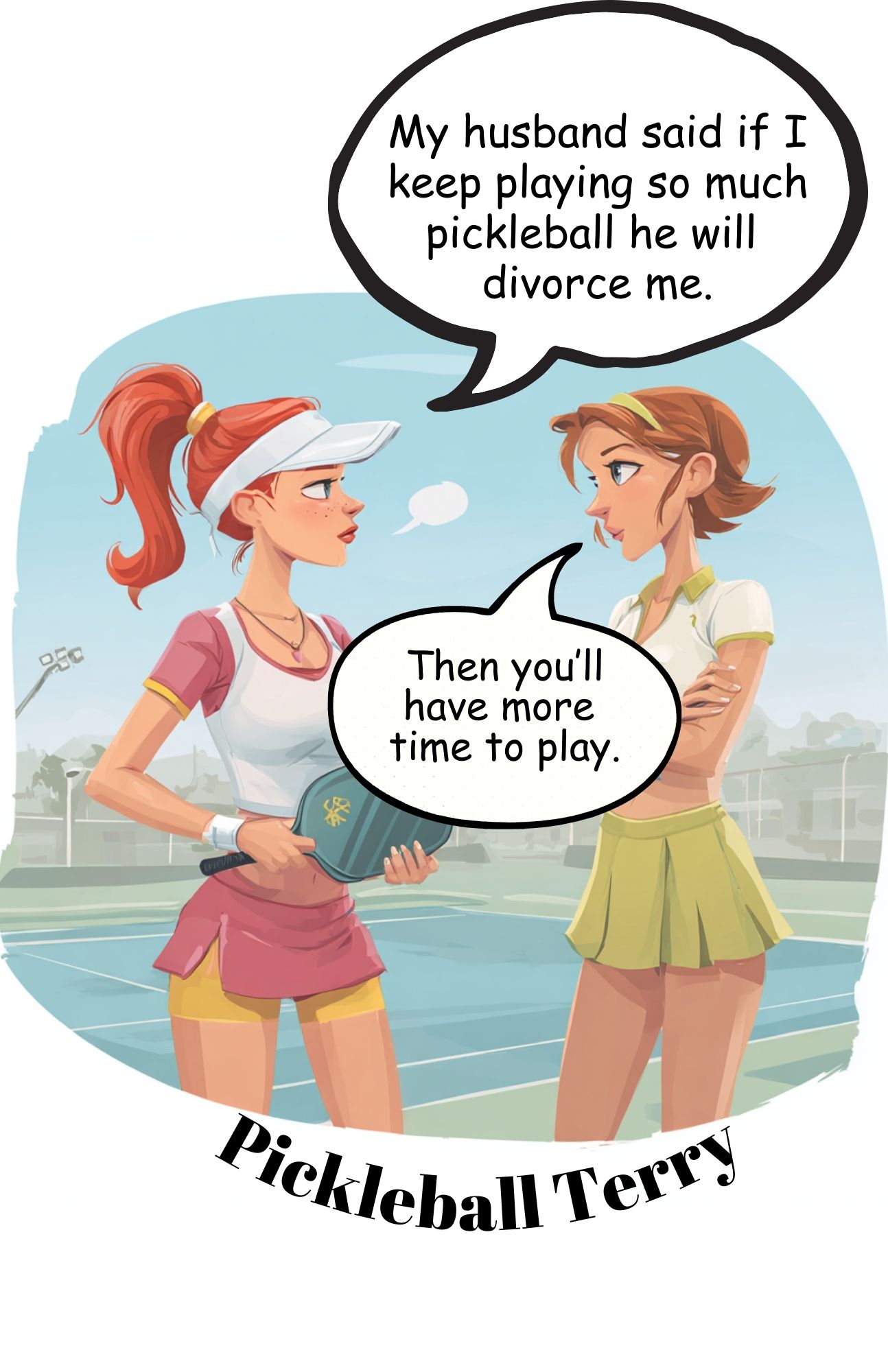
A cartoon of two women talking on a pickleball court. A joke.

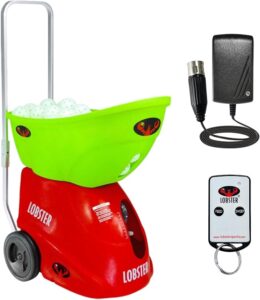
  • And this one. The coach who makes you pick up every ball while they stand there watching you. Oh my gosh, this actually happens more time than you think, especially if they are using a ball machine, blasting balls at the student until the machine runs out of balls. I call this lazy coaching. Then they make the student/students pick up the balls which takes up a lot of valuable lesson time. If you are an adult especially a senior, this is unusual punishment. Picking up 50 balls while the coach sits on the bench looking at their phone. No thank you! Half of your lesson should not be picking up balls.

Pickleball Machine – Full-Featured – Adjustable Topspin, Backspin, & Lobs, Random Oscillation, Ball Speed (20-60MPH),
Pickleball Machine – Full-Featured – Adjustable Topspin, Backspin, & Lobs, Random Oscillation, Ball Speed (20-60MPH) CLICK HERE

These are all signs of someone who isn’t fully invested in you.

A great coach does the opposite. They show up early, prepared, and fully focused. They take time to get to know you — your strengths, weaknesses, and goals. They don’t just bark orders; they encourage, explain, and guide. They give you their full attention and energy, and they genuinely care about your progress.

Most importantly, a good coach makes learning fun. You leave the court feeling encouraged, motivated, and excited to play again.

If you ever run into a coach who makes you feel like an afterthought, trust your gut — you deserve better. Pickleball is too great a game to waste on bad coaching experiences.

What Makes a Great Pickleball Coach?

Pickleball is growing at a rapid pace, and with that growth comes a surge of new players eager to learn. While anyone can hit a few balls and explain the rules, being a truly great pickleball coach takes more than just skill on the court. It’s about leadership, communication, passion, and creating an environment where players can grow.

1. Strong Fundamentals & Knowledge

A great coach has a solid understanding of the game — not just the rules, but strategies, shot selection, footwork, and court positioning. They stay current on evolving techniques and tournament trends, and they can break down complex plays into simple, actionable steps. Players trust a coach who can not only perform but explain why each shot or movement matters.

2. Clear Communication

Even the best drills are useless if they aren’t communicated well. Great coaches know how to explain things clearly and concisely, adapting their language to match the level of the student. Beginners need simple, encouraging guidance, while advanced players might benefit from more tactical, detailed feedback.

3. Patience & Positivity

Learning pickleball can be both exciting and frustrating. A great coach understands that mistakes are part of the journey. They stay patient, positive, and encouraging, helping students build confidence at their own pace. This supportive environment keeps players motivated and coming back.

4. Personalized Coaching

No two players are alike. A strong coach observes each player’s strengths, weaknesses, and learning styles, then tailors drills and strategies accordingly. Whether it’s refining a serve, improving footwork, or building doubles teamwork, personalization helps players improve faster.

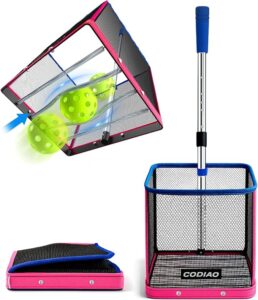
Multi-Ball Retriever & Grabber, Portable for Courts, Easy Storage
Multi-Ball Retriever & Grabber, Portable for Courts, Easy Storage CLICK HERE

5. Passion & Energy

Great coaches bring enthusiasm to every session. Their love for the game is contagious. When players see their coach having fun and genuinely caring about their progress, they feed off that energy. Passion turns a lesson into an experience.

6. Leadership & Role Modeling

Lastly, great pickleball coaches lead by example. They model sportsmanship, respect, punctuality, and dedication.


A great pickleball coach blends technical skill with human connection. They don’t just teach shots — they build confidence, community, and love for the game. And that’s what keeps players learning and thriving. I major in all the above. I share the love of the game and inspire people to get out and play. But, I’m not the only coach out there. I know a lot of great coaches. See who works best for you, and take some lessons to improve your game.

Thanks for reading,

Pickleball Terry

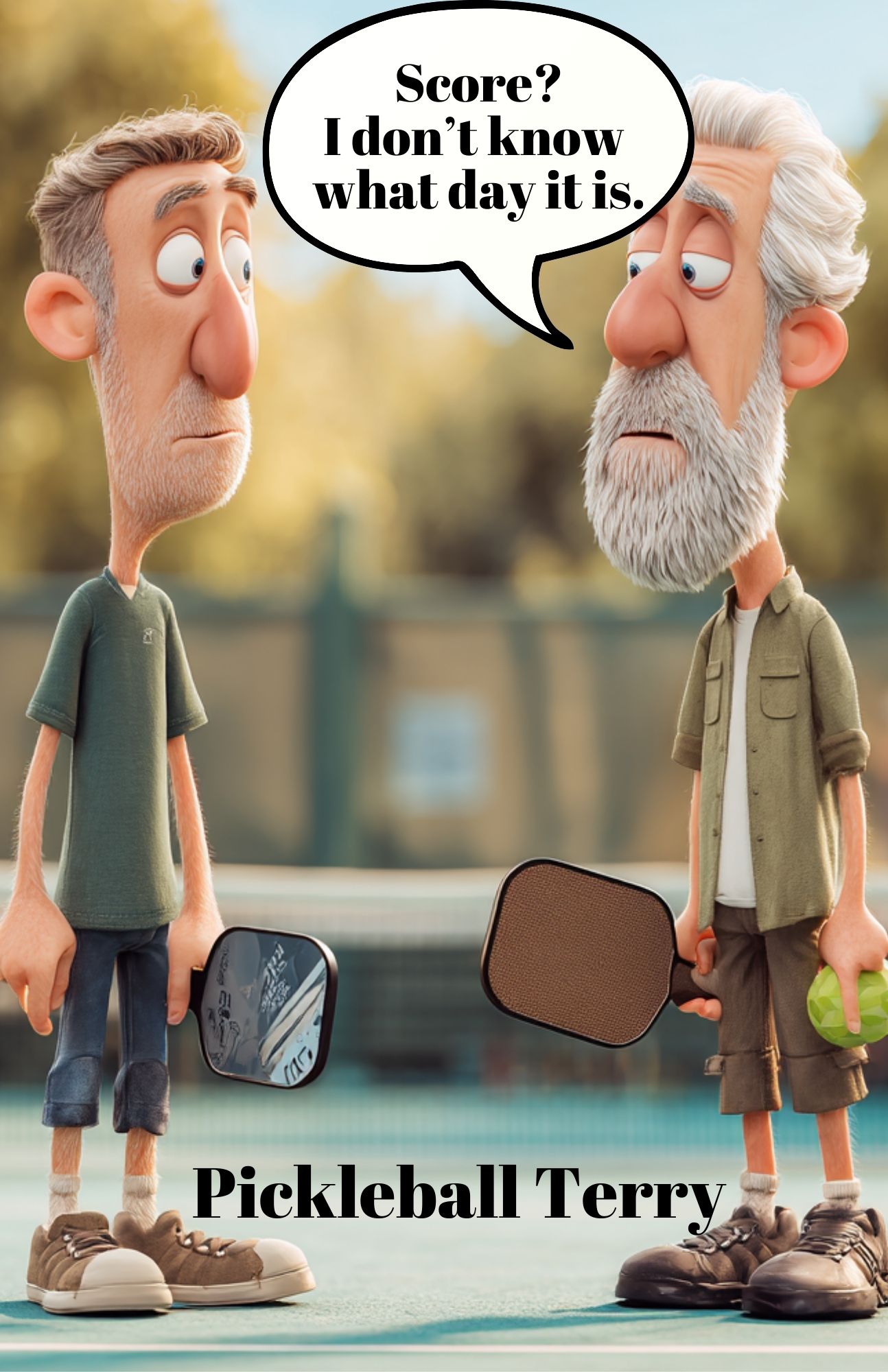
joke about pickleball score

Rebuttle to the New York Post Article about Pickleball Being a Dangerous Addiction

rebuttal to the New York Post Article about pickleball

Rebuttal: Pickleball Is Not a Drug—It’s a Lifelong Passion With Balance

Headline from the New York Post:
Doctors warned that “pickleball is a drug” as injuries rise among fervent players getting triangle fractures, wearing designer heels—even matching paddle and shoes. New York Post

Here’s how I would reframe this, not dismissing the concerns, but celebrating why that enthusiasm is a gift, and how balancing passion, safety, and joy makes it sustainable. By Pickleball TerryA cartoon of an chubby pickleball player

  1. Passion Isn’t Addiction, it’s Community
  • What’s being misconstrued: Doctors compare pickleball to “a drug” for the intensity it inspires. Some players are calling it an obsession, prioritizing paddle color over proper gear. New York Post
  • Rebuttal: Pickleball’s explosive growth—19.8 million Americans played in 2024, up 311% since 2021 New York PostWikipedia+1—shows it offers community, fitness, and fun, especially for those seeking meaningful connections after retirement.
  • Local angle (Sarasota): Players I know come for the rallies but stay for the post-game friendships and casual chats. It’s a joy that, done responsibly, brings health and happiness and not harm.
  1. Injuries Are Real But Preventable—Like Any Sport
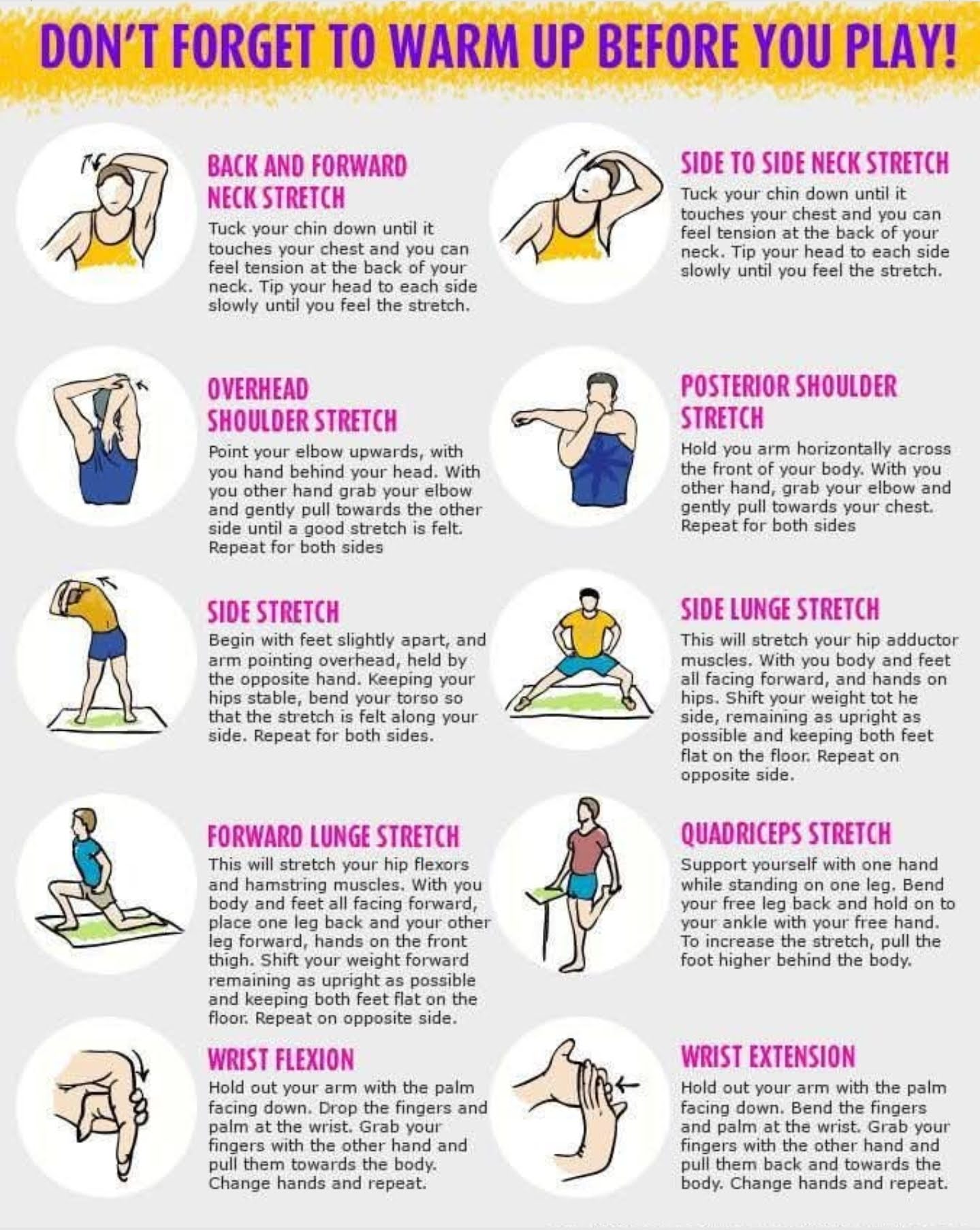
  • What the article notes: A spike in injuries like ruptures, torn menisci, and wrist fractures, has orthopedic doctors urging warm-ups, cooldowns, and correct footwear. New York Post
  • Rebuttal: That doesn’t mean the sport is harmful, it means precaution is essential. Like tennis, biking, or golf, pickleball is a fast-paced activity demanding preparation.
  • What we preach: At Sarasota courts, local coaches are teaching pre-game stretches, proper shoe choice, and knee-strength drills. I know that Coach Julie Stewart and I always start off with warmups. Safe training is sustained playing. Check with Dr. Frank, the Pickleball PT, and he will show you the proper way to warm up.  Click Here
  1. Style Can Still Be Smart
  • Point of tension: The article ridicules players who match paddle colors to shoes—even a patient who wore designer heels to her doctor appointment. New York Post
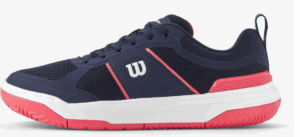
  • Rebuttal: Love and pride in your gear isn’t vanity. It’s just showing style. Gear can match identity, but balance means pairing style with stability. No more designer heels mid-rehab; just bright sneakers that support every dink and drive.

WILSON Women's Pickle Pro Sneaker
WILSON Women’s Pickle Pro Sneaker Click Here
  1. Pickleball Heals
  • Positive angle to uplift: Across the country and beyond, pickleball is making a difference in tough places. In California prisons, pickleball has become a rehabilitative lifeline, improving mental health, connection, and reducing disciplinary incidents. SFGATE
  • In spirit: So yep, pickleball feels addictive, but in the best possible way. It improves recovery, belonging, and purpose. It brings light into all of our lives.
    Check out my book: Pickleball and the Art of Starting Over. Click here

“Enthusiasm isn’t addiction. Pickleball becomes a problem only when it’s done without balance, care, or community. Injuries ease with warm-up.”
Pickleball Terry

Pickleball warm-ups
illustrations

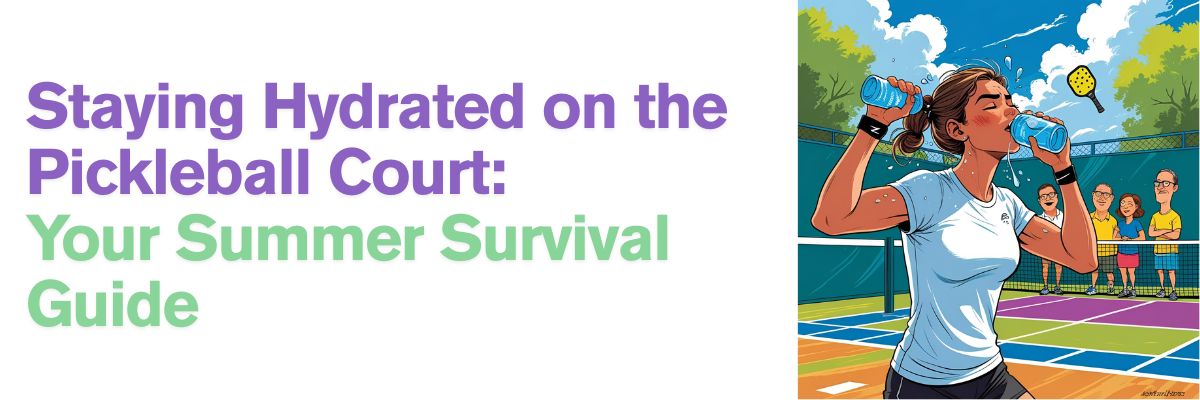
Staying Hydrated on the Pickleball Court: Your Summer Survival Guide

A woman drinking water on a pickleball court


When the summer heat kicks in, staying hydrated isn’t just about comfort — it’s essential for performance and safety on the pickleball court. As temperatures rise, so does your body’s need for water and electrolytes. Whether you’re playing a quick game or grinding through a full tournament, hydration can be the difference between finishing strong or fizzling out.

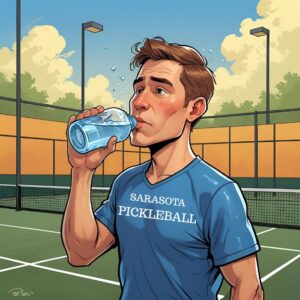
Cartoon of man drinking water on a pickleball court and sarasota pickleball is printed on his shirt

Why Hydration Matters in Pickleball

Pickleball, while fun and social, is a high-intensity sport. It involves quick bursts of movement, constant direction changes, and extended time on the court — often under the blazing sun. This leads to sweating, which causes the body to lose not just water but also electrolytes.

Dehydration can lead to:

  • Fatigue and sluggishness
  • Muscle cramps
  • Dizziness or lightheadedness
  • Heat exhaustion or even heat stroke

The Role of Electrolytes

So, what are electrolytes? They’re essential minerals — including sodium, potassium, magnesium, calcium, and chloride — that help regulate muscle function, nerve signals, and fluid balance. When you sweat, these minerals are lost. If they’re not replaced, your muscles may cramp and your performance will drop.

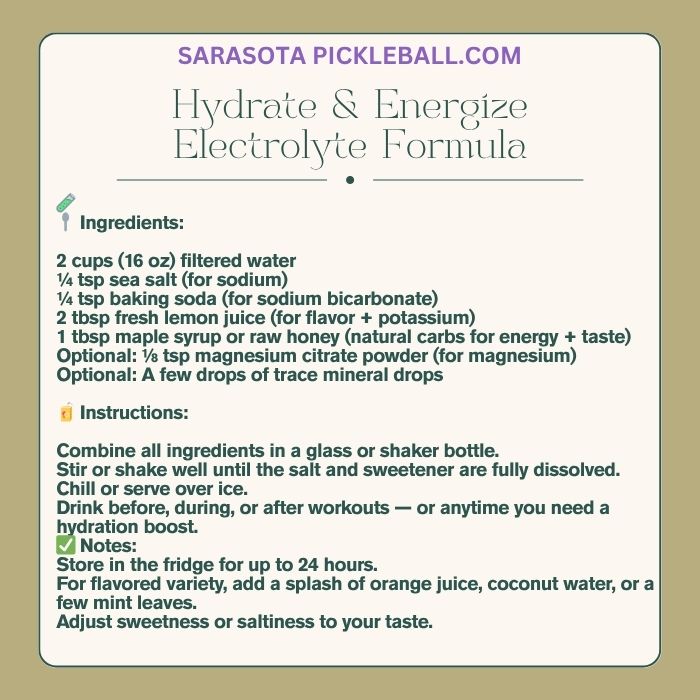
diy electrolyte drink formula recipe card

Staying Hydrated on the Pickleball Court Your Summer Survival Guide 

Ice, Water, and Electrolytes: The Winning Combo

To stay safe and sharp during your summer pickleball sessions, here’s what you need to do:

1. Bring Plenty of Cold Water

Always bring more water than you think you’ll need. Insulated bottles or coolers with ice can help keep your water cold for hours — cold fluids not only hydrate but also help lower your core body temperature.

2. Add Electrolyte Supplements

Plain water is great, but when you’re sweating heavily, it’s not enough. Mix in electrolyte powders or drink ready-made electrolyte beverages. Popular options include:

Be sure to read the labels — some products contain high amounts of sugar, which isn’t ideal during sustained activity.

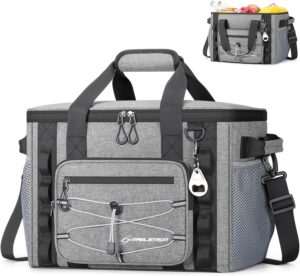
sports cooler
CLICK HERE

3. Pre-Hydrate and Re-Hydrate

Start hydrating before you step on the court. Sip throughout your games rather than waiting until you’re thirsty — thirst is a sign you’re already behind. After play, continue to hydrate to replace fluids lost through sweat.

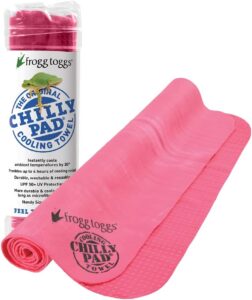
Chill pad for sports
Click Here

4. Pack Extra Ice

Ice is your best friend in the summer. Use it to keep your drinks cold, cool yourself off between games, or even place it in a towel around your neck to lower your body temperature during breaks.

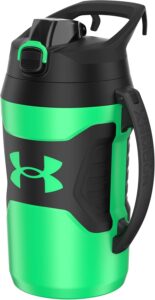
Under Armour Half Gallon Water Bottle Insulated, 64oz Insulated Water Bottle with Handle, Sports Water Jug, Fence Hook
Click Here

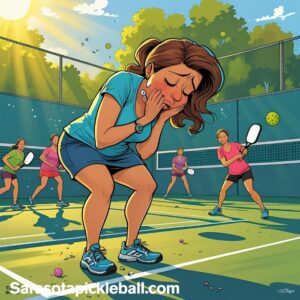
Cartoon of woman feeling ill on a court

5. Know the Signs of Dehydration and Heat Illness

Don’t push through if you feel:

  • Lightheaded
  • Nauseous
  • Excessively fatigued
  • Confused or disoriented

Take a break in the shade, drink fluids, and seek help if symptoms persist.

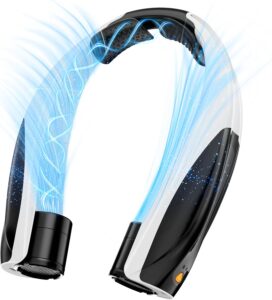
Neck fan
Neck fan Click here

Final Tips

  • Wear light, moisture-wicking clothing
  • Use a hat and sunglasses
  • Take frequent shade breaks
  • Avoid alcohol or excessive caffeine before play

Bottom Line:
Pickleball is meant to be fun, but the heat of summer adds a serious element to your preparation. Water, electrolytes, and ice are your three keys to staying safe, energized, and on top of your game. Hydrate early, hydrate often — and bring enough to share with a partner who forgot theirs!

Stay cool and dink smart.

Thanks for reading.
Pickleball Terry
941-400-0978

How to Play Aggressive Pickleball (Without Losing Control)

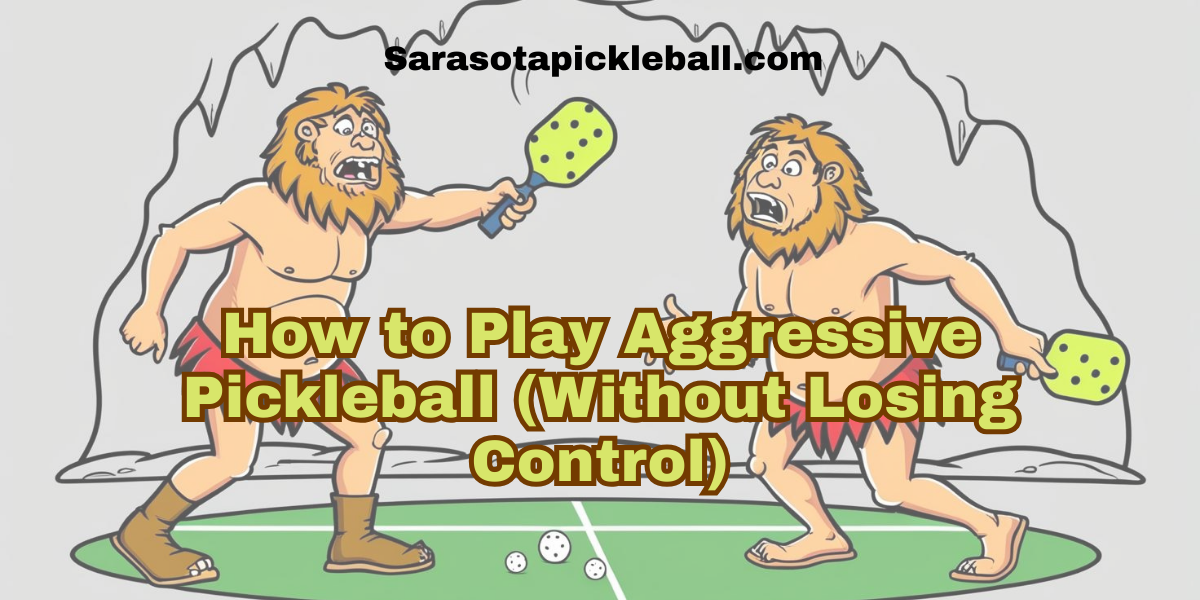
two cave men playing pickleball
Note: SarasotaPickleball.com was rewarded this honor. https://bloggers.feedspot.com/pickleball_blogs/How to Play Aggressive Pickleball (Without Losing Control)If you want to win more pickleball matches, sometimes the best defense is a great offense. Playing aggressively on the court can help you take control, apply pressure, and dominate — but it needs to be smart and strategic.
Here’s how to bring aggressive play into your pickleball game without becoming reckless.


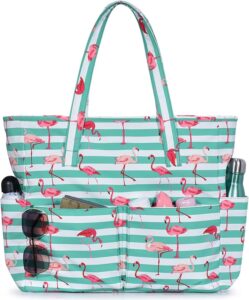
adorable beach bag with pink flamingosCLICK HERE


🔥 What Is Aggressive Pickleball?

Aggressive pickleball isn’t just about hitting the ball hard. It’s about:

  • Taking control of the net
  • Applying pressure on weak shots
  • Attacking at the right moments
  • Moving with purpose and confidence
  • Finishing points decisively

Aggression is about mindset as much as mechanics.

✅ Benefits of Playing Aggressively

1. Forces Opponent Errors

When you play fast and aggressively, your opponents have less time to react — leading to more unforced errors.

2. You Control the Tempo

Aggressive players dictate how rallies unfold. You’re playing offense, not defense.


Pickleball beach blanket

CLICK HERE


3. Creates Momentum

An aggressive approach fuels energy and momentum, shifting a match in your favor, especially in doubles.

🎯 5 Ways to Play Aggressive — the Smart Way

1. Own the Kitchen Line

After your third shot, rush the net and hold the line. This is where most points are won. From this position, you can:

  • React faster
  • Pressure opponents with volleys
  • Cut off angles

2. Attack Weak Shots

Look for:

  • Pop-ups
  • High dinks
  • Weak serves or returns

When you see a ball sitting up, go for it — but stay in control. Target feet, hips, or open court space.


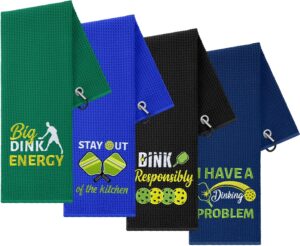
 4 Pieces Funny Dinkball Towels Microfiber Cotton Athletic Towels

4 Pieces Funny Dinkball Towels Microfiber Cotton Athletic Towels click here


3. Use Smart Placement

Aggression doesn’t always mean power. Well-placed shots can be just as deadly:

  • Sharp cross-court angles
  • Deep drives to the backhand
  • Roll volleys into the body

4. Anticipate & Move Early

Aggressive players don’t wait — they read and react. Stay light on your feet and anticipate your opponent’s next shot.

5. Keep Your Cool

Playing aggressively doesn’t mean playing emotionally. Stay calm, composed, and calculated. Smart aggression wins — not wild swings.

⚠️ When Not to Be Aggressive

Don’t attack just for the sake of it. Know when to reset the rally instead. Avoid attacking when:

  • The ball is low or skimming the net
  • You’re off-balance
  • You’re out of position

Patience is part of being aggressive — wait for the right ball.

🔁 Drills to Build Aggressive Skills

  • Third Shot Drive + Crash Drill
    Hit a third shot drive and follow it to the net quickly. Practice footwork and court positioning.
  • Attack vs. Reset Game
    One player attacks; the other focuses on resets. Switch roles every 5 minutes.
  • Fast Hands Volley Battle
    Stand at the kitchen line and rapid-fire volleys with a partner to train reflexes.

🧠 Final Tip: Controlled Aggression Wins

If you want to level up your game, don’t just “play it safe.” Be the player who takes initiative, attacks smartly, and stays one step ahead.

When done right, aggressive pickleball is confident, calculated, and incredibly effective.


Want more pickleball tips? Subscribe to our newsletter and get weekly insights straight to your inbox.

Thanks for reading!

Pickleball Terry
The Third Shot Drop in Pickleball

The third shot drop header for Sarasota Pickleball Organization

Mastering the Third Shot Drop in Pickleball: What It Is, How to Do It, and Why It Matters by Pickleball Terry
If you’re looking to level up your pickleball game, one shot you must understand and practice is the third shot drop. It’s a staple of smart, strategic play—especially in doubles—and often separates casual players from those with a more competitive edge.


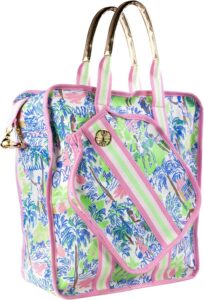
Lilly Pulitzer Pickleball Bag for Women with Storage for 2 Paddles, Zipper Pocket, Waterbottle Sleeve and Gold Details, Serving it UpLilly Pulitzer Pickleball Bag for Women with Storage for 2 Paddles, Zipper Pocket, Waterbottle Sleeve and Gold Details, Serving it Up CLICK HERE FOR PRICE


What is the Third Shot Drop?

The third shot drop is exactly what it sounds like: a soft, arcing shot played on the third shot of a rally. Here’s the typical sequence: (Remember: The serving team does the Third Shot Drop.)

  • Serve (1st shot)
  • Return of serve (2nd shot)
  • Third shot drop

After you serve and your opponent returns the ball, you (or your partner) play the third shot. The goal is to gently drop the ball over the net into the opposing team’s non-volley zone (also called the “kitchen”), where it ideally lands softly and is difficult to attack. Sounds easy but it’s not. It’s much easier to drive the ball than to execute a Third Shot Drop. A little too high and you have just given your opponents an easy put-away. Or too soft and whoops! It lands on your side of the net. Plus it takes more brain energy to remember to use this shot successfully. Yes, it’s much easier to just slam the ball back and hope for the best. As you improve and play more advanced players, the Third Shot Drop becomes strategic to the game. You will not be able to drive a ball through advanced players who are stationed at the NVZ (non-volley zone). If you want to move up, it’s going to take more effort in the form of perfecting Third Shot Drop.


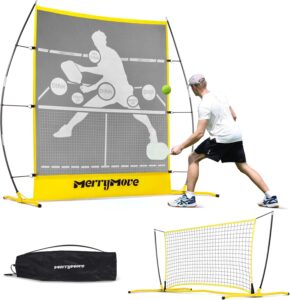
Pickleball Practice Rebounder Net: Pickleball Rebounder or 6FT Mini Pickleball Net Portable

Pickleball Practice Rebounder Net: Pickleball Rebounder or 6FT Mini Pickleball Net Portable CLICK HERE FOR PRICE


I tell my students that they have to practice the shot a thousand times ( A little dramatic but practice, practice, practice.) before they try to bring it to their game. If they don’t, too many errors and they have a better chance of a drive. But if they want to move up in level, they have to know this shot and be able to execute it.

Why is It So Important?

Pickleball is a game of positioning, and the most advantageous position is at the non-volley zone (NVZ). After serving, however, the serving team is at a disadvantage because they must stay back for the return. A well-executed third-shot drop allows the serving team time to advance to the NVZ safely.

If instead, you drive the ball hard on the third shot, it often results in an easy volley or put-away for your opponents. The drop shot neutralizes the return team’s advantage, forcing them to play a soft shot from below net level, giving you time to move up.

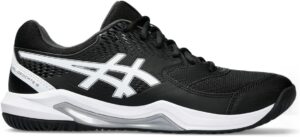
ASICS Men's Gel-Dedicate 8 Tennis Shoes
ASICS Men’s Gel-Dedicate 8 Tennis Shoes

How to Execute a Third Shot Drop

Here’s a breakdown of the mechanics:

Grip and Stance: Use a continental grip for better touch. Stay low with knees bent, paddle out front, and eyes on the ball.

Contact Point: Hit the ball after it bounces, ideally when it’s on the rise. Make contact in front of your body.

Soft Touch: Think of it like tossing an egg—you want to cradle the ball with a gentle lift, not a swat. The paddle motion is more of a slow upward arc.

Target Area: Aim to land the ball just over the net and into the kitchen. It should bounce low, making it hard for your opponents to attack.

Consistency: This shot takes time to master. Focus on control, not power. Drilling this repeatedly is key.

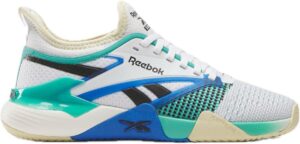
Reebok Women's Nano Court SneakerCLICK HERE

When to Use It

While the third shot drop is most common after a return of serve, you can also use drop shots later in the rally when you’re pushed to the baseline. It’s especially effective against aggressive players who hug the net and are looking for opportunities to smash.

Final Thoughts

The third shot drop isn’t flashy, but it’s fundamental. By giving your team time to move up and take control of the net, you turn defense into offense. It requires patience, finesse, and practice—but once mastered, it becomes a game-changer.

So the next time you step on the court, don’t just drive the ball—drop it with intention. Your future self (and your partner) will thank you.

Thank you for reading,
Pickleball Terry
SarasotaPickleball.com

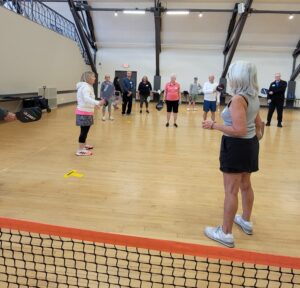
Pickleball Terry at her pickleball clinic with students in Sarasota, FL

The Difference in Balls in Pickleball

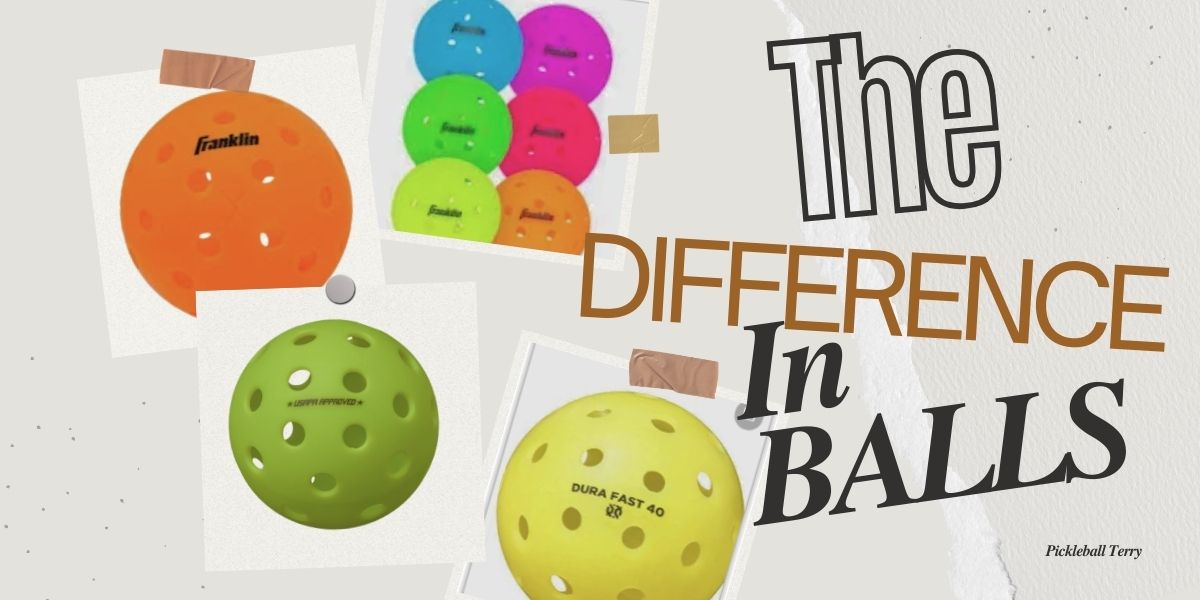
The difference in pickleballs

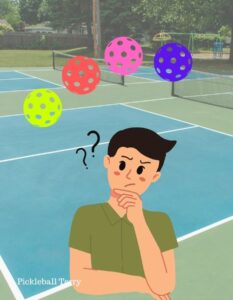
Ball wars do happen. What do I mean by “ball wars”? These are disagreements that occur on pickleball courts over the type of balls being used. Some players prefer the Franklin ball, while others favor the Dura 40. Additionally, some players prefer the orange ball, while others insist on using only the green one. I’m referring specifically to outdoor balls, which are harder and have 40 small holes. In contrast, indoor balls have 26 holes, are softer, and are designed for gym floors, making them slower than outdoor balls. I’ve seen players switch balls mid-game, provoking their opponents when they discover that the ball they wanted to use is missing.
Man thinking about whick pickleball to use

Pickleball may be simple to learn, but choosing the right equipment can make a big difference in your performance—especially when it comes to outdoor pickleballs. Unlike their indoor counterparts, outdoor balls are designed to handle wind, rougher surfaces, and the elements. But not all outdoor balls are created equal.

Let’s dive into the different types of outdoor pickleballs, what sets them apart, and how to choose the right one for your game.


https://amzn.to/4cpbOWh

CLICK HERE FOR PRICE

Key Features of Outdoor Pickleballs

Outdoor pickleballs:

  • Have smaller, more numerous holes than indoor balls (usually 40 holes).

  • Are heavier and harder to cut through wind resistance.

  • Bounce lower and travel faster than indoor balls.

  • Tend to wear out faster due to the rougher court surfaces and impact.

With that in mind, here are the most popular types of outdoor pickleballs and what makes each one unique.

dura 40 pickleballCLICK HERE TO SEE PRICE


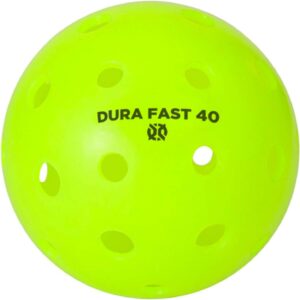
1. Dura Fast 40

Best for: Tournament play and experienced players

  • Feel: Hard and fast, offering consistent bounce and true flight.

  • Durability: Known to crack sooner than others, but widely used in official tournaments.

  • Playability: Favored by pros for its speed and precision.

Fun fact: The Dura 40 is the official ball of many major tournaments, including the USA Pickleball National Championships.


Franklin 40 for pickleball
For price click on pictures

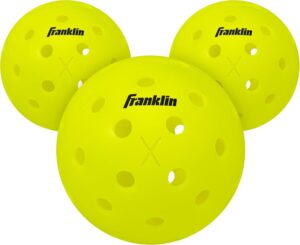
2. Franklin X-40

Best for: All-around players and clubs

  • Feel: Slightly softer than the Dura, but still fast and responsive.

  • Durability: More durable than the Dura, especially in hot weather.

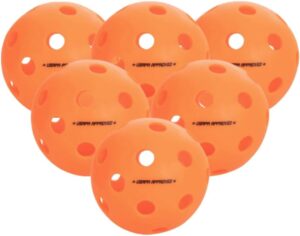
  • PlayOnix Fuse outdoor pickleballs in orangeClick here for price

  • 3. Onix Fuse G2

Best for: Beginners and intermediate players

  • Feel: Softer and quieter with a slightly higher bounce.

  • Durability: Highly durable and less prone to cracking.

  • Playability: Easier to control, making it great for learning and casual play.

The Fuse G2 is a comfortable option for players transitioning from indoor to outdoor play.


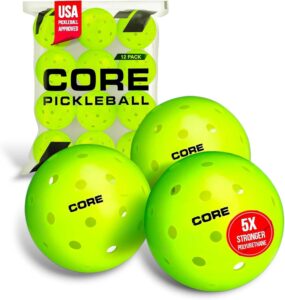
Core pickleballs in greenCLICK HERE FOR PRICE

4. CORE Outdoor Pickleballs

Best for: Durability and value

  • Feel: Similar to Franklin, but with a slightly firmer touch.

  • Durability: Designed to withstand high impact and rough surfaces.

  • Playability: Consistent bounce and good visibility, especially in yellow or neon.

CORE balls are growing in popularity due to their balance between pro-level performance and long-lasting play.


Anna Leigh Waters cheering

Choosing the Right Outdoor Pickleball

When selecting a ball, consider:

  • Your skill level: Beginners may prefer softer, slower balls for easier control.

  • Playing conditions: Harder balls perform better in windy conditions.

  • Frequency of play: If you play often, look for a ball with a reputation for durability.

  • Tournament rules: If you’re playing competitively, check which balls are USAPA-approved.


The best outdoor pickleball for you depends on your goals and playing environment. Whether you’re a weekend warrior or aiming for tournament gold, experimenting with a few types is the best way to find your match. Remember—your paddle and your strategy matter, but so does your ball.

 🇺🇸 Made in USA Pickleball Gear

Support American-made quality with this curated gear guide

Comparison Chart

Brand Product Type Made in USA? Notes
Selkirk Sport Paddles ✅ Yes Premium paddles made in Idaho. Trusted by pros.
Paddletek Paddles ✅ Yes Made in Michigan. Great for control and feel.
Engage Paddles ✅ Yes Designed and produced in Florida.
GAMMA Sports Paddles ✅ Mostly Innovative tech; made in Pittsburgh.
Franklin Balls ❌ No Manufactured in China.
Dura Balls ❌ No Formerly USA-made, now produced in China.
Onix Balls & Paddles ❌ No Designed in the US, made overseas.
American Giant Apparel ✅ Yes Durable athleticwear, made entirely in the USA.
Locale Pickleball Co. Apparel ✅ Some items Small brand. Check tags for origin.

And then there are indoor balls

🏠 What Makes Indoor Pickleballs Different?

Indoor pickleballs are built specifically for smoother, hard court surfaces with no wind or weather interference. Here’s how they stand out:

Key Features:

  • Fewer holes: Usually 26 larger holes (vs. 40 smaller ones in outdoor balls)

  • Softer plastic: Makes for slower play and better control

  • Quieter: Less noise during rallies—great for gyms and shared spaces

  • Higher bounce: Helps compensate for slicker surfaces


🔵 Top Indoor Pickleballs (and How They Compare)

1. Jugs Indoor Pickleballs

  • Feel: Soft and lightweight

  • Bounce: Higher than most—great for slower indoor courts

  • Durability: Very durable; holds up well on hardwood and tile floors

  • Best for: Beginners, casual play, and schools

📝 Note: Jugs are not USAPA approved for tournament play—but they’re a fan favorite for recreational use.


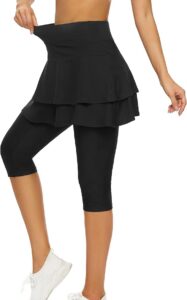
I love this skirt with leggings. So soft and nice high waist. Wish it came in more colors.

black tennis skirt with ruffles and leggins.

CICK HERE FOR PRICE


2. Onix Fuse Indoor Pickleballs

  • Feel: Slightly firmer than Jugs

  • Bounce: Consistent with a smooth feel

  • Durability: Excellent; designed for extended indoor use

  • Best for: Competitive recreational players, clubs, and training

📝 The Onix Fuse Indoor ball is USAPA-approved, which makes it a solid pick for league play.


3. Franklin X-26 Indoor Pickleballs

  • Feel: Very balanced—between soft and firm

  • Bounce: Consistent, slightly lower than Jugs

  • Durability: Good; may crack over time with heavy use

  • Best for: Players who like a bit more control and quieter hits

📝 Great for controlled rallies and technical play indoors.


4. CORE Indoor Pickleballs

  • Feel: Firm and responsive

  • Bounce: Consistent and slightly livelier

  • Durability: Designed for high-usage environments like rec centers

  • Best for: Players transitioning from outdoor to indoor

📝 A newer player in the market, but gaining popularity quickly.


⚖️ Indoor Ball Comparison Chart

Brand Holes USAPA Approved? Bounce Durability Best For
Jugs 26 ❌ No High High Beginners, schools, rec play
Onix Fuse 26 ✅ Yes Medium Very High Clubs, leagues, consistent play
Franklin X-26 26 ✅ Yes Medium Moderate Technical/control players
CORE 26 ✅ Yes Medium-High High Versatile indoor players

🎯 How to Choose the Right Indoor Pickleball

  • New to the game? Try Jugs—they’re forgiving and fun to play with.

  • Want tournament-ready play? Onix Fuse or Franklin X-26 are safe bets.

  • Looking for all-around durability? CORE Indoor or Onix Fuse are your go-tos.

So there you go. I remember the days when we were just happy to have a jug ball, but times have changed, pickleball has advanced, and so have the players.

Keep playing pickleball.

Thanks for reading,
Terry Ryan
A.K.A. Pickleball Terry

  • © 2025 Sarasota Pickleball Organization | All rights reserved


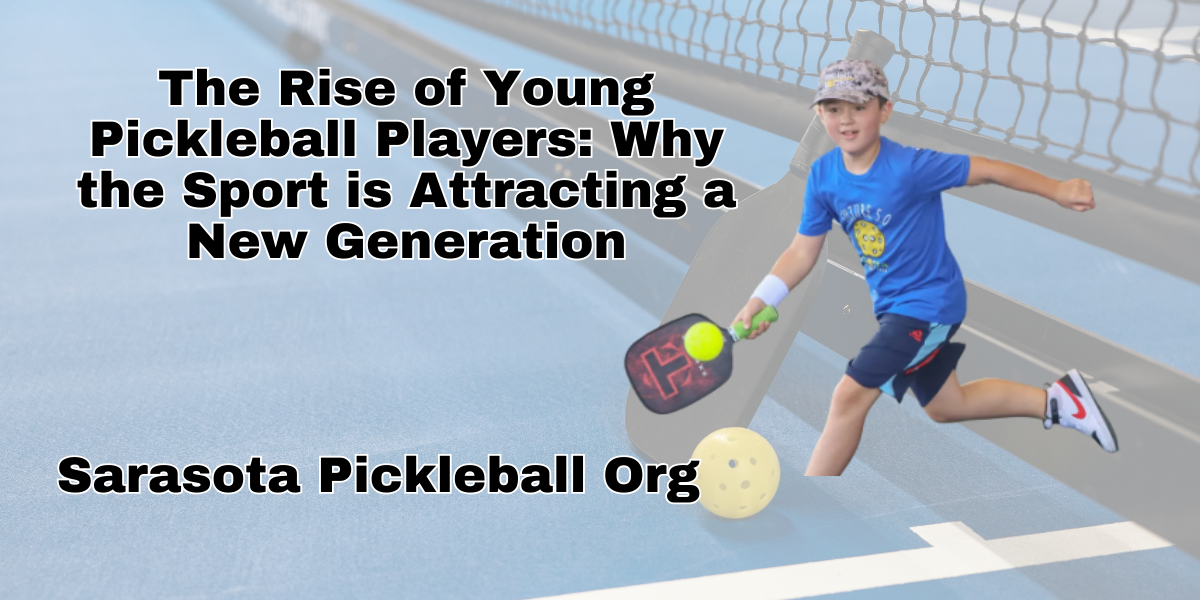
The Rise of Young Pickleball Players: Why the Sport is Attracting a New Generation

young boy playing pickleball

Pickleball has long been associated with older players, but that perception is rapidly changing. According to the Sports & Fitness Industry Association (SFIA), pickleball is the fastest-growing sport in the U.S. for the third year in a row, with a staggering 158.6% growth from 2020 to 2023. While older players still make up a significant portion of participants, younger demographics are joining in at record rates. In 2023, nearly 50% of all pickleball players were under the age of 35, proving that the sport is no longer just for retirees.

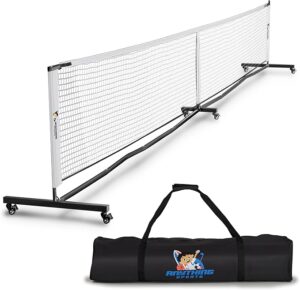
But what’s driving this surge in younger players?Heavy duty pickleball net with wheels black

Deluxe Heavy Duty Pickleball Net with Wheels
50 bought this month. Amazon choice. Click here.

1. Fast-Paced and Competitive

Pickleball is a mix of tennis, badminton, and ping pong, creating an exciting, high-energy game. Young athletes crave fast-paced sports, and with professional pickleball tournaments now offering prize pools exceeding $5 million annually, the sport is becoming a legitimate career path for elite players.

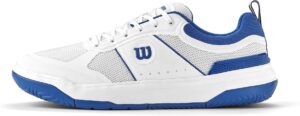
WILSON Men's Pickle Pro Sneaker

WILSON Men’s Pickle Pro Sneaker
CLICK HERE

2. Accessible and Easy to Learn

Pickleball is incredibly beginner-friendly. Research shows that 66% of new players find it easier to learn than tennis, thanks to its smaller court size and slower-moving ball. Schools and colleges are also introducing pickleball into their PE programs, with over 1,500 U.S. high schools and universities adding it to their curriculum.

3. Social and Community-Driven

Pickleball is not just a sport—it’s a social event. A survey by Pickleheads found that 70% of players say the sport has helped them make new friends. With the rise of dedicated pickleball clubs and leagues across the country, young players are finding a welcoming and competitive community to be part of.


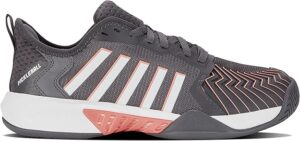
K-Swiss Women's Pickleball Supreme Shoe

K-Swiss Women’s Pickleball Supreme Shoe

CLICK HERE


4. Great for Cross-Training

Many young athletes from other sports, especially tennis, are transitioning to pickleball. A recent USA Pickleball survey found that 30% of new pickleball players previously played tennis, as it provides excellent hand-eye coordination training with lower impact on the joints.

5. The Influence of Social Media

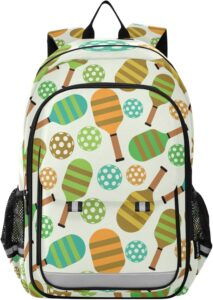
Social media has been a game-changer for pickleball’s popularity among younger players. Hashtags like #pickleball have amassed over 2 billion views on TikTok, with viral clips of rallies, trick shots, and pro matches attracting new fans daily. Top influencers and celebrities—including LeBron James, Tom Brady, and Drake—have even invested in professional pickleball teams, bringing more attention to the sport.backpack with colorful pickleball paddle printCLICK HERE

Final Thoughts

With nearly 9 million players in the U.S. and growing, pickleball is no longer just a pastime for retirees—it’s a sport that is dominating all age groups. As younger generations continue to flock to the courts, the future of pickleball is looking brighter than ever.

If you would like to get your students involved with the fastest growing sport, check out the links below.

www.mypbleague.com

https://sarasotayouthpickleball.org/service/

Thank you for reading,

Pickleball Terry-941-400-0978
Sarasotapickleball.com

Pickleball Terry is a Gearbox Dealer