
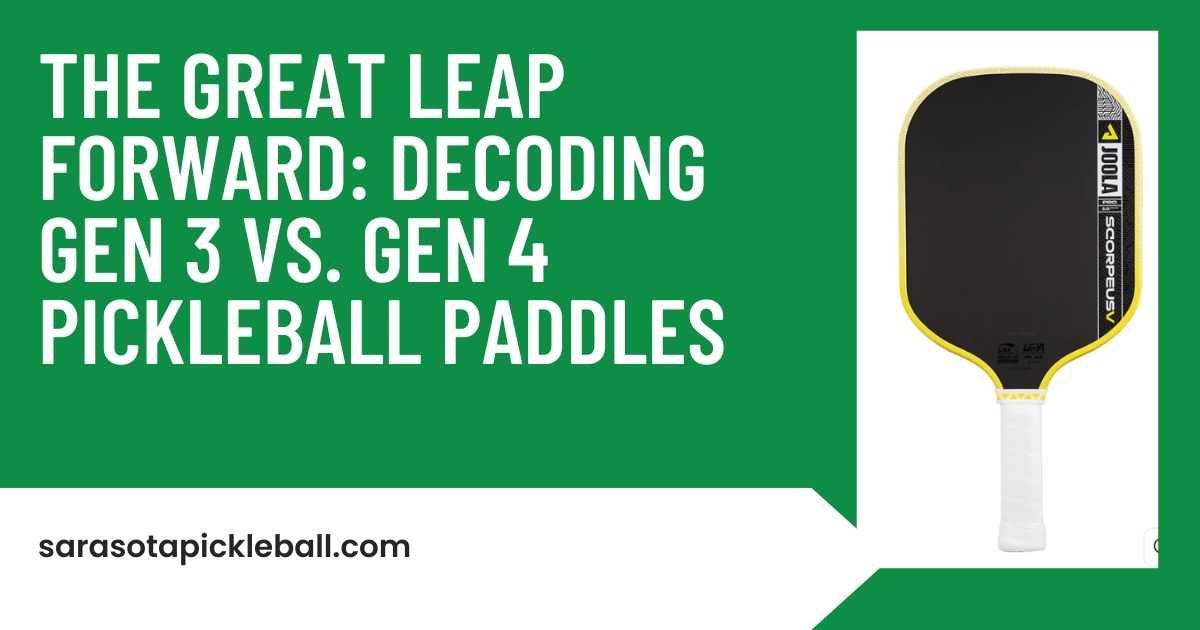
In the world of pickleball, equipment evolution is moving at warp speed. Just when you think you’ve mastered your favorite paddle, a new “generation” drops, promising to change the game. We’ve gone from the equivalent of “Prehistoric Paddles” (wooden planks) to the “Graphite Revolution” and now, we’re witnessing a battle for supremacy in the modern era: Generation 3 vs. Generation 4.
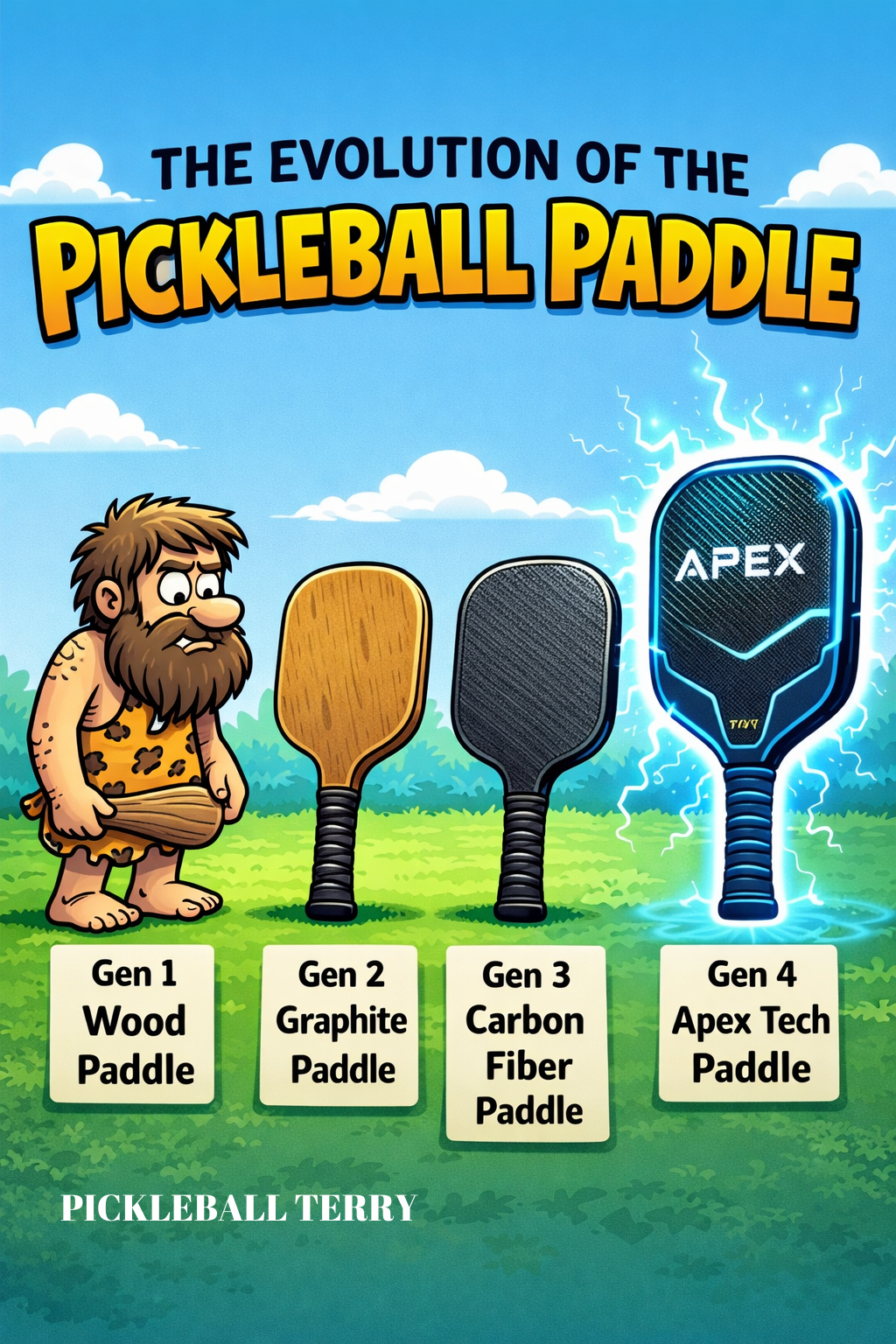 The “Evolution of the Pickleball Player” image provided perfectly captures this trajectory. We’ve left the simple “Tennis Exile” days far behind and are now firmly in the “Smart Tech Epoch.” If you’re a serious player, understanding the subtle (and sometimes radical) differences between Gen 3 and Gen 4 paddles is crucial for your next purchase.
Generation 3: Mastering the Hybrid
Generation 3 paddles were the first major jump into complex, composite engineering. They moved past basic graphite and carbon fiber faces by focusing heavily on core technology.
The hallmark of a Gen 3 paddle is the advanced honeycomb core, often made of polymer or specialized polypropylene, designed for a blend of power and control. These paddles refined the “sweet spot” and introduced technologies like perimeter weighting (for stability) and specialized textures (like raw carbon fiber) for maximum spin.
Think of Gen 3 as the era of optimization. They took the existing “Graphite Revolution” materials and engineered them to their absolute physical limits. These paddles are excellent “all-arounders,” providing a balance that many players still swear by.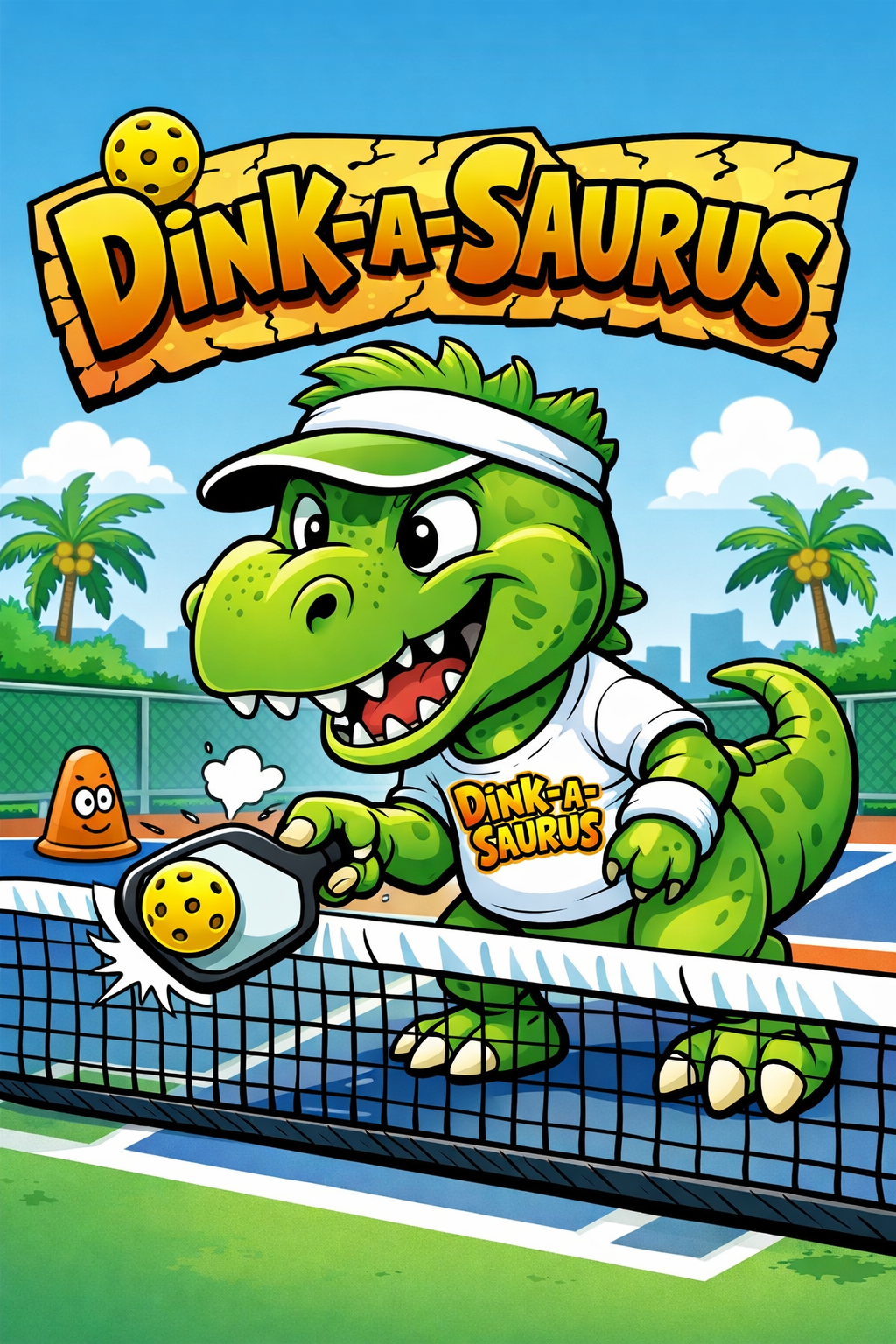
Generation 4: The Apex of Synthesis
If Gen 3 optimized materials, Generation 4 is about synthesis and the integration of technology, bordering on “The Ultimate Dink-a-Saurus” concept shown in the image. Gen 4 paddles are the frontier of innovation.
While not (yet) integrated with Wi-Fi (the day will come), Gen 4 paddles use materials and construction techniques previously reserved for aerospace engineering.
The core differentiator is the radical material integration. Instead of a simple core bonded to a face, Gen 4 paddles often use proprietary, multi-material composite cores (e.g., combining different densities or materials) or unique weaving techniques that allow the face and core to act as a single, dynamic unit. The goal is maximized energy transfer (power) without sacrificing feel and control. This technology provides a level of power, pop, and devastating spin that feels almost unnatural to those used to older gear.
The Verdict
So, which one do you need?
- Choose Generation 3 if you value a balanced, proven paddle and find the extreme power of newer models difficult to control. They are reliable workhorses.
- Choose Generation 4 if you are an aggressive player seeking cutting-edge performance, maximum spin, and raw power. If you want the “Ultimate Dink-a-Saurus” advantage and don’t mind a steeper price tag, Gen 4 is your new frontier.
Generation 3 paddles were the first major jump into complex, composite engineering. They moved past basic graphite and carbon fiber faces by focusing heavily on core technology.
The hallmark of a Gen 3 paddle is the advanced honeycomb core, often made of polymer or specialized polypropylene, designed for a blend of power and control. These paddles refined the “sweet spot” and introduced technologies like perimeter weighting (for stability) and specialized textures (like raw carbon fiber) for maximum spin.
Think of Gen 3 as the era of optimization. They took the existing “Graphite Revolution” materials and engineered them to their absolute physical limits. These paddles are excellent “all-arounders,” providing a balance that many players still swear by.
The Verdict
So, which one do you need?
- Choose Generation 3 if you value a balanced, proven paddle and find the extreme power of newer models difficult to control. They are reliable workhorses. My favorite paddle right now.
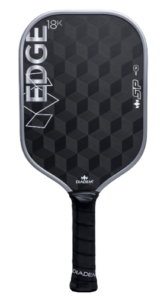
$239.95 and on sale for $174.95 Available from Pickleball Terry - Choose Generation 4 if you are an aggressive player seeking cutting-edge performance, maximum spin, and raw power. If you want the “Ultimate Dink-a-Saurus” advantage and don’t mind a steeper price tag, Gen 4 is your new frontier.
In 2026, the pickleball market has split into two distinct ways of using foam: as a perimeter stabilizer (edge injection) or as a full-core replacement for traditional honeycomb.
Hybrid Foam (Edge-Injected)
Most high-performance paddles in 2026 use foam around the outer edges. This acts as a “perimeter weight,” which expands the sweet spot and makes the paddle more stable on off-center hits. It also helps dampen the “pingy” vibration of polymer cores.
Paddles With Foam-Injected Perimeter or Edge Walls
1. JOOLA Perseus Pro IV Pickleball Paddle
-
Uses Hyper-Foam Edge Wall technology.
-
Foam injected around the paddle frame to improve stability and enlarge the sweet spot.
-
Designed for power players who want forgiveness on off-center hits.
2. Selkirk LUXX Control Air Invikta Pickleball Paddle
-
Built with FlexFoam perimeter technology.
-
Foam around the edge increases stability and reduces vibration.
-
Known for control and touch in the soft game.
3. Engage Pursuit Pro MX 6.0 Pickleball Paddle
-
Thermoformed construction with foam-injected edge walls.
-
Expands the effective sweet spot and improves paddle stability.
4. CRBN TruFoam Genesis Pickleball Paddle
-
Uses dense foam instead of a traditional honeycomb core.
-
Eliminates dead zones and produces a very consistent paddle face.
- JOOLA Ben Johns Perseus Pro IV: This remains a top choice for players who want a “connected” feel. It uses a Hyper-foam edge wall to increase pop and stability without making the paddle feel heavy or sluggish.
- Diadem Edge BluCore Hybrid: A versatile option that uses a foam perimeter ring specifically to increase the consistency of the sweet spot across the entire face. It is highly rated for its balance of power and comfort.
Engage ProFoam | High Density Foam Core Performance Pickleball Paddle –
Full Foam Core (Generation 4)
True “Gen 4” paddles have removed the honeycomb entirely. By using a solid foam core, these paddles eliminate the risk of “core crush”—a common issue where honeycomb cells break down over time. These paddles provide a “thud” rather than a “pop,” which is excellent for dwell time and spin.
Dwell time is the brief moment the ball compresses on the paddle before it springs off. Paddles with longer dwell time tend to feel softer and give players more control and spin, while paddles with shorter dwell time feel crisp and produce more power.
- CRBN TruFoam Genesis 3: This is a leading 100% foam core paddle. It is engineered to mimic the flex and dwell time of tennis strings, giving you significantly more time to “shape” the ball with spin before it leaves the paddle face.
Not to confuse you more but…When people talk about “flex time” in Gen-4 pickleball paddles, they are usually referring to how long the paddle face flexes and holds the ball before it rebounds.
It is closely related to dwell time, but flex time focuses more on the paddle bending or compressing, not just the ball contacting the face.
Simple explanation…
- When the ball hits the paddle:
The paddle face flexes slightly
The ball compresses into the paddle surfacThe paddle springs back and releases the ball
Flex time = the brief moment the paddle face is flexed before it snaps back.
- Engage ProFoam: Designed for long-term durability, this paddle uses a high-density core to provide consistent power from day one to day 100. It is a great pick if you are tired of paddles losing their “pop” after a few months of heavy play.
Choosing Your Feel
If you prefer a crisp, traditional feel with added forgiveness, look for a foam-injected edge paddle like the JOOLA. If you want a plush, quiet response and the highest possible spin potential, a full foam core like the CRBN is the way to go.
Recommendation based on playstyle:
- For Speed and Quick Hands: The CRBN TruFoam Genesis 3 is the clear winner. Its low swing weight allows for lightning-fast resets at the kitchen, and the full foam core provides the most plush, controlled feel for dinking.
- For Balanced Power: The JOOLA Ben Johns Perseus Pro IV offers a perfect middle ground. The Hyper-foam edges give you enough stability to block hard drives, while the honeycomb center maintains the classic pop needed for put-away shots.
- For Maximum Stability: If you find yourself hitting the ball off-center frequently, the Diadem Edge BluCore Hybrid provides the most forgiveness due to its slightly higher static weight and perimeter ring.
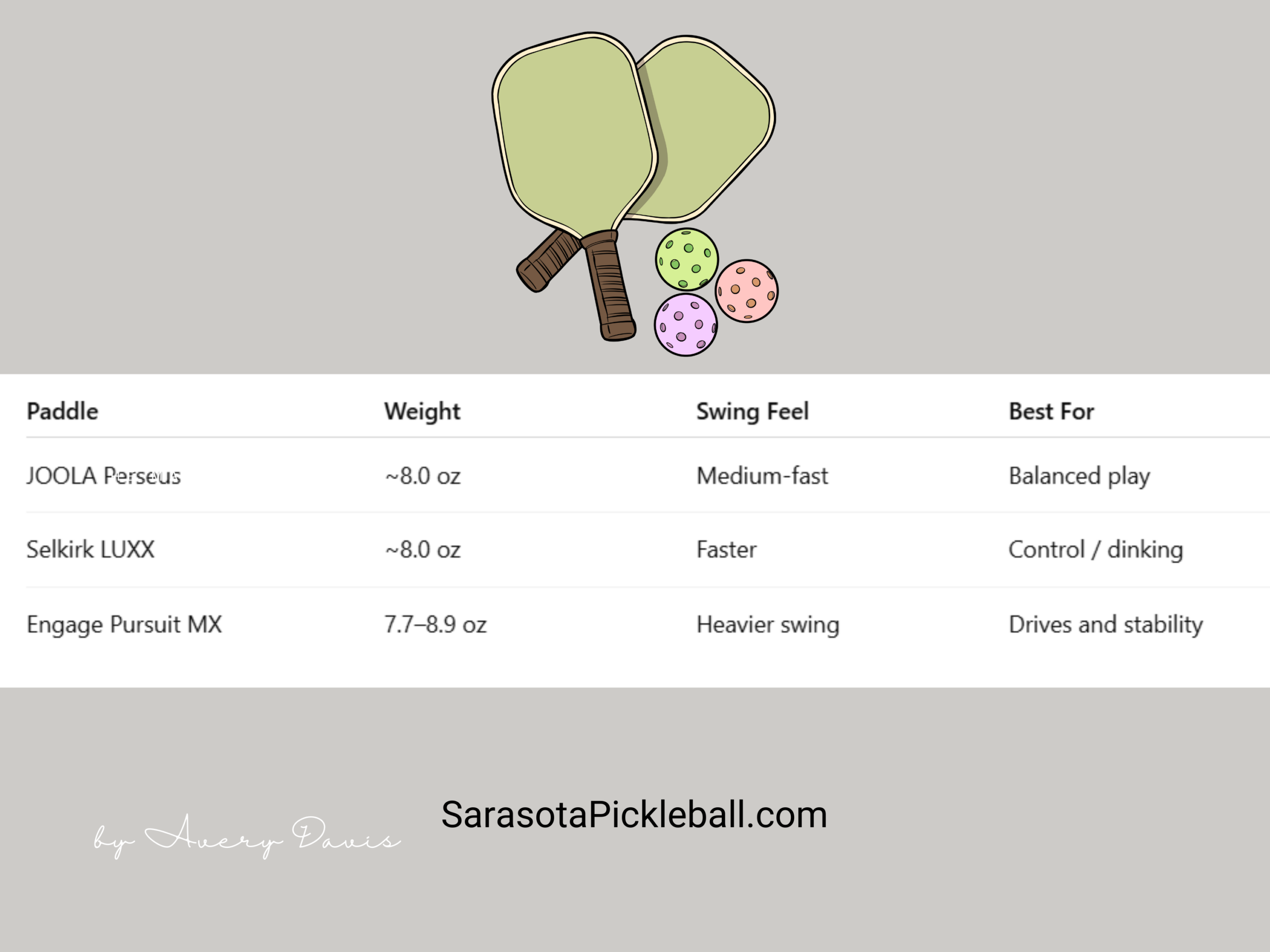
To help you decide between these modern foam-integrated options, I’ve compared their weights and swing speeds. These factors are critical for determining how “fast” a paddle feels at the kitchen line and how much effort it takes to reset hard-hitting shots.
Which one should you choose?
- For Speed and Quick Hands: The CRBN TruFoam Genesis 3 is the clear winner. Its low swing weight allows for faster resets during fast-paced volleys, and the full foam core provides the softest feel for precise dinking.
- For Balanced Power: The JOOLA Ben Johns Perseus Pro IV offers a versatile middle ground. The Hyper-foam edges provide stability to block hard drives, while the center maintains the crisp pop needed for put-away shots.
- For Maximum Forgiveness: If you hit the ball off-center frequently, the Diadem Edge BluCore Hybrid provides the most consistency due to its perimeter ring design and slightly higher mass.
Player Insights & Tournament Performance
- The “Hybrid” Experience (Gen 3): High-level players often praise the JOOLA Ben Johns Perseus Pro IV for its predictable response. In tournament play, the Hyper-foam edge wall is noted for reducing “dead spots,” allowing players to successfully reset hard drives even when they don’t hit the exact center of the paddle.
- The “Full-Core” Shift (Gen 4): Reviewers of the CRBN TruFoam Genesis 3 highlight the unique dwell time. Because the ball sinks into the foam face, players report being able to generate “massive amounts of topspin” that simply wasn’t possible with older honeycomb designs.
- Sweet Spot Consistency: The Diadem Edge BluCore Hybrid is frequently cited by instructors as a great “transition” paddle. The perimeter foam ring provides a very forgiving feel, making it easier for players moving up from intermediate gear to maintain consistency under pressure.
Comparison of Foam-Integrated Models
| Engage ProFoam | High Density Foam Core Performance Pickleball Paddle –
|
CRBN TruFoam Genesis 3 Pickleball Paddle
|
Diadem Edge BluCore Hybrid Pickleball Paddle
|
|
| Foam Tech | Edge Injection | Full Foam Core | Perimeter Ring |
| Vibration Dampening | High | Maximum | Moderate |
| Ball Feel | Crisp/Connected | Plush/Soft | Solid/Stable |
| Ideal Playstyle | Aggressive All-Court | Dink & Spin Specialist | Consistent/Forgiving |
Final Recommendation
- If you want a paddle that feels fast and soft for a touch-heavy game, go with the CRBN TruFoam Genesis 3.
- If you need stability and power for a competitive tournament environment, the JOOLA Ben Johns Perseus Pro IV is the most trusted hybrid option.
I remember the old days when we were happy with a wooden paddle and a Jug pickleball ball. Now, you have to practically be a scientist learning about the next generation of paddles. Stick with me, and I’ll try to keep up for you.
Thanks for reading,
Pickleball Terry