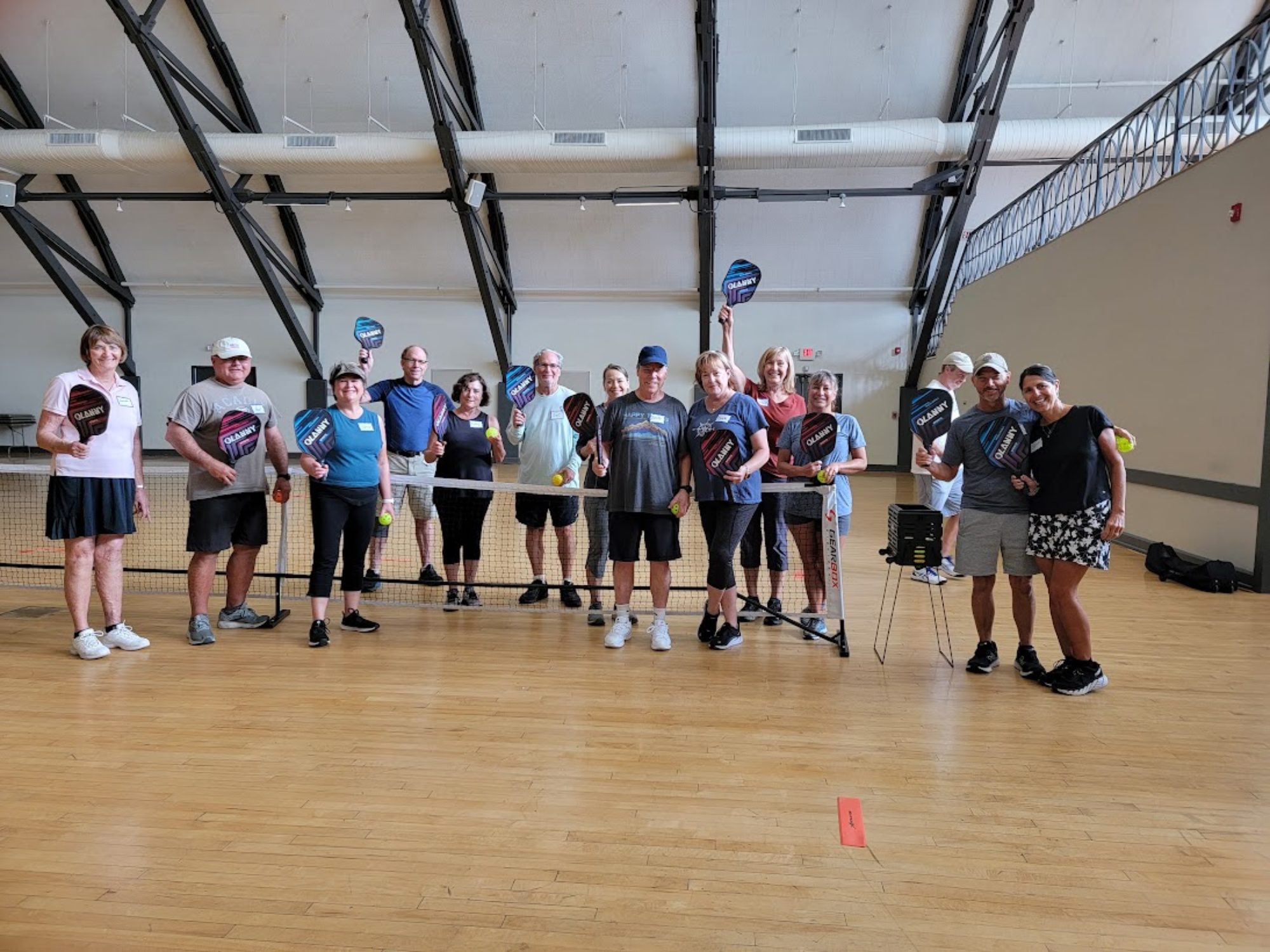


Human Growth Hormone and Pickleball: A Natural Boost for Health and Longevity

By Pickleball Terry

Human Growth Hormone (HGH) is one of the body’s most important hormones when it comes to health, energy, recovery, and aging. Produced by the pituitary gland, HGH plays a major role in muscle growth, fat metabolism, bone density, and cellular repair. When people talk about “feeling young,” a lot of that vitality is connected to healthy levels of growth hormone circulating through the body.
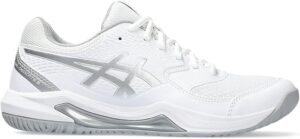
Adidas Gel Woman's Court Shoe
ASICS Women’s Gel-Dedicate 8 Tennis Shoes
Still a favorite on the courts! Check Amazon.
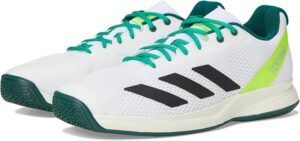
Mens Adidas Court Flash Pickleball Shoes
Mens Adidas Court Flash Pickleball Shoes On Sale! Check Amazon

As we age, HGH naturally declines. By the time someone reaches their 40s or 50s, levels can be significantly lower than they were in youth. This decline is associated with reduced muscle mass, slower recovery from exercise, increased body fat, and lower energy levels. While some people explore medical treatments, many scientists agree that lifestyle habits can significantly influence natural HGH production.
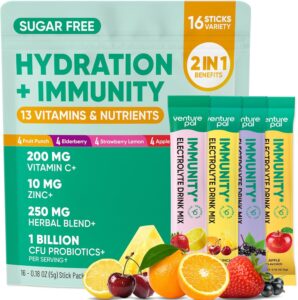
Liquid Hydration with vitamins
Venture Pal 2-in-1 Hydration + Immune Electrolytes Powder Packets with 7 Electrolytes & 6 Vitamins, Elderberry, Turmeric, Echinacea | Liquid Daily IV. Check Amazon

This is where pickleball enters the picture.

Pickleball may look like a simple recreational sport, but it actually contains many of the elements known to stimulate the body’s natural production of growth hormone. Short bursts of activity, quick movements, and interval-style exertion are all triggers for HGH release.

During a typical pickleball game, players sprint for a shot, recover quickly, reset, and then repeat. These bursts of effort resemble a form of high-intensity interval training (HIIT), which research has shown to stimulate growth hormone release. When your body experiences short, intense bouts of activity followed by recovery periods, the pituitary gland responds by increasing HGH output to help repair tissues and support muscle recovery.
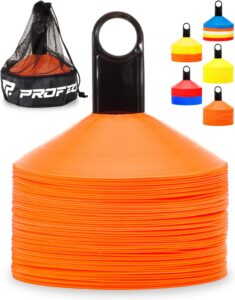
coach training cones
Every player needs these for training. Check Amazon

Another important factor is muscle engagement. Pickleball uses multiple muscle groups at the same time: legs for movement, core for balance, shoulders and arms for paddle control. This full-body involvement signals the body to repair and strengthen muscle fibers after play. Growth hormone plays a key role in that repair process.

Sleep is also deeply connected to HGH production, and regular physical activity like pickleball helps improve sleep quality. The largest release of growth hormone occurs during deep sleep. Players who exercise during the day often fall asleep faster and experience deeper rest, which in turn promotes higher nighttime HGH release.
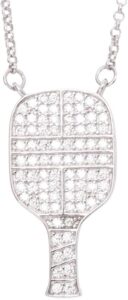
Hit Happy Pickleball Pendant with sterling silver
Material Sterling Silver
Metal type Platinum, Sterling Silver 
Clasp type Lobster
Chain type Cable
Gem type Cubic Zirconia Check Amazon

There is also a social component that indirectly supports hormone health. Pickleball is one of the most social sports in the world. Laughter, friendly competition, and connection with other players reduce stress hormones like cortisol. High levels of cortisol can suppress growth hormone production. When players are relaxed, engaged, and having fun, the body maintains a more balanced hormonal environment.

For players looking to maximize the HGH benefits from pickleball, a few simple habits can help.

Play with intensity during rallies. Move your feet, chase balls, and avoid standing flat-footed between shots.

Play regularly. Three to five sessions per week provides consistent stimulation for the body.

Strength train a couple times a week. Adding light resistance training supports the same muscle repair systems that rely on growth hormone.

900 Bought This Month
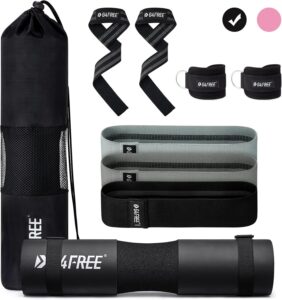
G4Free 9Pcs Barbell Pad Set for Squat, Hip Thrusts, Lunges, Leg day, Standard Olympic Bars with 2 Gym Ankle Safety Straps, 3 Hip Resistance Bands, 2 Lifting
G4Free 9Pcs Barbell Pad Set for Squat, Hip Thrusts, Lunges, Leg day, Standard Olympic Bars with 2 Gym Ankle Safety Straps, 3 Hip Resistance Bands, 2 Lifting check Amazon
Pickleball Terry's Pickleball tour of Costa Rica.
Do you love pickleball? Do you love exploring nature and going on tours in another country? Then go to pickleballandcostarica.com


Prioritize sleep. Aim for seven to eight hours of quality sleep so the body can perform its nightly hormone release.

Finally, avoid excessive sugar and highly processed foods, which can interfere with hormone balance.

The beauty of pickleball is that it doesn’t feel like a workout. People show up to play, laugh with friends, compete a little, and enjoy being outside. Yet beneath the surface, the body is engaging powerful biological systems that promote strength, recovery, and long-term health.

Cover of Sarasota Pickleball Magazine

In other words, every time you step onto the pickleball court, you may be doing more than just playing a game. You are giving your body one of the natural signals it needs to stay strong, resilient, and youthful.

Thanks for reading. Share your thoughts.
I love pickleball! Dinkpickleball@gmail.com

Pickleball Terry

 

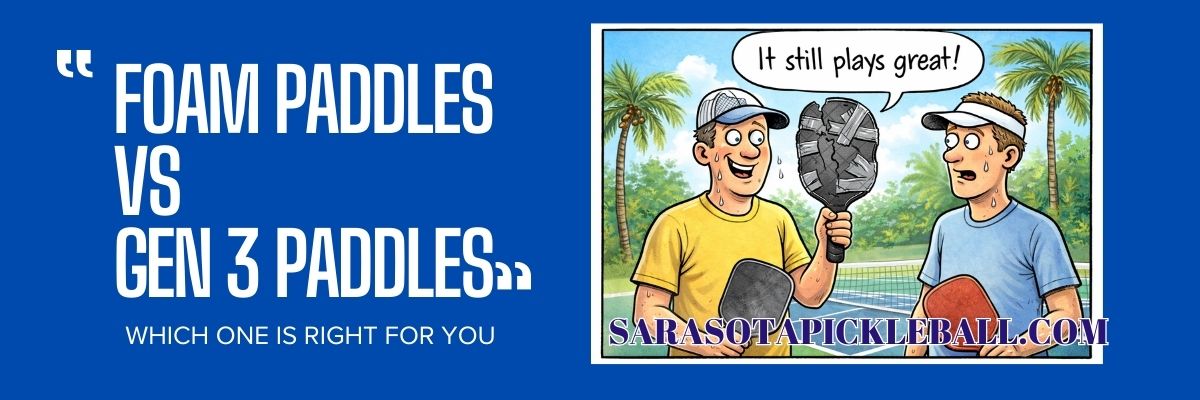
Foam Pickleball Paddles: What Players Need to Know About the Newest Paddle Trend

Foam Pickleball Paddles: What Players Need to Know About the Newest Paddle Trend

If you’ve been hearing more chatter about foam pickleball paddles, there’s a good reason. This new paddle technology is quickly gaining traction with recreational players, competitive amateurs, and even pros who are looking for more consistency, comfort, and long-term durability.

Traditional pickleball paddles use a polymer honeycomb core. While that design has worked well for years, many players have experienced “core crush” — a breakdown of the internal structure that leads to dead spots, unpredictable power, and reduced control over time. Foam paddles are designed to solve that problem.

Foam paddles use a high-density foam core instead of hollow cells. The result is a more solid interior that holds its shape longer and delivers consistent performance match after match. For players, that means the paddle you love on day one should feel very similar months down the road.

One of the biggest benefits players notice immediately is improved feel and control. Foam absorbs vibration extremely well, which creates a softer response on contact. Dinks feel more controlled, resets sit better in the kitchen, and mishits are more forgiving. Players dealing with tennis elbow or arm fatigue may especially appreciate the reduced shock.

Another advantage is the expanded sweet spot. Because foam distributes energy more evenly across the face, shots hit slightly off-center still travel cleanly. This is a big win for players working on consistency or transitioning into faster, higher-level play.

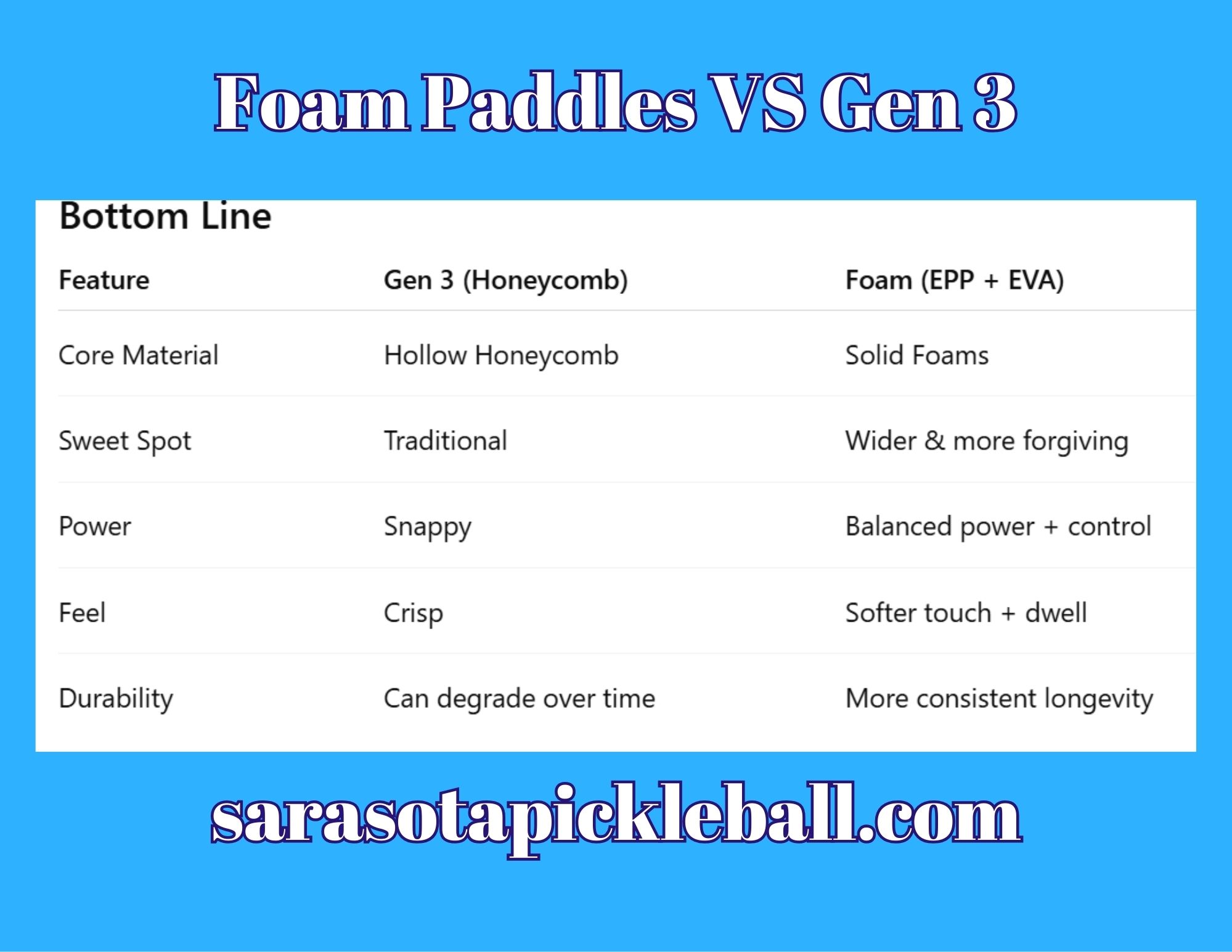
Power players won’t feel left out either. When paired with carbon fiber or textured faces, foam paddles can still generate plenty of pop and spin. The difference is that the power feels more controlled instead of explosive and unpredictable.chart of foam vs Gen 3 paddles

There are currently two main styles on the market:

  • Full foam paddles, which use foam throughout the entire core
  • Foam-enhanced paddles, which blend foam with traditional materials for added stability

So, who should consider switching? Players who value control, touch, durability, and comfort are excellent candidates. Foam paddles may feel slightly different at first, but many players adjust quickly — and don’t want to go back.

As paddle technology continues to evolve, foam paddles are shaping up to be one of the most meaningful upgrades the sport has seen. If consistency and feel matter to your game, foam might be worth a serious look.

EPP Foam Core vs EVA Foam: What’s the Real Difference?

EPP Foam (Expanded Polypropylene)

Think: structure, power, durability

What it is:
EPP is a rigid, resilient foam that rebounds quickly and resists permanent compression.

How it plays:

  • Produces more pop and power
  • Feels firmer at contact
  • Returns energy quickly to the ball
  • Maintains performance over time (less “break-in” change)

Why brands use it:

  • Excellent structural integrity
  • Very durable — resists core crush
  • Holds its shape after thousands of hits

Where it’s usually placed:

  • Center of the paddle core
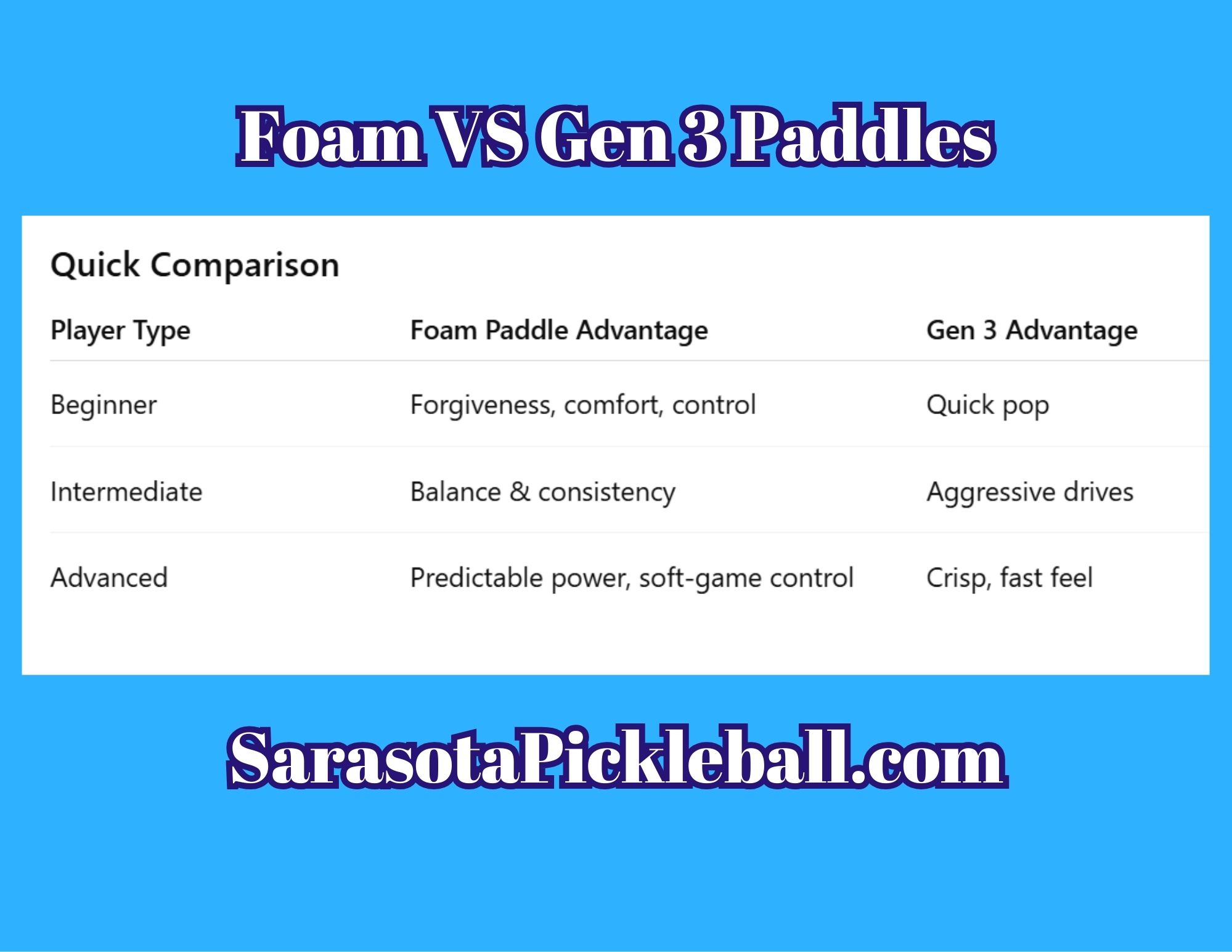
  • Anywhere power and stability are neededFoam vs Gen 3 paddles chart

Best for players who:

  • Drive the ball
  • Play aggressive baseline or transition game
  • Want consistency over the life of the paddle

EVA Foam (Ethylene Vinyl Acetate)

Think: softness, control, dwell time

What it is:
EVA is a softer, more flexible foam commonly used in shoe midsoles and vibration dampening.

How it plays:

  • Feels plusher and quieter
  • Absorbs vibration
  • Softens mishits

Why brands use it:

  • Improves touch and control
  • Expands the sweet spot
  • Reduces arm fatigue

Where it’s usually placed:

  • Edges of the paddle
  • Around the perimeter or sidewalls
  • Rarely used alone as a full core

Best for players who:

  • Value dinks, drops, and resets
  • Want forgiveness on off-center hits
  • Deal with elbow or wrist issues

Why Many Paddles Use Both

The newest designs combine EPP + EVA to get the best of both worlds:

  • EPP in the center → power, structure, durability
  • EVA on the edges → softness, control, forgiveness

This dual-foam approach creates a paddle that feels explosive when you swing hard, but controlled and stable in the soft game.


Foam vs Gen 3 Pickleball Paddle: Quick Decision Checklist

Choose a FOAM Paddle if…

☐ You want a larger sweet spot
☐ You value control and touch over raw pop
☐ You struggle with off-center hits
☐ You play a strong soft game (dinks, drops, resets)
☐ You want consistent performance over time
☐ You prefer a quieter, softer feel
☐ You experience arm or elbow discomfort
☐ You want more forgiveness in fast-hand battles
☐ You like a paddle that feels stable at the edges

Best for:

  • Beginners
  • Control-focused intermediates
  • Players who build power through mechanics
  • Players prioritizing consistency and durability

 Choose a GEN 3 Paddle if…

☐ You like instant pop and quick rebound
☐ You play an aggressive power game
☐ You prefer a crisp, connected feel
☐ You generate pace with short swings
☐ You like a paddle that feels lively and fast
☐ You don’t mind a smaller sweet spot
☐ You frequently counterattack at the net
☐ You’ve used honeycomb paddles for years

Best for:

  • Advanced players
  • Power-first players
  • Fast hands & counter specialists
  • Players who like immediate feedback

🔍 Still Not Sure? Ask Yourself These 5 Questions

  1. Do I miss-hit often under pressure? → Foam
  2. Do I rely on pop more than placement? → Gen 3
  3. Do I want the paddle to feel the same all season? → Foam
  4. Do I want maximum speed off the face? → Gen 3
  5. Do I prioritize resets and drops? → Foam

Pickleball Terry’s Bottom Line

There’s no “better” paddle — only a better match for your game.

  • Foam paddles reward patience, control, and consistency.
  • Gen 3 paddles reward speed, aggression, and quick hands.

The best paddle is the one that lets you play confidently when points matter.

Sarasotapickleball.com

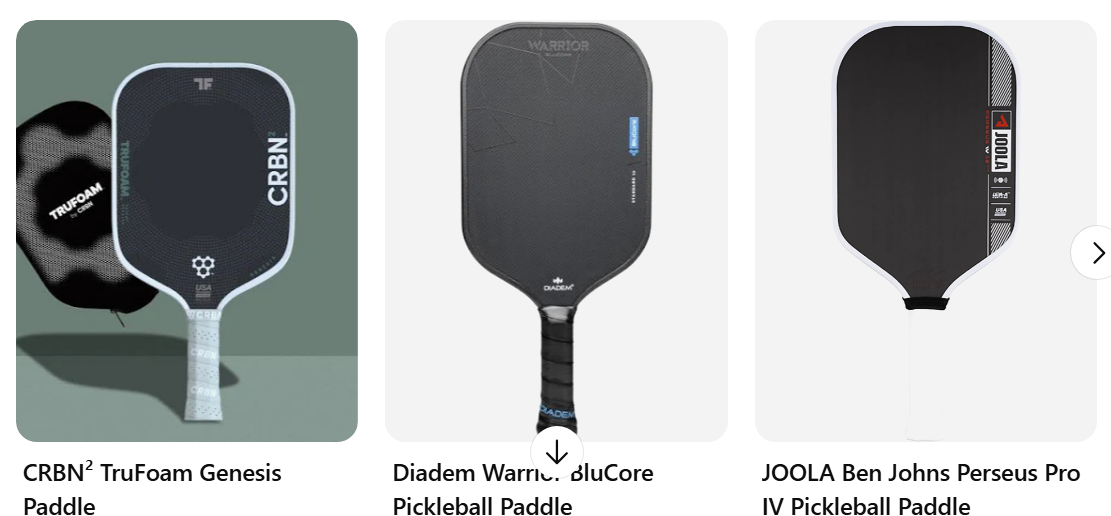
CRBN Pickleball – TruFoam Waves Paddle – Carbon Fiber Pickleball Paddle – 100% Foam Core Designed for Maximum Power, 14mm

Diadem Edge BluCore Pro Pickleball Paddle | Ultimate Power, Spin & Consistency, Extended Reach, Premium 18K Carbon Fiber, PowerSync Foam Core | USAPA Approved

JOOLA Ben Johns CAS Perseus or Hyperion 16mm Carbon Fiber Pickleball Paddle – CAS Surface Tech – Control & Power Paddle – USAP Approved – Aero Curve – Feel-Tec Pure Grip – NFC Chip


Thanks for reading!
Pickleball Terry

Rebuttle to the New York Post Article about Pickleball Being a Dangerous Addiction

rebuttal to the New York Post Article about pickleball

Rebuttal: Pickleball Is Not a Drug—It’s a Lifelong Passion With Balance

Headline from the New York Post:
Doctors warned that “pickleball is a drug” as injuries rise among fervent players getting triangle fractures, wearing designer heels—even matching paddle and shoes. New York Post

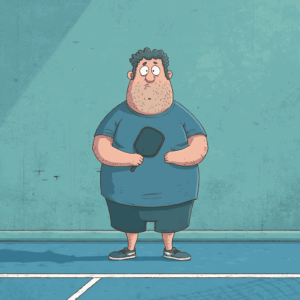
Here’s how I would reframe this, not dismissing the concerns, but celebrating why that enthusiasm is a gift, and how balancing passion, safety, and joy makes it sustainable. By Pickleball TerryA cartoon of an chubby pickleball player

  1. Passion Isn’t Addiction, it’s Community
  • What’s being misconstrued: Doctors compare pickleball to “a drug” for the intensity it inspires. Some players are calling it an obsession, prioritizing paddle color over proper gear. New York Post
  • Rebuttal: Pickleball’s explosive growth—19.8 million Americans played in 2024, up 311% since 2021 New York PostWikipedia+1—shows it offers community, fitness, and fun, especially for those seeking meaningful connections after retirement.
  • Local angle (Sarasota): Players I know come for the rallies but stay for the post-game friendships and casual chats. It’s a joy that, done responsibly, brings health and happiness and not harm.
  1. Injuries Are Real But Preventable—Like Any Sport
  • What the article notes: A spike in injuries like ruptures, torn menisci, and wrist fractures, has orthopedic doctors urging warm-ups, cooldowns, and correct footwear. New York Post
  • Rebuttal: That doesn’t mean the sport is harmful, it means precaution is essential. Like tennis, biking, or golf, pickleball is a fast-paced activity demanding preparation.
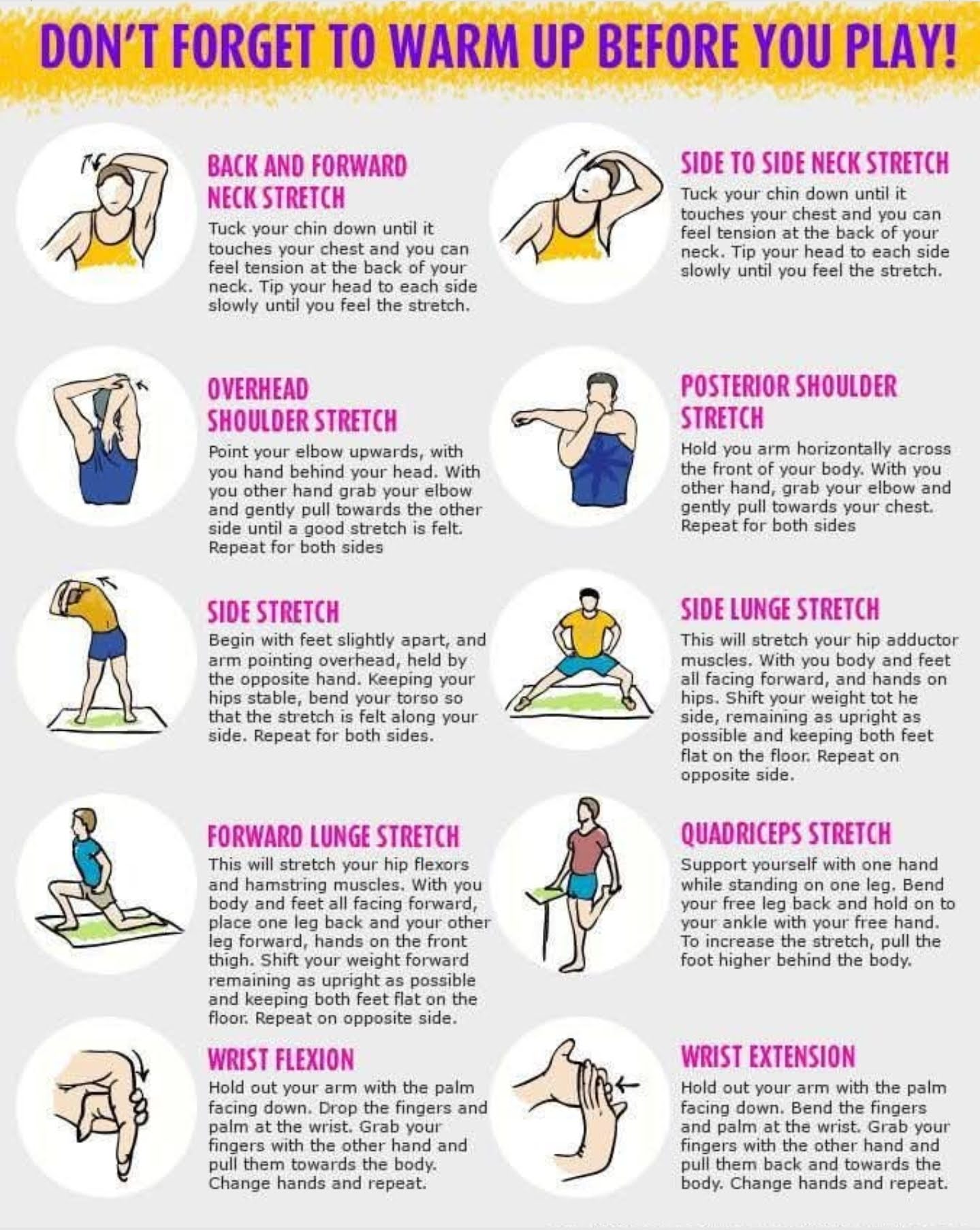
  • What we preach: At Sarasota courts, local coaches are teaching pre-game stretches, proper shoe choice, and knee-strength drills. I know that Coach Julie Stewart and I always start off with warmups. Safe training is sustained playing. Check with Dr. Frank, the Pickleball PT, and he will show you the proper way to warm up.  Click Here
  1. Style Can Still Be Smart
  • Point of tension: The article ridicules players who match paddle colors to shoes—even a patient who wore designer heels to her doctor appointment. New York Post
  • Rebuttal: Love and pride in your gear isn’t vanity. It’s just showing style. Gear can match identity, but balance means pairing style with stability. No more designer heels mid-rehab; just bright sneakers that support every dink and drive.

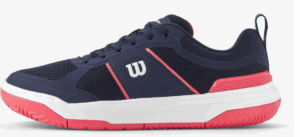
WILSON Women's Pickle Pro Sneaker
WILSON Women’s Pickle Pro Sneaker Click Here
  1. Pickleball Heals
  • Positive angle to uplift: Across the country and beyond, pickleball is making a difference in tough places. In California prisons, pickleball has become a rehabilitative lifeline, improving mental health, connection, and reducing disciplinary incidents. SFGATE
  • In spirit: So yep, pickleball feels addictive, but in the best possible way. It improves recovery, belonging, and purpose. It brings light into all of our lives.
    Check out my book: Pickleball and the Art of Starting Over. Click here

“Enthusiasm isn’t addiction. Pickleball becomes a problem only when it’s done without balance, care, or community. Injuries ease with warm-up.”
Pickleball Terry

Pickleball warm-ups
illustrations

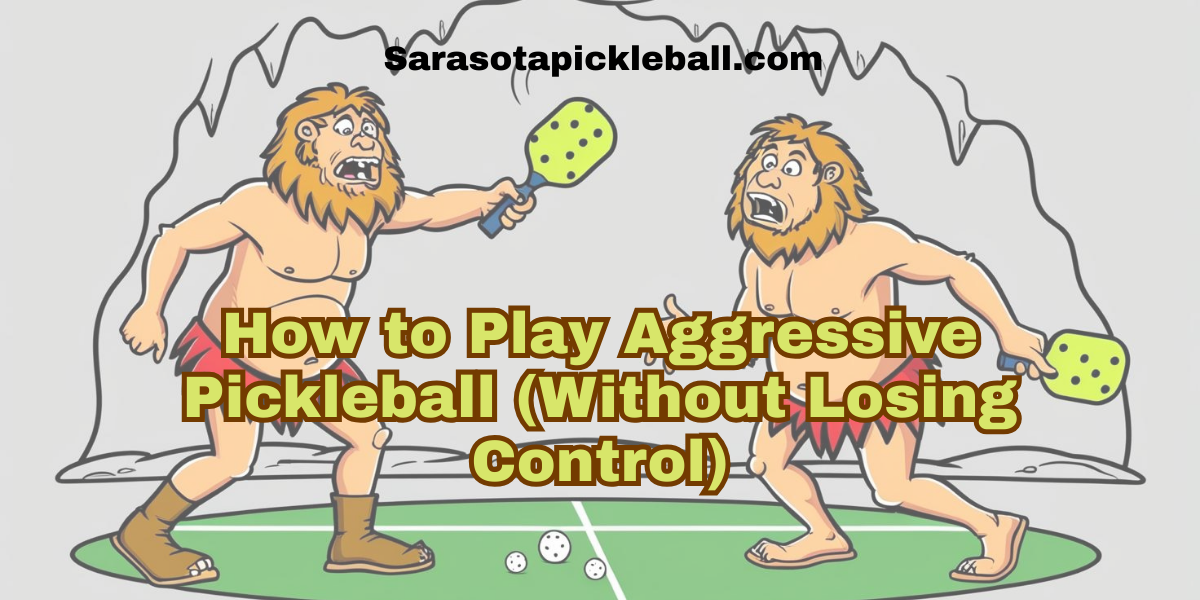
How to Play Aggressive Pickleball (Without Losing Control)

two cave men playing pickleball
Note: SarasotaPickleball.com was rewarded this honor. https://bloggers.feedspot.com/pickleball_blogs/How to Play Aggressive Pickleball (Without Losing Control)If you want to win more pickleball matches, sometimes the best defense is a great offense. Playing aggressively on the court can help you take control, apply pressure, and dominate — but it needs to be smart and strategic.
Here’s how to bring aggressive play into your pickleball game without becoming reckless.


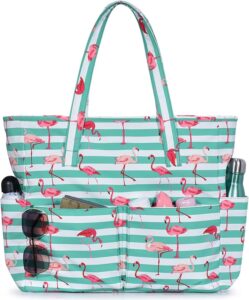
adorable beach bag with pink flamingosCLICK HERE


🔥 What Is Aggressive Pickleball?

Aggressive pickleball isn’t just about hitting the ball hard. It’s about:

  • Taking control of the net
  • Applying pressure on weak shots
  • Attacking at the right moments
  • Moving with purpose and confidence
  • Finishing points decisively

Aggression is about mindset as much as mechanics.

✅ Benefits of Playing Aggressively

1. Forces Opponent Errors

When you play fast and aggressively, your opponents have less time to react — leading to more unforced errors.

2. You Control the Tempo

Aggressive players dictate how rallies unfold. You’re playing offense, not defense.


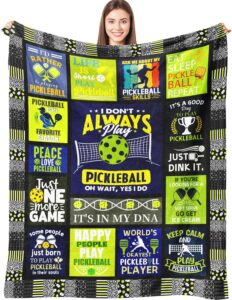
Pickleball beach blanket

CLICK HERE


3. Creates Momentum

An aggressive approach fuels energy and momentum, shifting a match in your favor, especially in doubles.

🎯 5 Ways to Play Aggressive — the Smart Way

1. Own the Kitchen Line

After your third shot, rush the net and hold the line. This is where most points are won. From this position, you can:

  • React faster
  • Pressure opponents with volleys
  • Cut off angles

2. Attack Weak Shots

Look for:

  • Pop-ups
  • High dinks
  • Weak serves or returns

When you see a ball sitting up, go for it — but stay in control. Target feet, hips, or open court space.


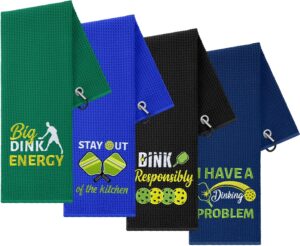
 4 Pieces Funny Dinkball Towels Microfiber Cotton Athletic Towels

4 Pieces Funny Dinkball Towels Microfiber Cotton Athletic Towels click here


3. Use Smart Placement

Aggression doesn’t always mean power. Well-placed shots can be just as deadly:

  • Sharp cross-court angles
  • Deep drives to the backhand
  • Roll volleys into the body

4. Anticipate & Move Early

Aggressive players don’t wait — they read and react. Stay light on your feet and anticipate your opponent’s next shot.

5. Keep Your Cool

Playing aggressively doesn’t mean playing emotionally. Stay calm, composed, and calculated. Smart aggression wins — not wild swings.

⚠️ When Not to Be Aggressive

Don’t attack just for the sake of it. Know when to reset the rally instead. Avoid attacking when:

  • The ball is low or skimming the net
  • You’re off-balance
  • You’re out of position

Patience is part of being aggressive — wait for the right ball.

🔁 Drills to Build Aggressive Skills

  • Third Shot Drive + Crash Drill
    Hit a third shot drive and follow it to the net quickly. Practice footwork and court positioning.
  • Attack vs. Reset Game
    One player attacks; the other focuses on resets. Switch roles every 5 minutes.
  • Fast Hands Volley Battle
    Stand at the kitchen line and rapid-fire volleys with a partner to train reflexes.

🧠 Final Tip: Controlled Aggression Wins

If you want to level up your game, don’t just “play it safe.” Be the player who takes initiative, attacks smartly, and stays one step ahead.

When done right, aggressive pickleball is confident, calculated, and incredibly effective.


Want more pickleball tips? Subscribe to our newsletter and get weekly insights straight to your inbox.

Thanks for reading!

Pickleball Terry

Flick Weight: The Secret Sauce Your Paddle Needs

pickle cartoons with title Flick weight the secret sauce

How long as everybody known about flick weight and why have I just heard about it? Pickleball…I learn something new everyday.

First, a new paddle company called me from North Carolina and asked if he could send me one of their paddles to try? (Of course, I said, “sure.” This Pickleball Terry thing does come with great perks.) Then he started telling me about paddle weight, swing weight and then flick weight. Flick weight? What the heck? I let it slide. But then I’m on TikTok (bye bye TikTok) and there was a pro showing how to to apply a swing weight to your paddle. Okay, now I have to do a deep dive. Flicking is essential to a 3.5 level player and up. And here is what I found.

Flick Weight: The Secret Sauce Your Paddle Needs
  1. When someone says a paddle is “heavy,” they often mean it feels unbalanced (hello, high flick weight 🙄).
  2. A paddle with a high swing weight doesn’t have to be slow at the kitchen line—it might actually have a low flick weight and feel zippy.

Curious? Stick around, and we’ll dive into the  details.


The Pickleball “Heavy Paddle” Myth 🧐

There’s this old-school idea floating around pickleball circles:

  • Heavy paddles = power on drives but sloooow at the kitchen line.

Everyone says it—weekend warriors, paddle nerds, even your favorite pro.

But here’s the twist: this “wisdom” might be totally wrong.

You can absolutely have a paddle with the power of a cannon and the speed of a hummingbird. The key? Understanding flick weight.

You can absolutely have a paddle with the power of a cannon and the speed of a hummingbird.

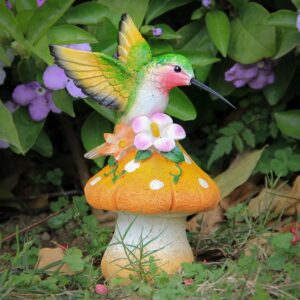
Humbird statue for gardens
Hummingbird Stand on Mushroom for Garden Decorations,Hummingbird Statue for Outdoor Backyard Yard Porch Patio Lawn Outside

What the Heck Is Flick Weight? 🤔

First, let’s talk about the usual suspects:

  1. Actual Weight (Static Weight): How much the paddle weighs, like 8.1 oz.
  2. Swing Weight: How heavy the paddle feels when you swing it from your shoulder.
  3. Twist Weight: How stable the paddle is on off-center hits (goodbye, wobbly mis-hits).

Now, meet the underdog: Flick Weight.

Flick weight measures how the paddle feels when you flick your wrist. It’s the secret sauce for quick reactions at the kitchen line.

  • High flick weight: The paddle feels sluggish and clunky.
  • Low flick weight: The paddle feels light and snappy.

Why Flick Weight Rules in Pickleball 👑

In pickleball, flicking your wrist is everything—think rolls, dinks, and counter-attacks. Unlike tennis, where big shoulder swings are the norm, pickleball requires speed and precision right at the net.

That’s where flick weight comes in:

  • A paddle with low flick weight is like a ninja—light, fast, and always ready.
  • A paddle with high flick weight feels like swinging a frying pan at a fruit fly.

The Balance Point Experiment 🧪

Some paddle fanatics measured 20 paddles using a Briffidi BP1 Racquet Balance Device (fancy, right?). Here’s what we found:

  • A paddle with a balance point at 24.1cm (6″) from the butt cap feels… balanced (duh).
  • Adding weight to the butt cap lowers flick weight without messing with swing weight.

Here’s how it works:

  • 1/4 oz (7g) on the butt cap drops flick weight by 1 point.
  • Add 1 oz (28g), and your paddle goes from flick weight 6 (balanced) to flick weight 2 (crazy fast).

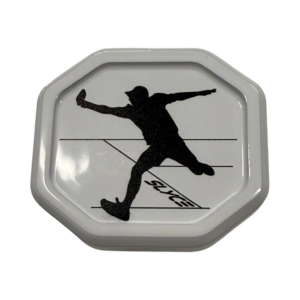
SLYCE Weighted SpeedCap (28g, 1.0 oz.) Paddle Performance Enhancer order here.

I just received a discount code for 10% off. Use Dinkpb10

adidas womens court shoes
Adidas Women’s Court Shoes

Why “Heavy” Doesn’t Always Mean Heavy 🤯

Tested this with players ranging from 4.5 to 5.5:

  • They were given a 9 oz paddle (flick weight 3.2) and an 8 oz paddle (flick weight 6.8).
  • Every single player said the 8 oz paddle felt heavier.

Why? Balance. The 8 oz paddle had a higher flick weight, so it felt clunky despite being lighter.

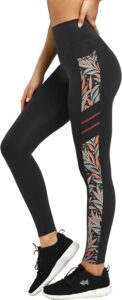
Yvette Printed Workout Leggings for Women High Waisted Yoga Pants with 2 Pockets Non See-Through Tummy Control
Click her 🧩

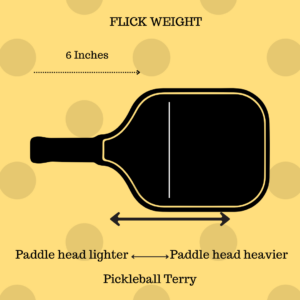
Flick Weight Made Simple Here’s an easy scale:

  • Flick Weight 6: Balanced.
  • Below 6: Head-light, faster paddle.
  • Above 6: Head-heavy, slower paddle.

a pickleball paddle showong the flick weight


How to Tune Your Paddle Like a Pro 🎯

Want your paddle to feel light and fast? Try this:

  1. Add Weight to the Butt Cap:
    • Start with 1/4 oz (7g). Even small changes make a big difference.
    • Pro tip: Replace your grip with a Hesacore and an overgrip (like Yonex Supergrap) to lower flick weight by 2 points.
  2. Keep Swing Weight in Check:
    • High swing weight for power? ✔️
    • Low flick weight for quick hands? Double ✔️.

a woman eating cake with a big pickleball in the background

The Big Takeaway 🎉

Understanding flick weight lets you have your pickleball cake and eat it too:

  • Power for drives? Check.
  • Speed at the kitchen line? Also check.

    Special Edition That Pickleball School (28g, 1.0 oz.) Paddle Performance Enhancer
    Special Edition That Pickleball School (28g, 1.0 oz.) Paddle Performance Enhancer click here USE coupon code DinkPB10

So grab your paddle, play around with weights, and get ready to dominate on the court. Happy tuning! ✨

Hope this post is entertaining and informative.

Thanks for reading,

Pickleball Terry
dinkpickleball@gmail.com

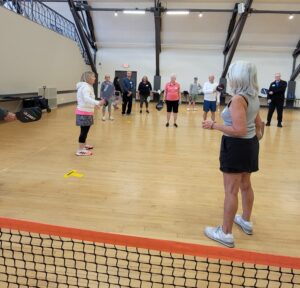
Pickleball Terry at her pickleball clinic with students in Sarasota, FL
 

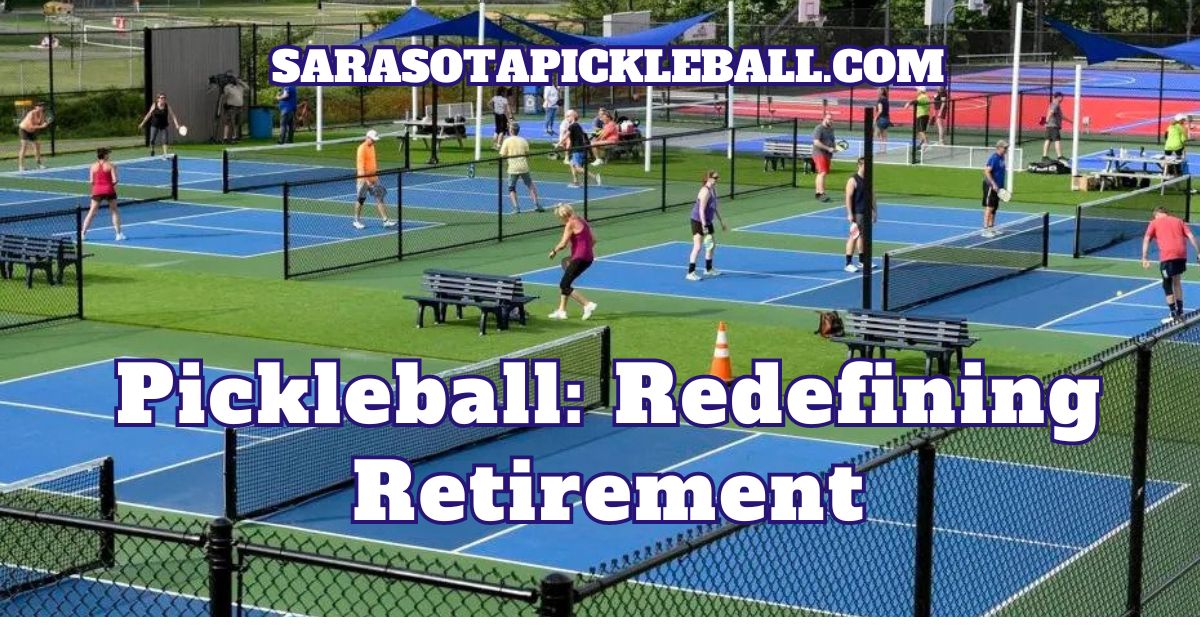
Pickleball: Redefining Retirement

Pickleball: redefining pickleball

By Pickleball Terry

Recently, a chiropractor I was speaking with made the following statement: “Pickleball is redefining retirement.” Wow, that is really true, I thought. Now that pickleball is so available to retirees, retirement is different. Could you picture your parents playing pickleball? What if your mother apologized for having to miss watching the kids because she needed to play pickleball? Heck, no!


Grandparents today appear and feel younger than ever. Additionally, they are active. Pickleball is ideal for senior citizens since it combines exercise with a strong sense of community and a vibrant social life. I believe that in their retirement years, prior generations were lacking something. We are so fortunate to have pickleball.

I noticed a big difference between seniors who play pickleball and those who don’t. People who play look younger, act younger and feel younger. Have you gone to a high school reunion lately and compare yourself to the other people in your class that don’t play a sport regularly? Yikes!


Let’s look at why pickleball is so popular with retirees.

  1. Physical Activity: Pickleball is a low-impact sport that is easy for retirees to pick up. It provides an excellent way to stay physically active and maintain overall health without putting too much strain on joints. Many retirees are embracing this sport as a way to stay fit and healthy.
  2. Social Engagement: Pickleball is a social sport that allows retirees to connect with others in their age group. It fosters a sense of community and camaraderie, which is important for mental and emotional well-being during retirement.
  3. Inclusivity: Pickleball is relatively easy to learn, making it accessible to people of various skill levels. This inclusivity means that retirees with varying athletic abilities can participate and enjoy the sport.

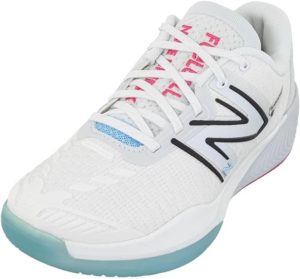
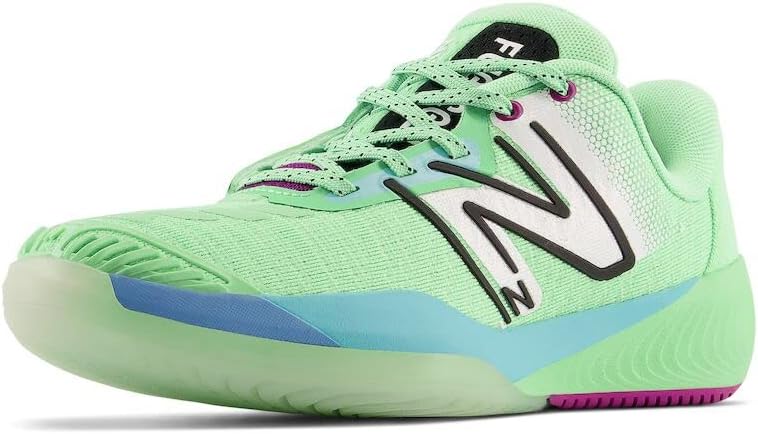
    New Balance pickleball shoe
    New Balance Pickleball Shoes Click on the picture
  4. Competition and Challenges: Retirement doesn’t mean the end of competitiveness. Many retirees enjoy the challenge of pickleball, whether they play for fun or in more competitive settings. This keeps their minds sharp and provides a sense of purpose.
  5. Recreation and Enjoyment: Retirement should be a time to enjoy life, and pickleball offers a recreational activity that retirees find fun and engaging. It’s an excellent way to spend leisure time and enjoy retirement to the fullest.
  6. Community Building: Many retirement communities and active adult communities have embraced pickleball as a core activity. This has led to the construction of dedicated pickleball courts and facilities, further fostering a sense of community and purpose.New Balance Pickleball Shoes

Pickleball is redefining retirement by promoting an active, social, and enjoyable lifestyle for retirees. It encourages physical activity, social engagement, and a sense of community, helping retirees lead fulfilling and healthy lives during their retirement years.

Thanks for reading,
Pickleball Terry
A comic of 2 squirrels playing pickleball

5 Ways to Keep Your Eye on The Ball in Pickleball

IMAGE OR 5 TIPS ON KEEPING YOUR EYE ON THE BALL IN PICKLEBALL

I was on the court today and my opponent popped a ball way up. Already picturing my graceful and accurate put-a-way,  I raised my paddle and watched the ball descend, but at the last moment I looked down and completely missed. Victory was not mine, not to mention, it’s embarrassing.

What happened? I was so sure I had it that I got over confident. Rookie move! I and many players have done it. GOT IT! Oops!

Sometimes you can’t help but look away when someone lobs the ball directly into the sun. Below is a video of opponents who used the sun as part of their strategy much to the annoyance of Leigh Waters.

Other times, it’s just sloppy playing.  Don’t be sloppy.

Here are five ways to keep your eye on the pickleball while playing:

  1.  Focus! Don’t get distracted by spectators, your opponents, or even your partner. Laser focus. Concentrate on tracking the ball’s trajectory, speed, and spin. A good drill is to write different numbers on the balls and  play. The players have to spot the number
  2. Track the ball with your paddle. Here’s a good tip from Sarah Ansboury, pro player, who said to follow the flight of the ball with your paddle. I use this with beginners and novices and it works!
  3. Ball! Another tip, say BALL as you are watching the flight to your paddle. It’s hard to think of anything else if you are saying BALL.
  4. Positioning. Position your body in a way that allows you to see the ball clearly. Keep your head up, eyes forward, and body balanced. Stay on the balls of your feet with eyes on the ball.  Try to stay ahead of the ball in thought and action.
  5. And my last tip is, it isn’t fair to your partner to NOT keep your eye on the ball. Yes, sometimes good old guilt works the best, but truthfully, you are not being a good partner or player for that matter, if you aren’t keeping your eye on the ball.

Remember, consistent practice and concentration are key to keeping your eye on the ball. By honing your visual skills and staying focused, you’ll be able to react quickly and effectively during the game, and we all want to play a good game.

Thanks for reading,

Pickleball Terry
Terry Ryan, Founder of Sarasota Pickleball Organization, LLC
PPR Certified Coach (over a thousand students so far)
Dinkpickleball@Gmail.com

picture of pickleball Terry

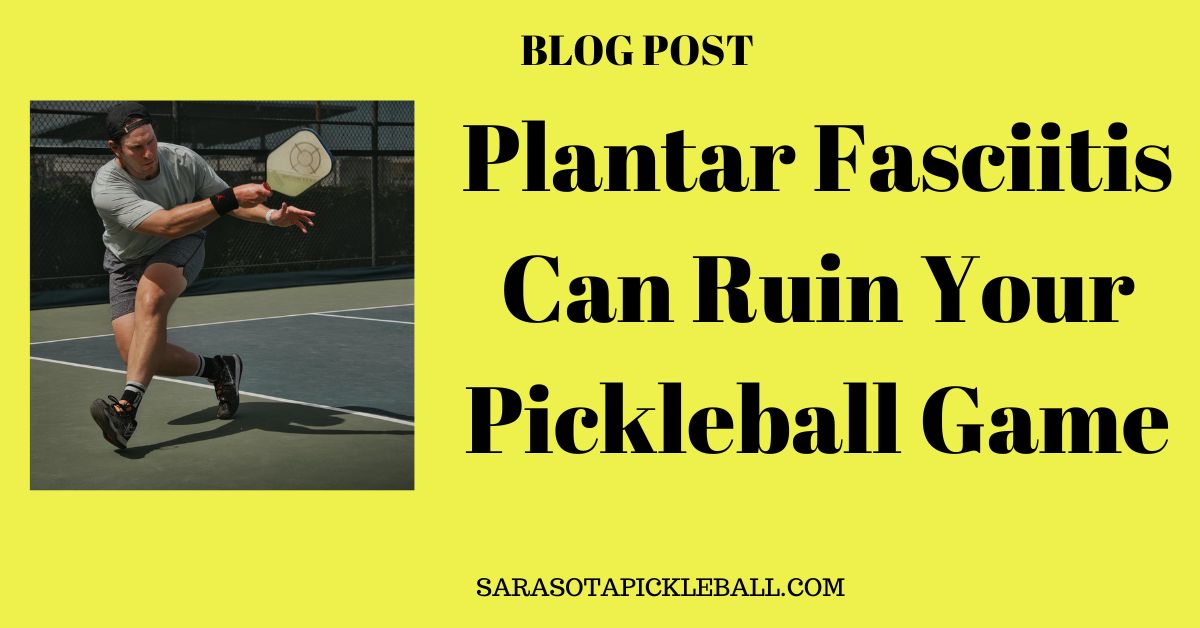
Plantar Fasciitis Can Ruin Your Pickleball Game

“What’s wrong, John?” I said after I saw a player grimace between shots on the pickleball court. “My foot is killing me,” he said through clenched teeth.

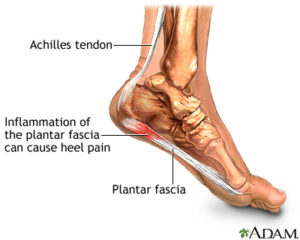
Turns out he has plantar fasciitis. An extremely painful foot condition characterized by pain and inflammation in the plantar fascia, a thick band of tissue that runs across the bottom of your foot, connecting your heel bone to your toes. The plantar fascia provides support to the arch of your foot and helps absorb shock during walking and playing pickleball.

Luckily and fingers crossed, I have never experienced that kind of pain, but so many pickleball players have and it is debilitating usually causing them to suspend playing pickleball. Yikes! Having plantar fasciitis can ruin your pickleball game!

When the plantar fascia is excessively strained, it can develop small tears and become irritated, leading to plantar fasciitis. This condition is often caused by repetitive stress or overuse, such as playing pickleball too much. It can also be associated with certain risk factors, including flat feet, high arches, obesity, tight calf muscles, and wearing improper or unsupportive footwear.

The primary symptom of plantar fasciitis is pain on the bottom of the heel, which may be sharp or dull. The pain is usually worse in the morning when taking the first steps after waking up or after prolonged periods of rest. It may also worsen with activity and improve with rest. In some cases, the pain can extend along the arch of the foot.

Treatment for plantar fasciitis typically involves:

  1. Rest and activity modification: Avoiding activities that worsen the pain and giving the foot adequate rest.
  2. Applying ice packs to the affected area to reduce inflammation and pain.
  3. Stretching and strengthening exercises: Performing specific exercises to stretch the calf muscles and plantar fascia and strengthen the foot muscles.
  4. Orthotic devices: Wearing supportive shoes or using orthotic inserts to provide better arch support and cushioning.
  5. Medications: Nonsteroidal anti-inflammatory drugs (NSAIDs) may be recommended to alleviate pain and reduce inflammation.
  6.  Make an appointment with a podiatrist or a physical therapist. They may provide additional treatment modalities like ultrasound therapy, massage, or taping techniques.
  7. Night splints: These devices keep the foot in a stretched position while sleeping to alleviate morning pain and stiffness.
  8. In severe cases, corticosteroid injections may be used to reduce pain and inflammation.

9. Surgery is rarely necessary and is typically reserved for cases that do not respond to conservative treatments after several months. I have met a couple of people who have had surgery though, with great results.

(Another good article to read. The Amazing Benefits of Rolling Out Your Feet)

How to avoid plantar fasciitis.

  1. Maintain a healthy weight.
  2. Choose supportive footwear or use inserts specially made for plantar fasciitis.
  3. Gradually increase activity levels: When starting a new exercise routine or increasing your physical activity, do so gradually. Sudden, intense activities can strain the plantar fascia. Allow your body time to adjust and strengthen gradually.
  4. Warm up and stretch: Before engaging in any physical activity, warm up your muscles and perform stretching exercises for your feet and calves. This helps prepare your muscles and reduces the risk of injury.
  5. Avoid prolonged standing or walking on hard surfaces: If your job or daily activities involve long periods of standing or walking on hard surfaces, try to take breaks, wear supportive shoes, or use cushioned mats to reduce the impact on your feet.
  6. Maintain a healthy foot posture: Practice good foot posture by avoiding excessive rolling inwards (pronation) or outwards (supination) of the feet. If you have any foot abnormalities or imbalances, consider using orthotic inserts or arch supports prescribed by a podiatrist.
  7. Strengthen your foot and leg muscles: Perform exercises to strengthen the muscles in your feet and lower legs, as strong muscles provide better support to the plantar fascia. Calf stretches, toe curls, and toe towel scrunches are some examples of exercises that can help.
  8. Take regular breaks from repetitive activities: If you have a job or hobby that involves repetitive foot movements (such as running or standing for long periods), try to take regular breaks and vary your activities to avoid overstraining the plantar fascia.
  9. Listen to your body: Pay attention to any foot pain or discomfort. If you experience persistent heel pain or other symptoms associated with plantar fasciitis, seek early treatment and avoid activities that worsen the pain.

If you’re experiencing persistent foot pain or suspect plantar fasciitis, it’s always important to consult a healthcare professional for an accurate diagnosis and appropriate treatment. Treat it before plantar fasciitis places you on the bench.

Thanks for reading,

Pickleball Terry, Founder and owner of Sarasota Pickleball Organization

941-400-0978 or dinkpickleball@gmail.com


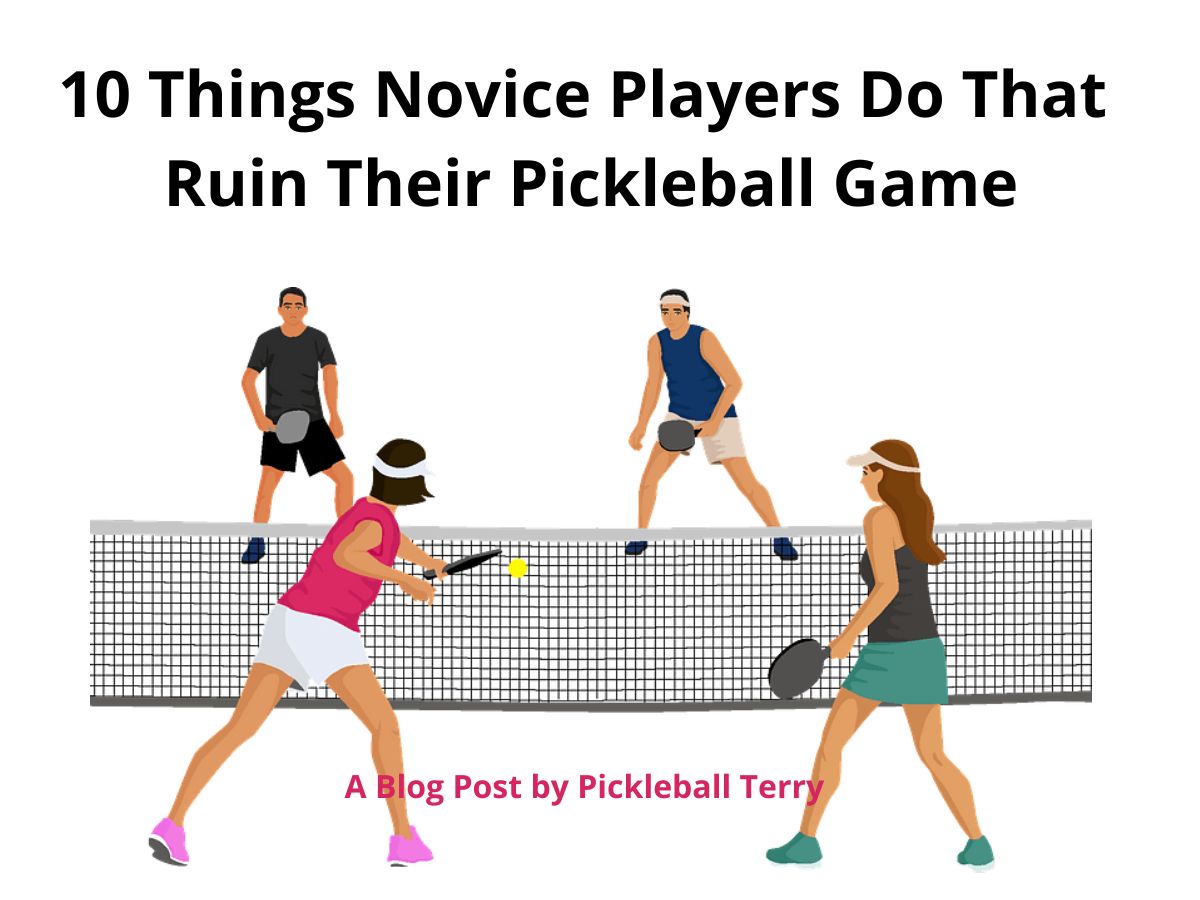
10 Things Novice Players Do That Ruin Their Pickleball Game

As a pickleball coach, I have been coaching for around 3 years. I am a fully insured PPR Certified Coach, and love introducing people to pickleball. I have taught over 500 people so far, and besides a few students falling, there has not been many bad moments. It’s always a good time teaching pickleball. I believe I have found my calling. Let’s just say, if you play pickleball, retirement is great!

Am Image of Sarah Ansboury
Sarah Ansboury

After observing student after student on the court, there are 10 things that a novice student should stop doing that SCREAMS I’m a novice player.  Here they are:

  1. Not standing on the balls of their feet.
    I tell my students, if you are not putting pressure on the balls of your feet and standing flat-footed, you are not in a ready position. Sarah Ansboury says pretend that there is a button on the bottom of your big toe and press that button.
  2. Standing too close to the baseline.
    If you are standing too close to the baseline when you are receiving a deep serve, you are going to either miss the serve, hit it before it bounces, or hit the ball up in the air and out of bounds. Always stand a foot behind the baseline. My students say, “But what happens if they serve short?” Then you run like you’re 18 years old and get to the ball, I always say jokingly. But, if you see someone who constantly serves a weak and short serve, take a step inside the baseline.
  3. Creeping up after you serve.
    Oh, seasoned pickleball players love to see their opponents do this…take a couple of steps forward onto the court after they serve. That’s a sign of definite weakness. Your receiver is going to return the ball deep back to you who is already a couple of steps too far forward, therefore you hit the ball before it bounces. FAULT! The saying is SERVE AND STAY!
  4. Not getting up to the NVZ line.
    This is a drill I do over and over with my students. It’s return and RUN. Or I like to say…RUN LIKE HECK! Now, this is when I’m teaching people who can run and who want to become aggressive players. If you are not returning the ball deep and running up to the kitchen, it says…I’m still learning.
  5.  Standing like a statue.
    They hit the ball and don’t move as they watch their ball fly over the net. Why? They are admiring their shot. Then what happens? They are not prepared for the return shot and miss it. Stop admiring your shot and immediately move and be ready for the ball coming back.
  6. Not keeping their paddle up.
    If I see a player standing with their paddles down by their side, I know they are not ready to return a fast ball coming at them. In pickleball, a player does not have the time to bring the paddle up from the side of their leg, to return a fast ball coming at their backhand. Keep your paddle up! A coaching trick I use is telling my students to put their finger tips of their non paddle hand on the back of their paddle after every return. If this doesn’t work, I give them a ball that they have to hold on the back of their paddle so they remember to keep their paddle up. And this one seems to work…I tell them keeping their paddle up makes them look 10 years younger.
  7. Not Focusing.
    Sometimes I see a ball fly by a student and they try to hit it after the pass. You know, the whiffing stroke. They look at the paddle like there must be a hole in it. How could they possibly miss that ball? They look at me, their coach, in disbelief. But seconds before, I could tell their mind was someplace else. I ask them, what were you just thinking of? They admit, they were thinking they had to get an oil change, or make a dentist appointment. Definitely not on the game at hand. You have to stay laser focused in the game. If not, it’s not fair to your partner, you or your opponents that are there because they want a good game.
  8. Hitting the ball back to your opponent (politely).
    Isn’t that what you are suppose to do? No! During warmup we hit the ball back and forth to each other because we are WARMING UP. After that, make your opponents move. Don’t give them an easy shot to return. And go for their backhand, the weaker side. When I’m playing, I will hit to one opponent and if he gets it back, I’ll switch direction and hit to the other opponent. Keep them guessing. {Select Ray-Ban Oakley & Costa active polarized sunglasses}
  9.  Hitting into the net.
    Time after time, I witness a novice player go for a put-a-way and they hit the ball with extreme force right into the net. That will hurt your ego. Then I look at their feet and find them standing a foot behind the NVZ line. If they were rather standing an inch back from the line as they should have, they would have gotten that ball over the the net and past their opponents. Win! Get as close to the NVZ line as you can.
  10. Not watching the ball.
    A ball comes towards you and you swing and miss it. Why? You thought you were watching the ball but just as it comes a foot from your paddle, you look across the court towards your opponents, and you completely miss the ball. What happened? You took your eyes off the ball. Another good hint from Sarah Ansboury is point your paddle paddle at the ball as it goes back and forth. This is good practice for your brain to train it to keep track of the ball.

If you are a novice, above are 10 things you should work on if you want to STOP looking like a novice. If you master the above 10, you are no longer a novice player and moving in to the intermediate zone.

If you have any questions, feel free to call me at 941-400-0978 or email at dinkpickleball@gmail.com.

  • Clinics
  • Bootcamps
  • Private lessons
  • Tournaments
  • Pickleball Consulting

Thanks for reading, Pickleball Terry

Image of Pickleball Terry

Pickleball Terry, Founder and owner of Sarasota Pickleball Organization, LLC