
Unsolicited Advice on the Pickleball Courts: Helpful or Harmful?
By Pickleball Terry
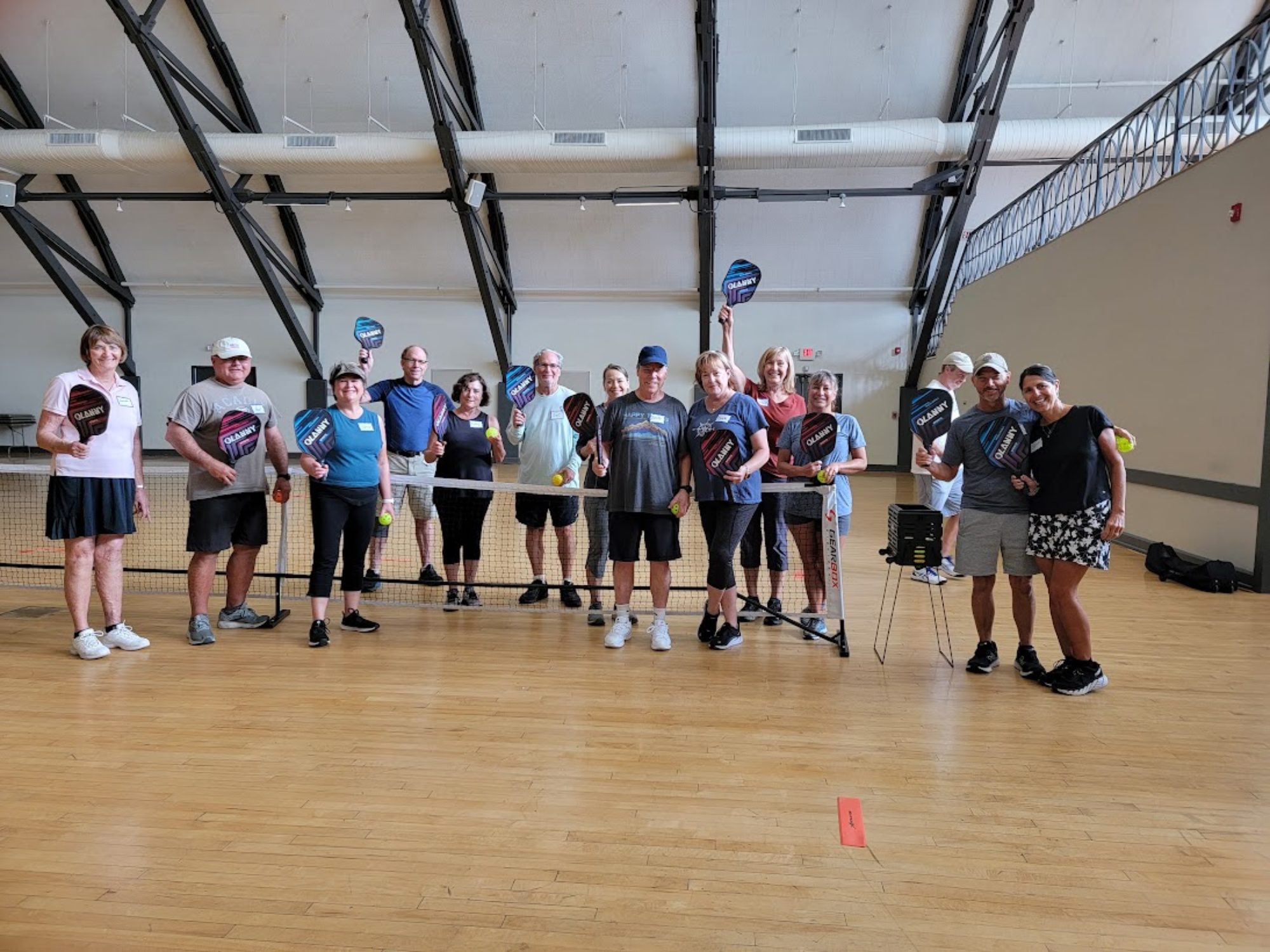
Pickleball courts are one of the most social spaces in sports. Players of all ages and skill levels mix together, laugh between points, and often strike up conversations with complete strangers. That friendliness is part of what makes pickleball special. But there’s one court habit that can quickly turn good vibes into tension: unsolicited advice.
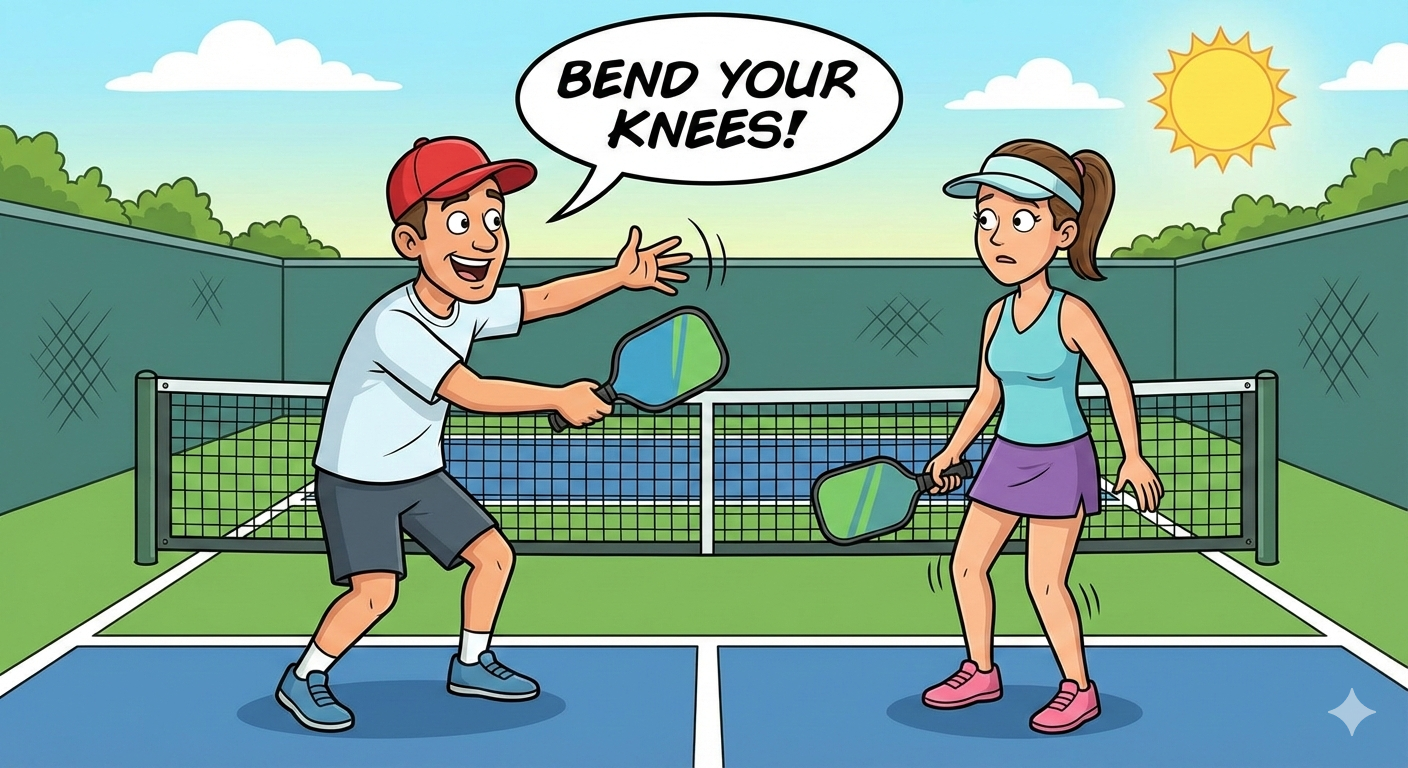
If you’ve played pickleball for more than a few weeks, you’ve probably experienced it. You miss a third-shot drop, and someone says, “You should really slow your swing down.” You pop up a dink and hear, “You need to get lower.” Sometimes it comes from a well-meaning partner. Sometimes it comes from an opponent. And sometimes it comes from the person waiting on the sideline who hasn’t even played the game yet.
 CLICK HERE
The tricky thing about unsolicited advice is that it’s often given with good intentions. Many players genuinely want to help. They remember being beginners themselves and think a quick tip will speed up your progress. The problem isn’t always the advice, but it’s the timing, the delivery, and whether it was invited in the first place.
On recreational courts, most people are there to have fun, get some exercise, and enjoy the social aspect of the game. When advice is forced on someone mid-game, it can feel embarrassing or condescending, even if that wasn’t the intent. Instead of focusing on the next point, the player is now thinking about mechanics, posture, or grip, usually at exactly the wrong moment.
 CLICK HERE
There’s also an unspoken hierarchy issue. Not all advice-givers are actually qualified to give advice. Pickleball is full of confident players who have played for a long time but may not fully understand proper technique. Bad advice can be worse than no advice at all, especially when it contradicts what a player is already working on.
So, when is advice appropriate?
A good rule of thumb is simple: wait to be asked. If someone comes up to you after a game and says, “Hey, do you have any tips for my serve?” That’s your green light. If your partner asks, “What do you think I should do differently?” then now you’re helping, not intruding.
If you truly feel compelled to say something, timing matters. Asking permission goes a long way. A quick, “Would you like a suggestion?” shows respect and gives the other person control. If the answer is no, let it go.
For players on the receiving end, it’s okay to set boundaries. A polite, “Thanks, I’m just out here to play today,” is enough. You don’t owe anyone an explanation.
“Thanks, I’m just out here to play today.”
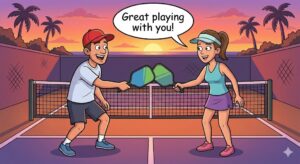
Pickleball grows because it’s welcoming. Keeping advice invited and kind helps preserve the joy that brings people back to the courts again and again. Sometimes the best thing you can offer isn’t a tip, but it’s a smile, a good rally, and a genuine “Nice shot.”
Thank you for reading,

Pickleball Terry